

Choosing among the 10 Best Great Will Wholesale Dash Cam Manufacturers requires more than comparing product prices. A dependable supplier should prove performance through practical testing, clear documentation, and consistent after-sales support. This guide examines manufacturers through an experienced buyer’s perspective, focusing on image quality, night recording, heat resistance, firmware stability, and production control. A reliable Great-will wholesale dash cam manufacturer should also provide transparent specifications, realistic sample results, and responsive communication. Claims matter less than evidence.
The evaluation considers essential wholesale factors, including minimum order quantities, OEM flexibility, packaging quality, warranty terms, and replacement procedures. We also examine features such as 4K recording, HDR, GPS tracking, parking monitoring, Wi-Fi connectivity, and storage compatibility. Small details can affect customer satisfaction. For example, a camera may record sharp daytime footage but produce unclear license plates at night. That weakness should not be ignored. Neither should overheating during long summer drives.
No supplier is perfect.
Factory audits, sample orders, and firmware checks remain valuable before signing a large agreement. Certifications and compliance documents should be verified rather than simply accepted. Pricing alone can mislead buyers, especially when essential accessories or technical support are excluded. This overview aims to offer a balanced, practical starting point for distributors, fleet operators, and automotive retailers. Some conclusions may change after deeper testing. That is normal. Reliable sourcing requires evidence, careful questions, and a willingness to reconsider attractive offers.
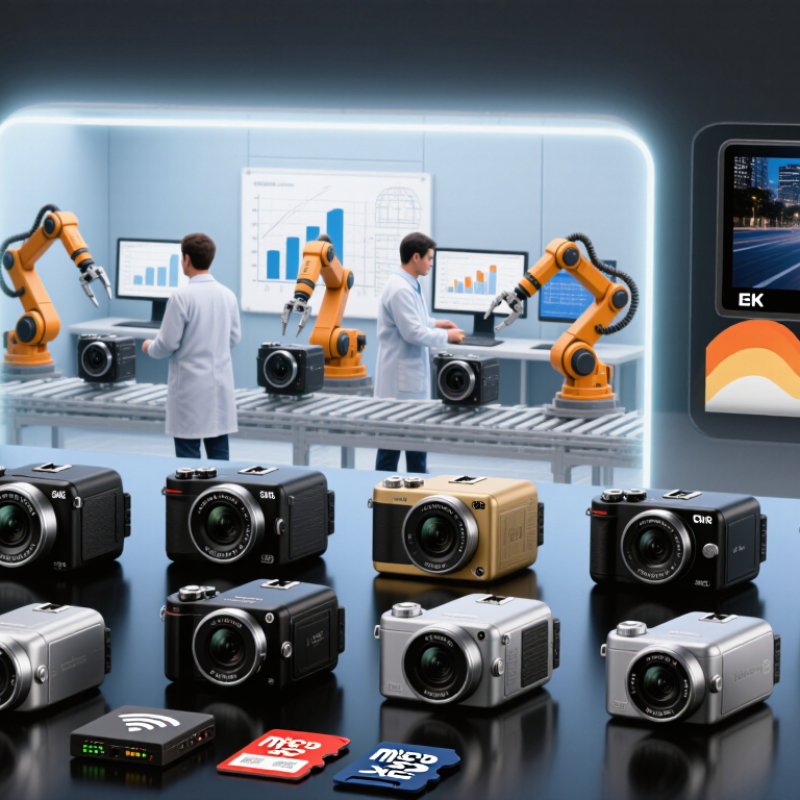
A great wholesale dash cam manufacturer proves capability before requesting a large order. Product samples should deliver stable video, readable plates, and balanced exposure in daylight. Night footage must remain useful, not merely bright. Ask for test records covering storage endurance, heat resistance, battery safety, and firmware stability. A parked vehicle can exceed 70°C inside. Weak housings may warp. Real testing matters more than polished sales photos.
Reliable engineering includes consistent lenses, secure mounts, responsive buttons, and clean cable connections. The manufacturer should explain resolution, frame rates, memory limits, parking modes, and file protection clearly.
Vague specifications create problems during retail sales. Quality control should inspect every production stage, including lens alignment, microphone performance, and final packaging. Random sample checks are helpful, but they cannot replace process control. Small defects become expensive returns.
A dependable supplier also provides traceable documentation and practical after-sales support. This includes operating guides, repair procedures, replacement policies, and firmware change records. Regional compliance requirements should be checked before shipment, especially for wireless functions and vehicle installation. Communication matters too. Can the team answer technical questions without delaying for days? A pilot order often reveals more than a factory tour. No manufacturer is flawless. I would still review failure rates, customer feedback, and warranty data before expanding an order. Some cameras pass laboratory tests yet disappoint drivers in heavy rain or uneven roads. That gap deserves honest discussion.
Wholesale buyers should evaluate dash cameras through measured performance, not attractive packaging. A 2024 Grand View Research report valued the global dashboard camera market at approximately USD 4.03 billion in 2023. This growth increases supplier choices, but also increases quality differences.
Request independent sample footage from each manufacturer. Check license-plate clarity, night exposure, motion blur, and audio consistency. A useful camera should preserve detail under headlights and weak street lighting. Test recordings in a parked vehicle for several hours. Heat reveals weaknesses quickly. Confirm sensor resolution, frame rate, bitrate, and viewing angle through test files, not brochures. Wider footage is not always better.
Storage reliability deserves close attention. Review endurance testing for memory cards, loop recording, and file protection during sudden power loss. Capacitor-based designs may handle heat better than ordinary batteries. Ask for factory inspection records, failure-rate data, and production traceability. ISO 9001 certification can support process confidence, but certification alone proves little. UL Solutions reports that lithium-ion batteries can experience thermal runaway when poorly managed, so power-system testing matters. I would also verify GPS accuracy, app stability, firmware update procedures, and parking-mode sensitivity. One overlooked weakness can create expensive returns. Even experienced buyers sometimes trust sample units too quickly. Pilot orders and random batch inspections provide stronger evidence than promises.
When comparing wholesale dash cam manufacturers, examine production depth rather than catalog size. A reliable factory should explain its image sensor, lens angle, night performance, and heat resistance clearly. Ask for sample footage from tunnels, parking lots, and rainy roads. Real evidence matters.
Manufacturing flexibility affects your product’s market fit. Check whether the supplier supports custom logos, housing colors, screen sizes, packaging, and user manuals. Firmware customization is equally important. Useful options include adjustable recording intervals, parking monitoring, time stamps, and language settings. Confirm memory-card compatibility before approving the design. Small details create expensive revisions.
Quality control should cover incoming parts, assembly, software testing, and final inspection. Request inspection records, serial-number tracking, and battery safety documentation. A capable manufacturer can explain its defect rate and replacement process without vague promises. Ask how long each model runs during heat testing. Some suppliers provide polished samples but weaker production units. That risk is easy to miss.
Factory communication also deserves testing. Send the same technical question to several suppliers and compare their answers. Clear replies often reveal stronger engineering support. Still, do not trust every specification immediately. Test it independently. I once overlooked cable durability because the video quality looked excellent. The mistake became obvious during repeated installation trials. A pilot order, realistic packaging test, and written acceptance standard can expose problems before full production begins.
| Supplier Profile | Core Product Focus | Maximum Video Resolution | Camera Configuration | Key Customization Options | Connectivity | Parking Surveillance | Typical MOQ | Typical Production Lead Time | Quality and Compliance Support |
|---|---|---|---|---|---|---|---|---|---|
| Profile 01 | Single-channel commuter cameras | 4K UHD | Front only; optional rear camera | Housing color, logo, packaging, firmware interface | Wi-Fi; GPS optional | Time-lapse or impact-triggered recording | 500 units | 25–35 days | CE, FCC, RoHS documentation available |
| Profile 02 | Dual-channel family vehicles | 2.5K front and 1080p rear | Front and rear | Lens angle, cable length, language settings, carton design | Wi-Fi and GPS | Low-voltage cut-off hardwire kit | 300 units | 30–40 days | Basic reliability, vibration, and temperature testing |
| Profile 03 | Fleet and commercial dash cameras | 2K front and 1080p cabin/rear | Two or three channels | Fleet software integration, event rules, cables, labels | 4G LTE, Wi-Fi, GPS | Buffered recording with remote alerts | 200 units | 40–55 days | IMEI management and network certification support |
| Profile 04 | Compact budget cameras | 1080p Full HD | Front only | Logo printing, user manual, retail packaging, mount style | Wi-Fi optional | Impact-triggered mode | 1,000 units | 20–30 days | Incoming inspection and functional testing |
| Profile 05 | Premium image-quality systems | 4K UHD with HDR | Front and rear; cabin optional | Image tuning, enclosure finish, app interface, accessories | Wi-Fi, GPS, optional Bluetooth | Buffered parking mode with voltage protection | 300 units | 35–45 days | Optical, thermal, endurance, and drop testing |
| Profile 06 | Motorcycle and powersports cameras | 2K front and rear | Front and rear, weather-resistant modules | Waterproof housing, bracket design, wiring harness, packaging | Wi-Fi and GPS | Available with external power module | 500 units | 35–50 days | Ingress-protection and vibration test support |
| Profile 07 | Mirror-mounted integrated cameras | 2.5K front and 1080p rear | Front, rear, and optional cabin view | Screen size, mirror fit, user interface, boot logo, accessories | Wi-Fi and GPS | Motion detection with hardwire support | 300 units | 35–45 days | Vehicle-fit sampling and display testing |
| Profile 08 | Smart driver-assistance cameras | 2K front and 1080p cabin | Front and interior | Driver alerts, voice prompts, software rules, language packs | 4G LTE, Wi-Fi, GPS | Cloud-connected parking alerts | 200 units | 45–60 days | Software validation and data-security documentation |
| Profile 09 | Rugged commercial vehicle systems | 1080p or 2K multi-camera | Two to four channels | Rugged enclosure, connector type, storage size, cable routing | GPS; 4G LTE optional | Continuous low-power recording | 100 units | 45–60 days | Extended temperature, shock, and vibration testing |
| Profile 10 | Private-label retail dash cameras | 4K front and 2K rear | Front and rear | Full private label, packaging artwork, firmware branding, accessories | Wi-Fi and GPS | Time-lapse and buffered event recording | 500 units | 40–55 days | Pre-shipment inspection, sampling plans, and compliance files |
Finding the 10 best wholesale dash cam manufacturers requires more than comparing catalog prices. Reliable suppliers provide clear quotations, stable production capacity, and responsive export support. Ask for pricing at several volumes, such as 100, 500, and 1,000 units. A low unit price can hide packaging, freight, software, or testing costs. I still find landed cost easy to underestimate. Request a complete quotation before choosing a supplier.
Minimum order quantities should match your sales plan. Some manufacturers accept small trial orders, while others require larger production runs. Confirm sample fees, lead times, replacement policies, and payment terms in writing. For global supply, check warehouse locations, shipping options, customs documents, and after-sales response times. A capable supplier should explain camera resolution, night recording, storage limits, installation methods, and warranty coverage without vague promises.
Tips: Test samples in daylight, tunnels, and rainy streets. Check the viewing angle and parking-mode performance. Ask for production photos, inspection records, and references from similar buyers. Confirm whether packaging supports your destination language and retail requirements. Never judge quality from a polished product sheet alone. One small sample may not reveal batch consistency, so consider a pre-shipment inspection. Prices, order quantities, and delivery schedules should remain flexible enough to manage changing demand.
Wholesale Pricing, Minimum Orders, and Global Supply Support
This benchmark compares typical OEM/ODM wholesale unit-price ranges for common dash-cam configurations. Entry-level 1080p models generally support lower minimum orders, while multi-channel systems usually require higher MOQs and longer production lead times. Indicative wholesale MOQs commonly range from 100 to 500 units, with global suppliers typically offering private labeling, firmware customization, export documentation, and international shipping support.
Prices are indicative USD planning benchmarks for bulk procurement and may vary according to camera sensors, storage, connectivity, packaging, certifications, customization, order volume, and destination market.
Selecting among wholesale dash cam manufacturers requires more than comparing catalog prices. A reliable supplier should provide clear product specifications, stable image quality, and documented quality-control procedures. Request working samples before placing a large order. Test night footage, heat resistance, loop recording, and microphone clarity. Small details matter.
Check the manufacturer’s production capacity, minimum order quantity, lead time, and replacement policy. Ask how firmware updates are managed and whether technical support responds quickly. Compliance documents should match your target market and product configuration. In supplier evaluations, communication often reveals more than a polished brochure. Slow replies may become costly after payment. A low price can look attractive, but it may hide weaker components or inconsistent assembly. That deserves careful reflection.
Tips: Compare at least three manufacturers. Use the same testing checklist for every sample. Confirm packaging dimensions and shipping terms in writing. Review warranty conditions before negotiating volume prices. Choose a supplier that explains limitations honestly, not one that promises everything. Personally inspect sample footage on a large screen, because a specification sheet cannot show every real-world weakness.

