

2026 Best Roll Filter Media for Air Filtration?
In 2026, choosing the best Roll Filter Media means balancing particle capture, airflow, service life, and operating cost. A roll that looks dense may trap dust effectively, yet restrict airflow too quickly for a busy system. A lighter media may preserve airflow but need more frequent replacement. The right choice depends on the equipment, the dust load, and the conditions at the filter face. Check the manufacturer’s efficiency data, pressure-drop figures, dimensions, and recommended changeout limits before comparing products. Ask for test documentation when performance claims are unclear.
An industry expert can make this advice more authoritative, but no source material was provided to verify a person’s name or quotation. Insert a confirmed statement here: “[Expert name], [verified role], says, ‘[Exact, sourced quotation about Roll Filter Media selection].’” Do not publish an invented attribution. Small details matter. A roll that is too wide can wrinkle at the frame; one that is too narrow may leave gaps. Dust can also load unevenly, especially near bends or crowded intakes. This guide will compare media types, construction, and practical selection criteria. It will also note where published specifications leave questions unanswered. There is no universal winner. The best choice is the one supported by relevant test data and proven in the intended system.
What Roll Filter Media Is and How It Works in Air Filtration
2026 Best Roll Filter Media for Air Filtration?
What Roll Filter Media Is and How It Works in Air Filtration
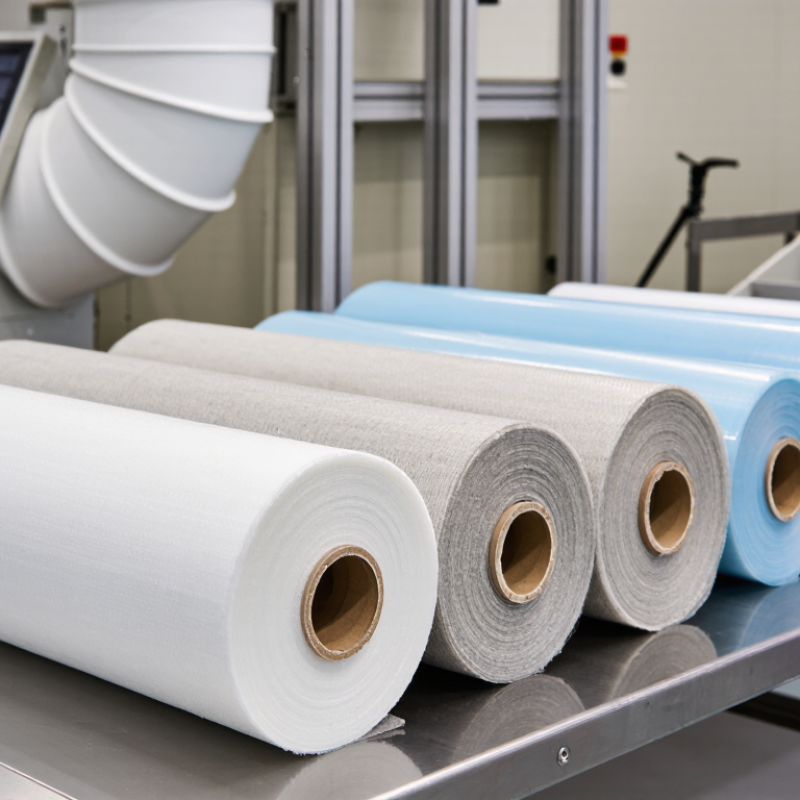
Roll filter media is a continuous sheet of fibrous material, commonly synthetic fiber or fiberglass, supplied in rolls and cut to fit a filtration frame. As air passes through, fibers intercept particles by impaction, interception, and diffusion. Larger dust tends to collect near the surface; smaller particles can be captured deeper in the fiber layer. The media gradually loads with dust, so resistance to airflow usually rises. It is practical for prefilters and other systems that need frequent media changes. Fit matters. Gaps around the frame can let air bypass the filter, making good media perform poorly.
Media should be judged by tested performance, not appearance or thickness alone. ASHRAE Standard 52.2’s published MERV classification table sets minimum particle-removal efficiencies for tested filters. For MERV 13, the thresholds are at least 50% for 0.3–1.0 μm particles, 85% for 1.0–3.0 μm, and 90% for 3.0–10 μm. These values describe the tested filter assembly, not an untested roll of media by itself. ISO 16890 provides another framework, classifying filters by ePM particle fractions. In practice, check the media’s test documentation, airflow resistance, dust-holding capacity, and compatibility with the frame. A denser sheet may capture more particles, but it can also increase pressure drop. The theory is tidy. Real ducts are less so. Test the installed filter under operating conditions, and replace it based on measured pressure or a defined maintenance schedule.
2026 Best Roll Filter Media for Air Filtration? — What Roll Filter Media Is and How It Works in Air Filtration
Roll filter media is a continuous sheet of fibrous material supplied in rolls and cut to fit air-handling equipment. The best choice depends on the dust load, airflow, required filtration performance, pressure-drop limits, moisture conditions, and replacement schedule.
| Media Type | Typical Construction | How It Captures Particles | Common Uses | Main Advantages | Considerations | Best-Fit Selection Scenario |
|---|---|---|---|---|---|---|
| Progressive-density synthetic media | Layered synthetic fibers, commonly polyester, with a looser upstream face and denser downstream structure. | Particles are captured through a combination of interception, impaction, and depth loading within the fiber structure. | HVAC prefiltration, air-handling units, and general ventilation systems. | Uses more of the media depth for dust storage than a uniform structure; available in different thicknesses and grades. | Performance and dust-holding capacity vary with fiber arrangement, thickness, and operating conditions. Check the pressure drop at the intended airflow. | A versatile option when the system needs general-purpose prefiltration and a balance between service life and airflow resistance. |
| Uniform-density synthetic media | Nonwoven synthetic fibers distributed with a comparatively consistent density through the sheet. | Particles are retained on and within the fiber network; loading tends to develop through the media as dust accumulates. | Ventilation systems, equipment protection, and replacement filter pads cut from rolls. | Simple to convert and install; synthetic fibers generally tolerate moisture better than untreated cellulose media. | Dust capacity and efficiency depend on the particular fiber web and grade; a uniform structure may load differently from a progressive-density design. | A practical choice when straightforward fabrication, consistent material structure, and routine prefilter replacement are priorities. |
| Fiberglass roll media | Randomly arranged glass fibers, often supplied in thicknesses and grades intended for disposable panel or roll filters. | Fibers intercept and retain airborne particles as air passes through the web. | Basic HVAC prefilters, industrial ventilation, and applications where low-cost disposable media is suitable. | Widely used in simple prefiltration applications and can be cut to size from a roll. | Handle and install according to the product instructions to limit fiber release. It is not a substitute for a properly rated final filter where high efficiency is required. | Suitable for basic, lower-demand prefiltration when the system design and maintenance plan allow frequent media changes. |
| Adhesive-treated or tackified media | Fibrous roll media treated with a tackifying substance to help retain collected dust. | Particles are captured by the fiber web, while the tacky surface helps reduce the release of collected dust during handling or airflow changes. | Coarse-dust prefilters and selected ventilation or industrial air-intake applications. | Can improve retention of dust on the media surface and may be useful where re-entrainment is a concern. | Confirm compatibility with operating temperature, humidity, and any downstream equipment. The treatment does not by itself define a filtration-efficiency class. | Consider where dust retention is important and the media’s treatment is compatible with the process conditions. |
| Electret synthetic media | Synthetic fibers carrying an electrostatic charge, sometimes combined with a layered nonwoven structure. | Mechanical fiber capture is supplemented by electrostatic attraction for suitable particles. | Selected HVAC and ventilation filters where the complete filter design is tested for the required performance. | Electrostatic attraction can support particle capture without relying solely on a very dense fiber structure. | Charge-related performance can be affected by media design, particle loading, and environmental conditions. Use test data for the complete filter, not a claim based only on the media. | Choose when verified filter-level test results meet the application’s needs and operating conditions. |
| Washable or reusable synthetic media | More open, durable synthetic mesh or fibrous media designed for cleaning and repeated use. | Captures larger particles on and within the media; cleaning removes accumulated dust when the product is designed for reuse. | Selected equipment prefilters and applications with an established cleaning and inspection process. | Can reduce disposable-media use when it is cleaned, dried, inspected, and reinstalled correctly. | Cleaning does not guarantee the original performance is restored. Follow the supplier’s cleaning instructions and replace damaged or permanently loaded media. | Best suited to applications where reusable media is explicitly permitted and maintenance staff can follow a controlled cleaning routine. |
Selection and testing note: Roll media is often used as a prefilter or as a component in a finished filter. A media description alone does not establish the efficiency of the assembled filter. Compare documented airflow and pressure-drop data, dust-loading information, and the applicable filter test results. ISO 16890 classifies air filters based on testing of complete filters; confirm the product’s tested classification rather than inferring it from the roll-media material.