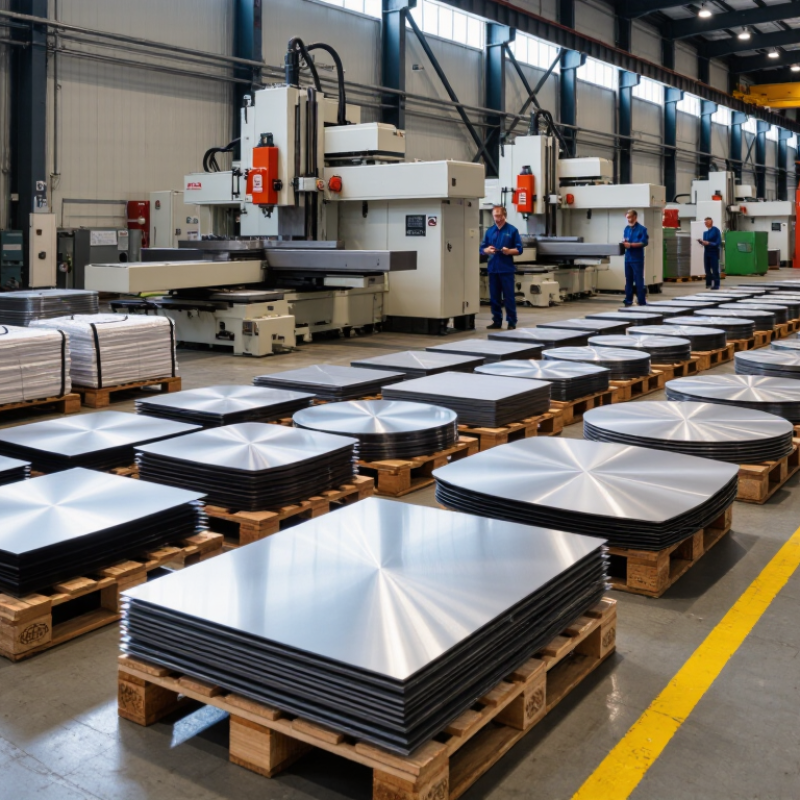
The 2026 stainless steel market demands more than attractive prices and polished supplier websites. According to World Stainless statistics, global crude stainless steel production reached approximately 58.4 million tonnes in 2023. This scale reflects strong demand across food processing, chemical equipment, architecture, and clean-energy projects. It also makes supplier selection more difficult.
This guide examines leading Sus304l Stainless Plates suppliers worldwide through practical and technical criteria. These include mill capacity, plate thickness ranges, surface finishes, production traceability, and export experience. ASTM A240, EN 10088, and JIS G4304 remain important reference standards for product verification. For low-carbon 304L plate, buyers should confirm the stated carbon limit, typically no higher than 0.030%, through certified mill test reports.
Small details matter.
A reliable supplier should provide heat numbers, chemical analysis, mechanical results, inspection records, and EN 10204 3.1 documentation when required. ISO 9001 certification supports process consistency, but it does not replace independent inspection. The World Stainless 2024 market data also highlights how regional production patterns influence lead times, freight exposure, and available inventory. North American, European, and Asian suppliers may offer different advantages.
No ranking is flawless. Supplier claims can change, and online catalogues may omit production limitations. Therefore, this overview combines published data with buyer-focused checks, including sample review, factory capability, packaging quality, and after-sales response. We also consider whether a supplier can protect plates during long sea transport, where moisture marks and edge damage are common. The best choice depends on project standards, delivery risk, and documented performance—not marketing language alone.
SUS304L stainless plate is a low-carbon austenitic steel designed for reliable fabrication and corrosion resistance. Its typical composition includes about 18–20% chromium and 8–12% nickel. Carbon is limited to 0.03% maximum. Manganese, silicon, phosphorus, and sulfur remain controlled under the selected material standard.
The low carbon level reduces carbide precipitation during welding. This helps protect corrosion resistance near welded joints. The plate is tough, formable, and usually nonmagnetic in its annealed condition. It performs well in humid interiors, clean production areas, and mildly corrosive service. However, it is not immune to chloride attack. Saltwater exposure can still cause pitting, especially on scratched or poorly cleaned surfaces.
Common applications include food-processing equipment, storage tanks, kitchen structures, pressure vessels, pipe fittings, and architectural panels. Fabricators often choose it when repeated welding and smooth forming are expected. In practice, surface finish matters as much as chemistry. A polished plate may resist contamination better than a rough surface. Buyers should check heat numbers, thickness tolerance, mechanical test results, and corrosion requirements before approval. One detail is easy to overlook: “SUS304L” does not guarantee identical performance across every specification. Plate thickness, heat treatment, welding quality, and service temperature can change the result. A material certificate is useful, but installation practice still deserves careful review.
In 2026, evaluating SUS304L plate suppliers requires more than comparing price per tonne. The International Stainless Steel Forum reported global stainless crude steel production at about 62.2 million tonnes in 2024. This indicates a large, competitive supply base. Scale alone proves little. Ask for heat numbers, original mill certificates, and traceability from slab to finished plate. A reliable supplier should match ASTM A240 or EN 10088 requirements, depending on your design jurisdiction. For low-carbon SUS304L, verify carbon, nickel, and chromium levels. Request independent PMI and ultrasonic testing records for critical orders.
Technical evidence should be paired with delivery experience. Review three recent export references, thickness tolerances, packaging photographs, and claims data. An EN 10204 3.1 certificate is useful, but it cannot replace laboratory verification. Check whether the supplier controls heat treatment, surface finishing, cutting, and corrosion testing. The World Steel Association’s 2025 Short Range Outlook describes continuing uncertainty in steel demand and trade flows. Ask for realistic lead times, alternate production routes, and written Incoterms. Cheap offers can hide port delays.
Tips: Send a complete purchase specification before requesting prices. Include thickness, width, length, finish, tolerance, edge condition, packing, and testing requirements. Compare delivered cost, not the mill price alone. Photograph labels when the container opens. Buyers often inspect documents too late. Move verification before payment, and record every deviation. Suppliers welcoming witnessed inspections deserve closer consideration.
| Evaluation Dimension | Relevant SUS304L Data or Benchmark | What a Qualified Supplier Should Provide | Recommended Verification Evidence | Procurement Importance |
|---|---|---|---|---|
| Material Identification | UNS S30403; common European designation: EN 1.4307 / X2CrNi18-9. | Clear identification of the grade, applicable standard, heat number, product form, and plate condition. | Material test certificate showing the grade designation, heat number, chemical analysis, mechanical results, and applicable specification. | Critical for preventing substitution with standard 304 or another austenitic stainless grade. |
| Applicable Product Standards | Common references include ASTM A240/A240M for chromium and chromium-nickel stainless steel plate, sheet, and strip, and EN 10088-2 for stainless steel flat products. | Ability to manufacture and document the product against the exact standard and revision required by the purchaser. | Purchase-order compliance statement, standard edition, inspection plan, and third-party inspection option where required. | High; standards may differ in chemistry, tolerances, testing, and surface requirements. |
| Chemical Composition | Typical ASTM A240 limits for 304L include: carbon ≤ 0.030%, manganese ≤ 2.00%, silicon ≤ 1.00%, phosphorus ≤ 0.045%, sulfur ≤ 0.030%, chromium approximately 17.5–19.5%, and nickel 8.0–12.0%. | Consistent heat chemistry within the ordered standard; low carbon must be demonstrated rather than assumed from the “L” suffix. | Heat-analysis report issued against the required standard, preferably supported by independent laboratory testing for critical applications. | Critical for corrosion performance, weldability, and specification compliance. |
| Mechanical Properties | Typical ASTM A240 minimum values for annealed 304L plate include tensile strength of 485 MPa, yield strength of 170 MPa, and elongation of 40%; exact requirements depend on thickness and standard. | Results should be reported for the actual production heat and product thickness, not only as generic grade data. | Tensile test report with yield strength, tensile strength, elongation, specimen direction, thickness, and test method. | High for pressure equipment, structural fabrication, forming, and regulated projects. |
| Dimensions and Tolerances | Common commercial plate thicknesses range from approximately 3 mm to 50 mm or more; widths and lengths vary by mill capability and order quantity. | Confirmed thickness, width, length, squareness, flatness, edge condition, and permitted dimensional tolerances. | Dimensional inspection report referencing ASTM, EN, or the purchaser’s specified tolerance class. | High; dimensional variation affects fabrication yield, machining allowance, and installation fit. |
| Surface Finish | Common plate finishes include No. 1 hot-rolled annealed and pickled; thinner flat products may also be supplied in 2B or other cold-rolled finishes when available. | Surface designation, roughness or visual acceptance criteria, edge treatment, and protection method should be stated in the quotation. | Surface inspection record, representative photographs, roughness data where specified, and packing inspection. | High for architectural, hygienic, food-processing, and visible equipment applications. |
| Heat Treatment and Corrosion Control | 304L is normally supplied in an annealed condition. It offers good general atmospheric and many chemical-service corrosion resistance properties but is not universally resistant to chloride pitting or crevice corrosion. | Confirmation of annealing, pickling, passivation requirements, and suitability review for the actual service environment. | Heat-treatment record, pickling/passivation declaration, corrosion-service review, and relevant testing where contractually required. | Critical where exposure includes chlorides, acids, elevated temperatures, or hygienic processing. |
| Weldability and Fabrication | The low-carbon composition helps reduce the risk of sensitization during welding compared with standard 304, although welding procedure control remains necessary. | Technical guidance for welding, forming, cutting, and post-fabrication cleaning without contaminating the stainless surface with carbon steel. | Welding procedure recommendations, fabrication guide, ferrite or weld-quality requirements when applicable, and contamination-control plan. | High for fabricated tanks, process equipment, piping components, and welded structures. |
| Traceability | Each plate should be traceable to a specific heat and production batch through permanent marking or controlled documentation. | Matching heat numbers on the plate, packing list, certificate, inspection report, and shipping documents. | Heat-number photographs, digitally searchable certificates, packing records, and chain-of-custody documentation. | Critical for safety-related, pressure-retaining, pharmaceutical, and regulated applications. |
| Inspection and Testing | Standard testing commonly includes chemical analysis, tensile testing, dimensional inspection, and visual examination; ultrasonic testing may be added for internal discontinuity control. | Inspection scope should be agreed before production, including sampling frequency, acceptance criteria, and independent inspection access. | Inspection and test plan, mill certificate, dimensional report, visual report, and ultrasonic report when specified. | High for thick plate, pressure applications, heavy fabrication, and export projects. |
| Quality Management | A documented quality-management system should control purchasing, melting, rolling, heat treatment, testing, nonconformities, and corrective actions. | Current quality certification and evidence that the certified scope covers stainless flat products and relevant production sites. | Valid quality certificate, audit summary, process-control records, calibration records, and corrective-action history. | High for repeat orders and projects requiring consistent heat-to-heat performance. |
| Packing and Export Protection | Stainless plates should be protected from moisture, salt contamination, abrasion, and contact with untreated carbon steel during handling and transport. | Moisture-resistant wrapping, suitable skids or supports, corrosion-resistant strapping, clear marking, and container-loading controls. | Packing specification, loading photographs, weight list, shipping marks, and transport-damage procedure. | Medium to high, especially for long-distance ocean shipments and polished or sensitive surfaces. |
| Delivery Capability | Availability depends on thickness, width, length, surface finish, quantity, testing scope, and production schedule; no universal lead time applies. | Written confirmation of stock or production status, estimated dispatch date, partial-shipment policy, and capacity for repeat orders. | Order schedule, production milestones, booking confirmation, previous on-time delivery records, and escalation contact. | High when project schedules, shutdown windows, or continuous production depend on the material. |
| Commercial Evaluation | The landed cost should include material price, testing, cutting, surface treatment, packing, inland transport, freight, insurance, duties, and inspection fees. | Transparent quotation with validity period, currency, Incoterm, payment terms, minimum order quantity, and exclusions. | Itemized quotation, landed-cost model, payment-risk review, and written agreement on claims and replacement obligations. | High; the lowest ex-works price may not represent the lowest total procurement cost. |
| Technical Suitability | Typical 304L physical data includes density of approximately 8.0 g/cm³ and a melting range of approximately 1,400–1,450°C; application performance depends on design and service conditions. | Supplier should review temperature, chloride exposure, chemical concentration, forming, welding, and cleaning conditions before confirming suitability. | Application data sheet, corrosion-resistance guidance, design review record, and written deviation approval where necessary. | Critical; correct grade selection cannot be based on price or nominal chemistry alone. |

In 2026, leading SUS304L stainless plate suppliers are distributed across major industrial regions. Asian producers often provide broad thickness ranges, large export capacity, and competitive lead times. Buyers should inspect heat numbers, surface finish, and packing before shipment. Small details matter.
European suppliers are valued for strict process control and detailed documentation. Many support EN 10088 requirements, solution annealing records, and precise dimensional tolerances. North American suppliers commonly serve energy, food-processing, and architectural projects. They may provide ASTM A240 documentation, ultrasonic testing, and local inventory. Regional stock can reduce delays, but it may limit available plate sizes.
Middle Eastern and Southeast Asian suppliers are expanding their processing and distribution networks. Their strengths often include custom cutting, project logistics, and access to nearby construction markets. However, regional capability can differ greatly between facilities. A supplier’s website is not enough evidence. Request recent mill certificates, PMI results, welding guidance, and traceability samples. Check them carefully.
SUS304L performs well in welded equipment because its lower carbon content helps reduce sensitization risk. It still requires suitable fabrication practices and a realistic corrosion assessment. Salt exposure, acidic cleaning, and stagnant water can change material performance. I have found that clear communication prevents more problems than a low quotation. Yet even careful buyers can overlook packaging damage or mixed heat numbers. That weakness deserves attention during inspection.
2026 Top SUS304L Stainless Plates Suppliers Worldwide
Reliable SUS304L plate suppliers show more than polished certificates. They demonstrate how quality is controlled from melting through shipment. Buyers should request the applicable standard, grade designation, thickness tolerance, and delivery condition before placing an order.
Common references include JIS G4304, ASTM A240, and EN 10088. These standards can differ in chemistry, dimensions, and acceptance limits. A supplier should provide a material test certificate with heat number, chemical composition, mechanical results, and product size. EN 10204 3.1 documentation is often requested for traceable industrial orders. ISO 9001 certification supports process control, but it does not prove every plate is defect-free.
Testing should match the plate’s intended service. Spectrometric analysis verifies chromium, nickel, carbon, and other elements. Tensile testing checks yield strength, tensile strength, and elongation. Hardness testing adds useful evidence. Ultrasonic examination may detect internal discontinuities, while visual inspection reveals pits, scratches, scale, and edge damage. Surface finish needs clear measurement criteria.
Sampling is not perfection. A compliant test piece cannot represent every square meter of a large shipment. I have seen documentation look complete while packaging concealed corner damage. Independent inspection, heat-level traceability, calibrated instruments, and retained test records reduce that risk. Suppliers should explain failed-test procedures openly, including retesting rules and corrective actions. Claims without records deserve caution.
Comparing SUS304L stainless plate suppliers requires more than checking the lowest quotation. Request the same specifications from every supplier, including thickness, width, length, surface finish, edge condition, and flatness tolerance. A 10 mm plate with a polished surface may cost much more than a hot-rolled plate. Ask whether prices include testing, export packaging, inland transport, and shipping terms. Otherwise, the cheapest offer may become expensive later.
Lead time should be measured from purchase order confirmation, not from the first email. Reliable suppliers should provide production and inspection milestones. For example, they might schedule material preparation in five days, rolling in ten days, and final testing within three days. Ask how they handle urgent quantities or specification changes. Promises can be vague. I have learned that a written dispatch date matters more than a confident sales call. Also check whether the quoted lead time includes weekends, port congestion, and document preparation.
After-sales support reveals operational maturity. Require a named contact, response deadlines, and a clear process for shortages, surface damage, or failed test results. Ask for mill test certificates, dimensional records, and batch traceability before shipment. A practical supplier should review photographs and packing lists quickly when a problem occurs. Not every claim is caused by the supplier, though. Storage moisture, forklift marks, and incorrect unloading can create disputes. Clear evidence protects both sides. A low price still has limits.