

Choosing the best Pan Tilt Video Platform from China requires more than comparing prices or camera resolution. A reliable platform must perform under real conditions, not only in a product demonstration. Imagine a warehouse entrance at dusk, with moving forklifts, weak lighting, and rain on the lens. Smooth pan and tilt control, accurate tracking, stable video transmission, and clear night images become essential.
This guide examines platforms through practical and professional criteria. It considers optical zoom, movement speed, preset accuracy, weather resistance, network stability, and compatibility with common management systems. Cybersecurity also matters. Secure passwords, firmware updates, access controls, and transparent technical documentation can reduce operational risks. Independent certifications and manufacturer testing records offer stronger evidence than advertising claims. Yet specifications do not tell the whole story. Installation quality, software usability, and technical support may determine long-term value.
Field experience often reveals small weaknesses. A platform may respond quickly but produce noisy images in low light. Another may provide excellent tracking but limited integration options. These trade-offs deserve honest attention. No single model fits every project. Site size, climate, bandwidth, monitoring goals, and maintenance resources can change the decision. This introduction provides a careful framework for comparing Chinese manufacturers and identifying dependable solutions. The evaluation remains practical, but not flawless. Product data can change, and real-world performance may vary between installations. Testing samples, reviewing support responses, and checking current compliance documents remain wise steps before purchase. Reliability is earned over time.
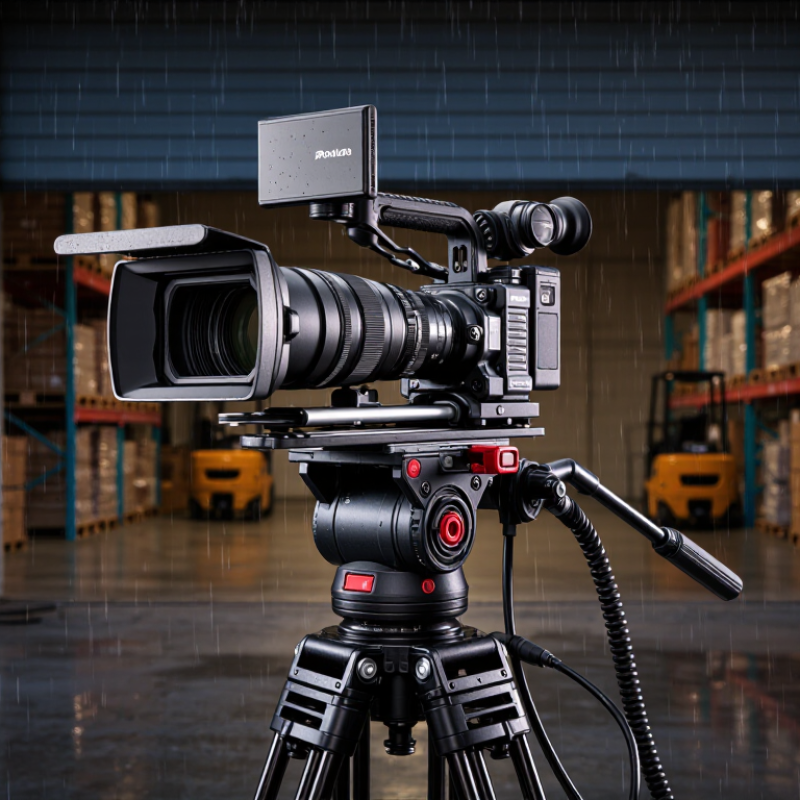
A pan-tilt video platform is a camera support system with two controlled movements: horizontal panning and vertical tilting. It allows an operator to change the viewing angle without moving the entire base. Some platforms also provide zoom control, image stabilization, tracking, and remote video transmission.
In practical use, the platform may sit on a vehicle, tripod, inspection robot, or fixed structure. A camera operator can follow a person, examine a pipe joint, or monitor a wide warehouse aisle. Precise motors matter because small movements become visible at high zoom. Low-latency control matters even more. A delayed image can cause missed details. During field testing, I also check cable routing, mounting strength, balance, and heat management. These details are easy to overlook.
When comparing a pan-tilt video platform from China, buyers should examine payload capacity, rotation range, control accuracy, weather protection, and software compatibility. Manufacturing quality can vary between suppliers, so documented testing is valuable. Look for clear specifications, sample footage, inspection records, and responsive technical support. No platform is perfect. Some models offer smooth movement but weaker night imaging. Others provide strong video quality but need better cable protection. Privacy controls, secure access, and lawful installation should remain part of the evaluation. A well-designed system should be reliable in daily operation, not only impressive during a product demonstration.
Chinese pan-tilt video platforms combine a camera module, horizontal and vertical motors, encoders, and network software. The control system converts a user command into precise motor movement. Preset positions allow operators to return to the same doorway, loading bay, or road junction. The mechanics are simple. Accuracy is not.
Most platforms stream video through IP networks using protocols such as RTSP and ONVIF. Edge processing can detect motion, track people, and reduce unnecessary uploads. According to MarketsandMarkets’ 2023 report, the global video surveillance market could grow from about 53.7 billion US dollars in 2023 to 83.3 billion by 2028. This wider market includes fixed cameras, so the figure does not represent pan-tilt systems alone.
China-based platforms often emphasize compact hardware, fast component integration, and flexible software interfaces. In field testing, network delay matters more than impressive resolution. A two-second delay can make tracking a moving vehicle frustrating. Power recovery also deserves attention. Some systems restore their last position, while others return to a default preset. That difference affects real operations. The same report identifies cloud and analytics adoption as major growth factors, yet cloud dependence can create costs, privacy concerns, and weak performance during unstable connections. A better evaluation checks latency, motor noise, tracking accuracy, open protocols, firmware support, and documented security practices. Specifications help, but real movement tests reveal more.
What Is the Best Pan Tilt Video Platform from China?
Choosing a pan-tilt video platform requires more than comparing resolution numbers. Field testing should begin with movement accuracy, response speed, and image stability. A useful platform should turn smoothly without visible shaking, even during slow horizontal tracking. Fast preset recall also matters when monitoring several fixed areas.
Check image performance in real conditions. Test bright sunlight, deep shadows, rain, and low light after sunset. Optical zoom should preserve readable details on distant signs or equipment. Digital zoom often looks impressive in demonstrations but loses clarity quickly. Low latency is equally important, especially when an operator follows moving vehicles or people. A delay of even half a second can affect decisions.
Look closely at installation and daily maintenance. The platform should support secure network protocols, clear access controls, and documented firmware updates. Weather resistance needs independent verification, not only a label on the housing. Ask for test reports, operating temperature ranges, and service response times. Integration with existing video systems should be tested before purchase. This is where specifications can become vague.
There is no perfect platform. A model with excellent zoom may pan too slowly. Another may track well but consume more power than expected. I would record performance at several distances and repeat tests after extended operation. One short demonstration is not enough. Local support, spare parts, and transparent documentation can matter more than a small resolution advantage. My own evaluation would remain cautious until the platform survives real weather and ordinary operator mistakes.
This neutral evaluation model highlights the factors that usually have the greatest impact on pan-tilt video platform performance. Image quality, PTZ precision, intelligent tracking, and low-light capability receive higher weights because they directly affect identification, coverage, and operational reliability. Use these percentages as a procurement framework rather than as a vendor ranking.
China’s leading pan-tilt video platforms serve different operating environments. Fixed-site PTZ platforms support factories, warehouses, ports, and large public facilities. They usually combine optical zoom, wide rotation, preset positions, and network video transmission. During field checks, stable mounting matters as much as camera resolution. A powerful lens cannot correct vibration from a weak bracket.
Mobile pan-tilt platforms fit temporary inspections, emergency response, and remote construction areas. Their compact frames often include rechargeable batteries, wireless links, and rapid setup features. Some models combine visible-light cameras with thermal imaging. This pairing helps operators inspect equipment during darkness, smoke, or changing weather. Battery performance can disappoint in cold conditions, so real-world testing remains essential.
Multi-sensor platforms provide several viewing angles from one installation point. They can reduce blind spots, but their higher data load requires stronger network planning. AI-assisted tracking is another major type. It can follow moving people or vehicles, yet reflections, rain, and crowded scenes may confuse the system. Professional buyers should examine latency, weather protection, software updates, storage control, and integration with existing security networks. Independent testing records are valuable, although published specifications sometimes overlook maintenance effort. Operators should also review privacy requirements and local installation rules before deployment.
The best platform depends on the required image quality, movement range, installation environment, connectivity, and control method. The specifications below represent common capabilities available in the Chinese pan-tilt video platform market; exact performance varies by model and configuration.
| Platform Type | Typical Camera Configuration | Pan / Tilt Capability | Typical Video Features | Common Connectivity | Typical Protection Level | Best-Fit Applications | Main Advantages | Key Limitations |
|---|---|---|---|---|---|---|---|---|
| Indoor Network PTZ Platform | Fixed indoor housing with an integrated visible-light camera; commonly 1080p or 4K | Usually pan: 0–360° or continuous; tilt: approximately −30° to +90° | Optical zoom commonly 10×–30×, autofocus, preset positions, digital image stabilization on selected models | Ethernet, PoE on compatible units, HDMI or SDI on selected configurations, ONVIF support may be available | Usually not rated for outdoor exposure; indoor models may have limited dust protection | Meeting rooms, classrooms, studios, houses of worship, and indoor monitoring | Low installation complexity, quiet operation, and efficient remote control | Not suitable for rain, direct weather exposure, or demanding low-light outdoor surveillance |
| Outdoor Speed-Dome PTZ Platform | Weatherproof dome housing with a visible-light camera; commonly 2MP–8MP class sensors | Often 360° continuous pan and approximately −15° to +90° tilt; speed varies by model | Optical zoom commonly 20×–40×, infrared illumination on many models, patrol tours, presets, and auto-tracking on selected units | Ethernet, PoE or higher-power PoE variants, alarm I/O, and network video protocols | Commonly IP66 or IP67; vandal-resistant ratings vary by housing design | Perimeters, transport facilities, city surveillance, industrial sites, and large outdoor areas | Long-range observation, broad coverage, and flexible remote positioning | Moving objects may be missed when the camera is pointed elsewhere; requires careful mounting and network planning |
| Rugged Mobile PTZ Platform | Compact PTZ camera mounted on a portable tripod, mast, vehicle, or temporary tower | Usually pan: 0–360°; tilt range commonly about −20° to +90° | 1080p or 4K video, optical zoom commonly 10×–30×, preset scanning, and optional low-light or infrared capability | Wi-Fi, 4G or 5G cellular, Ethernet, battery power, and optional solar charging | Often designed for outdoor use; IP ratings and impact resistance must be checked for each unit | Construction sites, emergency response, temporary events, traffic control, and remote locations | Fast deployment, flexible placement, and reduced dependence on fixed infrastructure | Battery runtime, cellular coverage, bandwidth, and physical stability can limit operation |
| Thermal and Visible-Light Dual-Sensor PTZ Platform | Combined visible-light and uncooled thermal imaging modules, typically with separate lenses | Commonly 360° pan with a tilt range near −20° to +90°; exact movement depends on the payload | Thermal resolutions commonly range from 256 × 192 to 640 × 512 pixels; visible channel may provide optical zoom and image fusion | Ethernet, PoE on selected models, alarm I/O, serial control, and network video protocols | Outdoor housings commonly use IP66 or IP67 protection | Perimeter security, fire-risk monitoring, maritime observation, utilities, and low-light operations | Thermal detection can support observation in darkness, haze, and some low-visibility conditions | Higher cost, lower thermal detail than visible video, and thermal performance varies with weather and target distance |
| Long-Range Laser-Illuminated PTZ Platform | High-sensitivity visible-light camera with long optical zoom and integrated laser illumination | Usually 360° continuous pan and approximately −20° to +90° tilt | Optical zoom commonly 30×–50×; laser illumination distance may reach several hundred metres depending on conditions and configuration | Ethernet, PoE or dedicated power input, alarm interfaces, and remote serial or network control | Commonly IP66 or IP67; heater and wiper options may be available | Large perimeters, coastlines, border areas, ports, airports, and wide-area security | Extended nighttime viewing distance and strong detail at long range | Performance is affected by fog, rain, atmospheric conditions, vibration, and accurate focusing |
| Vehicle-Mounted PTZ Video Platform | Stabilized or semi-stabilized PTZ payload mounted on a vehicle roof, mast, or utility platform | Often 360° pan with approximately −30° to +90° tilt; stabilization capability varies considerably | 1080p or 4K video, optical zoom commonly 10×–30×, GPS metadata, and optional object tracking | Vehicle power, Ethernet, Wi-Fi, 4G or 5G, and serial or IP-based control | Ruggedization and weather resistance vary; installation should account for vibration and vehicle movement | Mobile command, law enforcement support, utility inspection, public events, and field operations | Wide-area coverage from a moving platform and rapid relocation between sites | Vehicle vibration, power regulation, network availability, and mounting height affect image quality |
Choosing the best pan tilt video platform from China starts with the site, not the catalog. A warehouse may need a compact unit, while a coastal tower needs corrosion resistance, sealed connectors, and stable movement in wind. MarketsandMarkets estimates that the global video surveillance market could reach about USD 83.9 billion by 2029. That growth makes specification checking more important, not less.
Define the camera payload, tilt range, pan speed, repeatability, and mounting load before comparing prices. Confirm support for ONVIF, RTSP, and secure network protocols. These features reduce integration risks with existing monitoring software. Check latency with a live stream, not a brochure.
Request thermal, vibration, and ingress protection test records. A platform rated for outdoor use should show its operating temperature and protection level clearly. It should also provide firmware updates and vulnerability contacts.
Security deserves equal attention. NIST’s Cybersecurity Framework emphasizes identification, protection, detection, response, and recovery. Ask how accounts, logs, encryption, and remote access are managed. Review CE, FCC, or other required certifications for your destination and application.
Standards help, but they do not replace testing. No scorecard is perfect. I would still inspect a sample, run continuous motion for several days, and measure positioning drift.
An inexpensive platform can become costly when replacement parts, software support, or shipping delays are ignored. Choose the supplier that documents weaknesses honestly, not only the one promising the highest zoom or lowest price.

