

10 Best Drywall Steel Profiles Suppliers Worldwide
Choosing among the 10 Best Drywall Steel Profiles Suppliers Worldwide requires more than comparing prices. Drywall Steel Profiles shape wall alignment, ceiling stability, installation speed, and long-term performance. A small variation in flange width can complicate fastening. Uneven coating may also matter in humid interiors. Buyers should compare profile dimensions, steel thickness, coating specifications, test documentation, production consistency, and delivery capacity. Ask for samples and technical data before approving a large order.
Cold-formed steel specialist Don Allen, P.E., associated with the American Iron and Steel Institute, offers a useful principle, paraphrased here rather than quoted verbatim: “Reliable framing starts with matching the profile and specification to the project.” That distinction matters. A supplier may offer a broad catalog, yet not every profile suits every partition, ceiling, or load requirement. Confirm compatibility with the project design and applicable local standards. Check how the supplier handles tolerances, packaging, and quality records, too.
This guide compares suppliers through practical questions: What products do they make? Can they provide consistent specifications? Do they support project-specific requirements and dependable shipping? The answers help contractors, distributors, and procurement teams build a shortlist with fewer assumptions. Some details remain difficult to compare from a website alone. Request written confirmation. Inspect a sample. Then weigh cost against documented performance and service—not just a polished catalog.
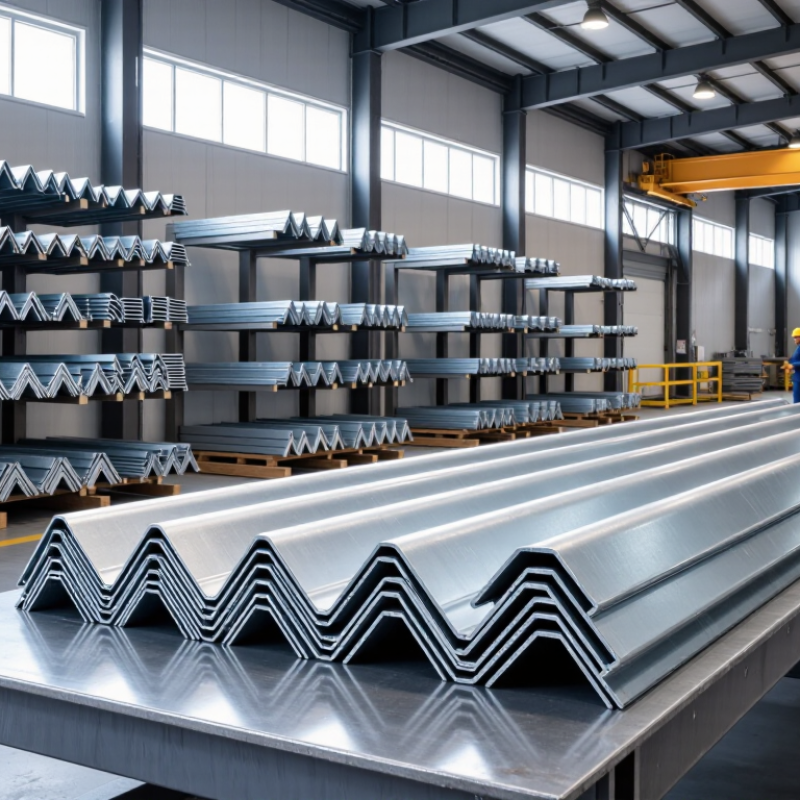
What Drywall Steel Profiles Are and How They Are Used
Drywall steel profiles are thin, cold-formed metal sections that create a frame behind plasterboard. Common shapes include U-shaped tracks, C-shaped studs, furring channels, and corner beads. Tracks run along floors and ceilings, while studs stand vertically between them. Boards are screwed to the frame, leaving space for insulation, wiring, or plumbing. Ceiling systems may use channels to support board below joists. That matters. Steel profiles are light to handle and consistent in shape, though poor storage can bend them.
Choosing profiles means checking depth, metal thickness, coating, and spacing against the board system and intended loads. Door openings, tall partitions, and wide ceiling spans may call for reinforced sections or closer spacing; a standard stud is not automatically suitable. Ask for published dimensions and load guidance, not only a product photo. Keep the components compatible. On site, small differences in flange shape can make screws sit awkwardly or joints drift. Measure twice. Profiles should be stored dry and flat, since bent edges can complicate installation. Requirements vary by system and exposure, so confirm specifications before ordering.
10 Best Drywall Steel Profiles Suppliers Worldwide - What Drywall Steel Profiles Are and How They Are Used
Drywall steel profiles are cold-formed metal sections used to frame, support, join, or finish gypsum-board assemblies. This guide compares ten common profile types to help buyers assess a supplier’s product range. It is a product reference, not a ranking of named companies.
| No. | Profile type | Typical form or size reference | How it is used | What to confirm with a supplier |
|---|---|---|---|---|
| 1 | C-stud | C-shaped section; commonly supplied in nominal web widths such as 50, 70, 92, or 100 mm. Thickness and dimensions vary by system. | Vertical framing member in non-load-bearing partition walls; supports plasterboard fixed to its flanges. | Web and flange dimensions, steel thickness, coating, available lengths, and compatibility with the matching track. |
| 2 | U-track | U-shaped channel sized to suit the associated stud system. | Installed horizontally at the floor and ceiling to locate and retain the ends of wall studs. | Matching stud size, section tolerances, thickness, cut-length options, and whether the system requires a deflection detail. |
| 3 | Furring channel | Shallow channel profile; depth and flange geometry depend on the ceiling or wall system. | Creates a fixing plane for plasterboard on ceilings or existing walls and can help accommodate services or uneven substrates. | Channel dimensions, compatible clips or brackets, maximum spans specified by the system, and corrosion-protection requirements. |
| 4 | Hat channel | Hat-shaped section with a raised center and two fixing flanges; sizes vary by application. | Provides a secondary framing layer for walls and ceilings, including installations where a stand-off from the substrate is needed. | Profile depth, flange width, steel thickness, attachment method, and published load or span data for the intended assembly. |
| 5 | Resilient channel | Thin, formed channel designed to provide a flexible mounting connection; profile geometry is system-specific. | Used between framing and gypsum board in certain wall or ceiling assemblies to reduce direct mechanical sound transmission. | Tested assembly details, installation orientation, fastener locations, and compatibility with the specified board and framing. |
| 6 | Carrying channel | Primary ceiling channel, often used with separate furring or secondary channels. | Forms part of a suspended ceiling grid, transferring ceiling loads through hangers to the supporting structure. | System layout, hanger spacing, connection components, allowable loads, and applicable installation instructions. |
| 7 | Deflection track | Deep-leg or slotted track designed to allow controlled vertical movement; details vary by system. | Used at the head of a partition where floor or roof movement must be accommodated without transferring unwanted movement to the wall. | Movement capacity, stud engagement requirements, fire- and acoustic-rated assembly details, and compatible fasteners. |
| 8 | Shaftwall stud or C-H stud | Specially formed steel stud designed to work with shaftwall liner panels and related components. | Frames elevator, stair, and service shafts, often from one side where access to the inside face is restricted. | Complete system components, tested fire-resistance assemblies, maximum wall heights, and project-specific approvals. |
| 9 | Corner bead | Perforated or expanded-metal angle profile; leg width and finish depend on the product. | Reinforces and creates a straight external corner on plasterboard walls before joint compound or finishing coats are applied. | Material, corrosion resistance, leg dimensions, fixing method, and suitability for the specified interior or exterior exposure. |
| 10 | Edge or shadow-gap profile | Metal edge section with a visible reveal or defined board termination; shape and reveal width vary. | Finishes exposed board edges and creates a deliberate recessed joint or clean transition at ceilings and openings. | Reveal dimensions, board-thickness compatibility, finish options, installation details, and availability of matching accessories. |
Purchasing note: Dimensions and steel thicknesses are system- and market-dependent; confirm the current technical datasheet before ordering. For framing products, ask suppliers for applicable conformity documentation and assembly data—for example, EN 14195 in relevant European markets, or ASTM C645 for nonstructural steel framing and ASTM C955 for load-bearing steel framing where applicable. Fire, acoustic, structural, and corrosion performance must be verified for the complete specified assembly.