

Choosing the best Metal Stamping manufacturers in China takes more than comparing prices or browsing polished factory photos. A supplier’s real strengths show up in its tooling control, material traceability, dimensional consistency, and ability to meet delivery schedules. Look closely at the details: a stamped bracket’s hole position, a clean edge, and stable results across repeated production runs. Small differences matter.
Taiichi Ohno, a pioneer of the Toyota Production System, wrote, “Where there is no standard, there can be no kaizen.” That principle applies to supplier evaluation. Ask how a manufacturer documents inspections, handles tooling maintenance, and responds when a part falls outside specification. A confident sales presentation helps little without clear process records. Still, paperwork alone is not proof of dependable production.
This guide examines manufacturers through practical criteria, including equipment, engineering support, quality controls, and communication. It also considers whether a supplier can explain its capabilities plainly, rather than promise everything. No ranking can replace a factory audit or a well-defined sample review. That is worth remembering. A strong candidate for one project may not suit another, especially when part geometry, material, volume, and tolerances differ. Use the comparisons as a starting point, then verify the details against your own drawings and production needs.
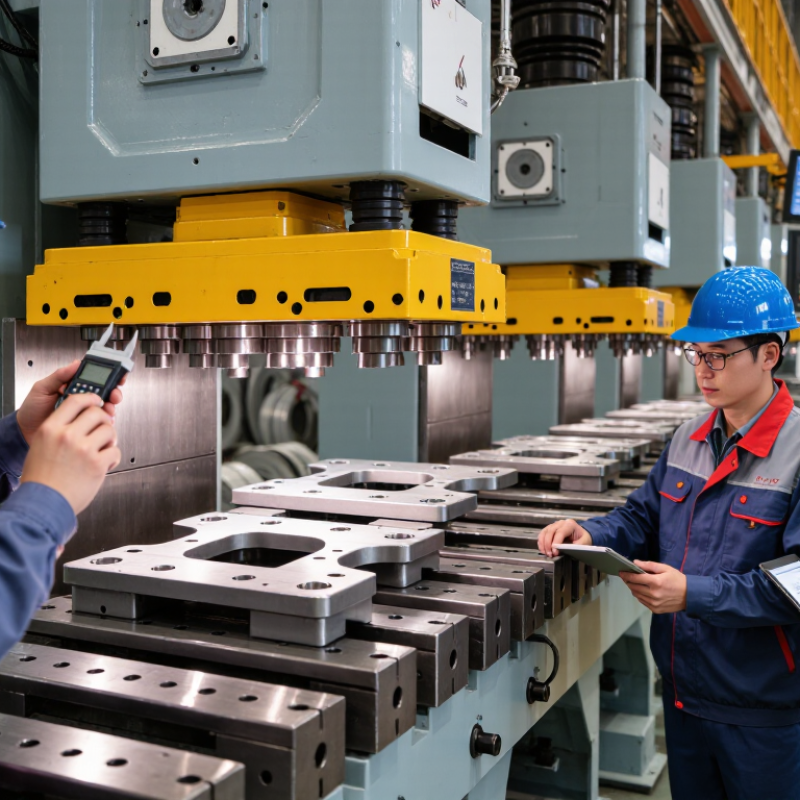
A leading metal stamping manufacturer in China does more than press flat sheets into parts. Its engineers understand how steel, aluminum, and copper behave during forming. They can explain how material thickness, grain direction, bend radius, and tooling clearance affect the finished component. Good die design helps control burrs and springback. Details matter. A capable factory also monitors press settings, checks dimensions against drawings, and records material batches so problems can be traced.
Consistent quality should be visible in the work, not just promised in a sales conversation. Ask how the supplier inspects first-off parts, checks critical dimensions, and manages changes to tooling or materials. For a sample, compare hole positions, edge condition, and flatness with the approved drawing. Clear answers are useful. Vague answers are a warning. Production speed matters, but only when repeatability holds across a full run. No supplier is flawless; even a mature process can need adjustment when a new material or design is introduced.
Tips: Request a sample inspection report and a short explanation of the measurement method. Share a complete drawing, including tolerances and finish requirements. Ask who will notify you if a defect appears. A brief trial run can reveal issues that a polished presentation may miss. Look for practical evidence, and leave room to reassess.
Chinese metal stamping manufacturers commonly offer blanking, piercing, bending, and forming for sheet-metal parts. Blanking cuts a flat outline, while piercing creates holes or slots. Progressive dies combine several operations in one press cycle, helping produce repeat parts efficiently. Deep drawing shapes flat blanks into cups or housings. That takes careful control.
Capabilities may also include tapping, spot welding, deburring, and surface finishing. These steps can reduce the number of outside processes, but they do not guarantee consistent quality. Buyers should ask how a supplier checks material thickness, tool wear, and critical dimensions. A sample part and its inspection report reveal more than a process list. Details matter.
The right process depends on geometry, material, production volume, and tolerance needs. A simple bracket may suit a single-operation die; a complex, high-volume part may justify progressive tooling. Ask about press capacity, die maintenance, and changeover plans. Also clarify which tolerances are realistic across a full production run. Supplier capability sheets can be optimistic, and I would treat them as a starting point, not proof. Review trial parts before approving production.
China’s leading metal stamping manufacturers are best compared by specialty, not size alone. Precision progressive-die shops serve electrical connectors and small brackets, where burr control and repeatable pitch matter. Deep-drawing specialists make sinks, appliance shells, and battery enclosures with fewer seams. Automotive-focused plants handle high-strength steel and aluminum panels, often pairing simulation, die tryout, and inline gauging. The difference shows on the press floor.
Tips: Ask for a capability matrix, not just a catalog. Check material thickness, press tonnage, tool ownership, and first-article inspection records. Request sample parts with measured flatness and hole position. Small details matter.
Market scale offers context, but not a supplier ranking. The World Steel Association’s World Steel in Figures 2024 reports that China produced about 1.019 billion tonnes of crude steel in 2023. The China Association of Automobile Manufacturers reported 30.16 million vehicles produced that year, supporting demand for formed components. These figures describe the ecosystem, not any factory’s quality. Audit tooling maintenance, scrap handling, and change-control practices before placing an order. One caveat: a polished sample can still hide inconsistent batch control, so I would verify several production lots.
Comparing metal stamping manufacturers in China takes more than reviewing a quotation. Ask for recent inspection records, defect rates, and control plans for the exact part family. Check how suppliers monitor critical dimensions, such as a 0.2 mm hole position, and how often they inspect tooling. A low unit price can hide setup charges, scrap, or costly revisions. Request a sample cost breakdown and clarify who pays for die maintenance.
Capacity should be verified against your actual order pattern, not a factory’s headline press tonnage. The World Steel Association reported that China produced about 1.005 billion tonnes of crude steel in 2024, showing the scale of its upstream materials base; it does not prove any individual stamper has available machine time. Ask for press schedules, backup equipment, and recent on-time delivery records. The World Bank’s 2023 Logistics Performance Index ranked China 19th overall, but national logistics performance cannot predict a specific shipment’s lead time. Check production and transit estimates separately. One caveat: a polished audit can still miss a bottleneck on a busy production line.
Tips: Send the same drawing, annual volume, and delivery schedule to each supplier. Compare tooling life, inspection frequency, response time, and quoted lead time alongside price. Ask for a trial run before committing to full-volume production.
Selecting a metal stamping manufacturer in China begins with your part, not its sales brochure. Share drawings, material grades, thickness ranges, annual volumes, and critical tolerances. Then ask which processes fit: progressive-die stamping, deep drawing, or simple blanking. Grand View Research’s Metal Stamping Market Size, Share & Trends Analysis Report valued the global market at about US$217.5 billion in 2022 and forecast 4.2% annual growth through 2030. That signals a substantial, changing industry—not that any supplier can meet your specifications. Ask for evidence.
Review tooling ownership, maintenance plans, press capacity, and inspection methods. Request sample parts made with production-intent tooling, plus dimensional reports for features that matter to assembly. Check how the factory controls coil changes, die wear, and nonconforming parts. A site visit can reveal practical details: labeled material racks, protected dies, and measured parts near the press. A polished factory video is not proof. I would also compare quoted cycle time with the proposed press and process; this can be overlooked, even by experienced buyers. Ask how production changes are approved, and whether records can link a batch to its material certificate and inspection results. Market growth figures provide useful context, but supplier selection still depends on verifiable process capability, clear communication, and consistent sample-to-production results.
| Selection Dimension | What to Evaluate | Evidence to Request | Questions for Your Shortlist |
|---|---|---|---|
| Process and part fit | Experience with the required process, such as progressive-die, transfer, or single-operation stamping, and with parts of similar geometry and material. | Anonymized examples of comparable parts, process-flow descriptions, and a review of your drawings and specifications. | Which process would you recommend for this part, and what design or tooling trade-offs should we consider? |
| Material and sourcing | Ability to work with the specified metal grade, thickness, temper, and finish, with controls for material traceability where required. | Material certificates, incoming-inspection procedures, and a clear explanation of how material substitutions are approved. | Can each production lot be traced to its material documentation, and how are supplier changes controlled? |
| Tooling capability | In-house or managed die design, build, tryout, maintenance, and spare-parts planning relevant to the project. | Tooling scope, tryout plan, maintenance schedule, and written terms covering tool ownership, storage, transfer, and repair costs. | Who owns the tooling, where will it be stored, and what is the process if production needs to move? |
| Quality system and inspection | Documented quality controls, inspection methods, nonconformance handling, and measurement capability for the drawing’s critical characteristics. | Current certificates verified with the issuing body, sample inspection reports, calibration records, and corrective-action examples. IATF 16949 may be relevant for automotive supply chains; verify customer-specific requirements. | How are critical dimensions monitored, and how will deviations be contained and reported? |
| Capacity and delivery | Press and secondary-operation capacity, available production time, changeover needs, and realistic lead times for tooling, samples, and production. | A capacity plan for your forecast, production schedule assumptions, and the supplier’s approach to disruptions and order changes. | What capacity is reserved for this program, and what could affect the quoted delivery schedule? |
| Finishing and assembly | Availability and control of required deburring, coating, plating, heat treatment, welding, or assembly, whether in-house or through qualified partners. | Process specifications, partner-control procedures, inspection records, and compliance documentation applicable to the part and destination market. | Which operations are subcontracted, and how are their quality and delivery performance monitored? |
| Total cost and commercial clarity | A comparable breakdown of piece price, tooling, sampling, packaging, freight assumptions, payment terms, and costs tied to forecast changes. | A written quotation with stated assumptions, quote validity, minimum order quantities, and clearly defined tooling and engineering charges. | What is excluded from the quote, and how will price changes be handled if material or volume assumptions change? |
| Communication and project control | Clear ownership of engineering questions, sample approvals, revision control, escalation, and routine project updates. | A named project contact, documented review and approval steps, and examples of production and quality reporting. | Who approves drawing changes, and how will the team confirm that the production site is using the latest revision? |
| Verification before award | Whether the stated capabilities, site, certifications, and proposed process can be independently confirmed before committing to production. | A site audit or live facility review, reference checks where available, sample run results, and confirmation of the legal manufacturing entity. | Can we review the production site and validate the process before approving tooling or placing a production order? |
The best manufacturer is the one whose verified capabilities, quality controls, capacity, and commercial terms match your specific part and production requirements. Confirm tolerances and acceptance criteria on the engineering drawing rather than relying on general claims.

