

Choosing a Pe Tape supplier for international sourcing is rarely just about finding the lowest quoted price. A roll may look identical online, yet differ in thickness, adhesive consistency, unwind feel, and performance after storage. Small gaps matter. For converters, distributors, and industrial buyers, those details can shape waste rates, line speed, and customer returns.
This guide presents 10 suppliers for consideration, using buyer-focused factors rather than claiming one company suits every market. It examines product range, customization, production capability, quality controls, export experience, and the clarity of technical information. Request current data sheets and samples. Check roll width, length, backing thickness, color, adhesive type, packaging, and lead time against your actual use. No supplier can be judged from a catalog alone.
A practical evaluation also considers how the tape performs on the intended surface, at expected temperatures, and during application or removal. Where relevant, request test methods, batch traceability, and documentation supporting stated specifications. Compare like with like. Supplier websites and sales materials may omit limitations, and this overview cannot verify every production batch or delivery promise. Treat the shortlist as a starting point, confirm details directly, and run a small trial before placing a large order. That extra check may feel slow. It is often cheaper than discovering a mismatch after the cartons arrive.
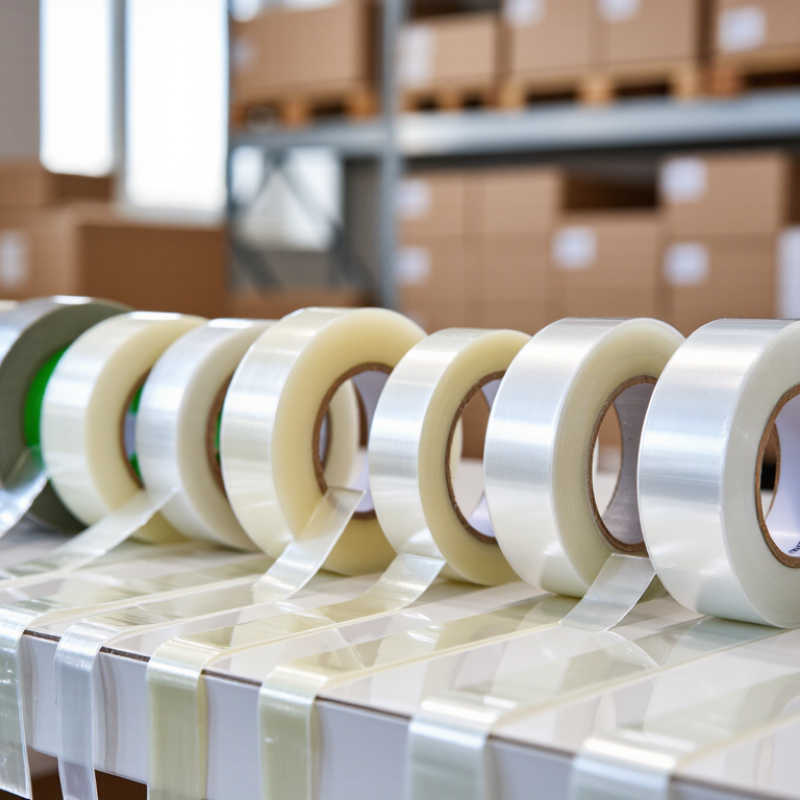
Polyethylene (PE) tape has a thin plastic film backing coated with pressure-sensitive adhesive. The backing can flex around curved cartons, pipes, or uneven surfaces. Adhesive formulations vary, so two tapes that look alike may behave differently. Some prioritize quick tack; others aim for cleaner removal or better moisture resistance.
PlasticsEurope’s Plastics—The Fast Facts 2023 reports global plastics production of 400.3 million tonnes in 2022. That figure covers many plastics, not PE tape specifically, but it shows the scale of the material supply chain. PE tape is used for bundling, temporary surface protection, packaging, and selected construction tasks. Fit matters. A practical blind spot is assuming that “water-resistant” also means suitable for prolonged outdoor exposure. Sunlight, heat, and surface dust can weaken performance.
For buyers, check the film thickness, adhesive type, operating temperature, and removal requirements. Test a small area first, especially on painted walls or delicate finishes. Not all surfaces respond alike. Leave the tape in place for the intended period, then inspect for residue or lifting. A short trial may reveal what a specification sheet cannot: real-world surfaces are rarely perfectly clean or uniform.
Choosing among PE tape suppliers requires more than comparing quoted prices. Ask for a specification sheet covering backing thickness, adhesive type, peel strength, and recommended application conditions. Check whether the tape suits your actual surface, such as a smooth panel or a slightly textured plastic part. A sample roll can reveal edge lifting, residue, or uneven unwind that a product sheet may not show. Test it under your own storage and use conditions. Small differences matter.
Tips: Request samples from shortlisted suppliers and apply them to representative surfaces. Record application temperature, dwell time, and removal results. Ask how batches are identified and how quality issues are handled. Review available test reports, production capacity, minimum order quantities, and typical lead times. For international orders, confirm export packaging, shipping terms, and whether documents can be prepared for your destination. Keep answers in writing.
A low price can be appealing, but unstable supply may cost more later. Compare communication quality, too: clear replies about tolerances and production changes are useful evidence of process control. Do not treat one successful sample as a guarantee; repeat tests when specifications or production batches change. Supplier assessment is rarely perfect, and that is worth admitting. Build a small trial order into your decision rather than relying on promises alone.
The leading PE tape suppliers stand out through specific production strengths, not broad promises. Some control film extrusion in-house, which helps keep thickness consistent across long rolls. Others focus on adhesive formulation, balancing grip with clean removal from painted metal or plastic. Useful samples should be tested on the actual surface. Lab results alone can miss real-world variation.
A third group offers precise slitting for narrow widths used in assembly lines. Flexible converters handle custom lengths and core sizes, while print-capable plants add clear product or handling information. Outdoor-grade specialists improve resistance to sunlight and moisture. Low-residue producers target applications where cleanup time matters. Each focus serves a different buyer.
The remaining strengths often appear after production. Responsive technical teams can investigate lifting edges, uneven unwind, or adhesive transfer. Export-ready suppliers manage protective packing and provide dependable shipment records. Quality-focused factories retain batch data and check dimensions, adhesion, and appearance. Ask how often those checks occur. A certificate is helpful, but it does not replace a trial roll. Even capable suppliers can miss a detail; specifications and expectations should be confirmed in writing.
Anonymous, representative supplier profiles—not named companies or a verified ranking. Capabilities vary by factory and product grade; confirm specifications and compliance directly with prospective suppliers.
| Supplier Profile | Key Strength | Typical PE Tape Capabilities | Best-Fit Applications | Buyer Checks |
|---|---|---|---|---|
| Integrated film-and-tape producer | Control over multiple production stages can support consistent material supply and coordinated quality checks. | May produce polyethylene backing film in-house and convert it into adhesive tape; available grades, thicknesses, and widths depend on the facility. | High-volume construction, packaging, and industrial orders requiring repeat supply. | Ask which stages are performed in-house, and request technical data sheets, batch records, and sample rolls. |
| Construction protection-film specialist | Experience matching temporary protection products to building surfaces and job-site conditions. | Often offers PE-film protection tapes in multiple colors, widths, and adhesion levels; some products are designed for clean removal within a specified time and on tested surfaces. | Temporary protection of window frames, profiles, panels, and other construction components. | Test adhesion and removal on the actual substrate; confirm exposure limits, storage conditions, and recommended removal time. |
| Surface-protection tape converter | Converting flexibility for customer-specific roll widths, lengths, and packaging formats. | Can slit supplied or locally sourced PE-backed material into specified roll dimensions; customization depends on equipment and minimum order quantities. | Distributors, fabricators, and manufacturers needing tailored roll formats. | Verify tolerances for width, roll length, core size, winding, and edge quality using a pre-production sample. |
| Export-oriented tape manufacturer | Familiarity with export packing, shipping documentation, and international order coordination. | May offer standard PE tape grades alongside export cartons, palletization, and private-label packaging services. | Importers and wholesalers purchasing container or consolidated shipments. | Confirm the named exporter, country of origin, packing list details, lead time, trade terms, and shipment inspection arrangements. |
| Custom-adhesive tape producer | Ability to adjust adhesive formulation or coat weight for different bonding and removal requirements. | Products may use pressure-sensitive adhesive systems; compatibility, initial tack, peel adhesion, and residue behavior are grade- and surface-dependent. | Applications where standard adhesion levels do not meet process or surface requirements. | Request test methods and results, then conduct application trials across relevant surfaces, temperatures, and dwell times. |
| Automotive and appliance protection supplier | Focus on temporary protection needs during assembly, transport, or storage. | May offer PE-backed products with specified adhesion and temperature ranges for particular substrates and process conditions. | Protecting painted, coated, or finished components during handling and transit. | Check compatibility with the exact coating, paint-cure state, temperature cycle, and maximum application duration. |
| Packaging-focused tape supplier | Experience supplying roll formats and packaging configurations for high-throughput operations. | May supply PE film tapes for bundling, temporary sealing, or protection; product suitability depends on tape construction and packaging-line conditions. | Warehousing, parcel operations, and light industrial packaging. | Test unwind, adhesion, roll consistency, and performance on the intended carton or packaging surface. |
| Specialty-color and print-capable supplier | Options for visual identification, color coding, or printed surface-protection messages. | Some converters can provide colored or printed PE film tapes, subject to print method, artwork approval, and order volume. | Product identification, installation workflows, and branded packaging programs. | Approve color and print proofs; confirm ink durability, legibility, artwork ownership, and minimum order quantities. |
| Small-batch custom converter | Potentially flexible order quantities and responsive sampling for niche requirements. | May slit, rewind, or package PE tape to order, often using purchased master rolls rather than manufacturing the film or adhesive. | Prototyping, regional distributors, and specialized low-volume applications. | Clarify whether the supplier manufactures or converts the tape, and evaluate capacity, traceability, and repeat-order consistency. |
| Quality-system-focused manufacturer | Documented production controls can help buyers manage repeatability and supplier qualification. | May maintain defined inspection procedures, product specifications, and lot traceability; certifications and scope must be verified for the facility and product. | Regulated or quality-sensitive procurement programs requiring documented supplier controls. | Request current certificates, confirm their issuing body and scope, and review inspection records and change-control procedures. |
Choosing a PE tape supplier takes more than comparing quoted prices. Request samples with the same width, thickness, and roll length you plan to buy. Check whether the film tears cleanly and whether the adhesive holds on your actual packaging surface. A tape that performs well on a clean carton may behave differently on dusty or recycled board. Ask for product specifications and batch-level quality records. Small differences matter.
Tips: Compare the same test conditions. Record adhesion, unwind feel, and performance after storage. Ask how the supplier handles rejected batches and specification changes. Keep notes. A quick sample check is useful, but it cannot replace production trials.
Pricing should include more than the unit cost. Compare minimum order quantities, packaging, shipping terms, and any setup charges. Then ask about monthly output, current lead times, and how capacity changes during busy periods. A supplier may quote an attractive price but struggle to meet a sudden increase in demand. Request a realistic production schedule and discuss backup stock or staggered shipments. Do not assume every answer is guaranteed; confirm key details in writing. I would still leave room for uncertainty, since forecasts can change and no supplier controls every delay. Start with a manageable order, review delivery consistency, and adjust your buying plan as real performance becomes clear.
Verify the factory, not just the quotation. Ask for its legal business details, production address, and recent batch records. Request samples from a normal production run, not specially prepared rolls. Check that the backing thickness, adhesive type, and roll dimensions match the specification. Small differences matter.
Test peel adhesion using ASTM D3330 and holding power using ASTM D3654. Record the test conditions; results from different methods are not directly comparable. Ask for aging and temperature data if the tape will face heat, humidity, or long storage. A sample may look perfect and still fail after a week on a carton. Paper checks are not enough.
Review traceability, complaint handling, and inspection records before placing a large order. The World Bank’s 2023 Logistics Performance Index assesses 139 economies across six dimensions, including customs and shipment reliability. Use it as context when comparing export routes, not as proof of a supplier’s quality. Confirm packaging, lead times, and shipment documents in writing, then begin with a small trial order. I would still leave room for doubt: a polished audit cannot predict every production variation.

