

A Plate Filter is not a one-size-fits-all purchase. Its performance depends on the slurry, target clarity, operating pressure, and cleaning routine. For global buyers, supplier choice also affects commissioning, spare-parts access, and production uptime. A polished catalog is useful, but it cannot replace practical questions about real operating conditions. Ask which plate materials are available, how filter cloth is selected, and what testing supports stated capacity. Small details matter. A brief discussion about feed variation may prevent a costly mismatch later. Still, no supplier can promise identical results across every process.
This guide compares seven suppliers using criteria that matter to industrial buyers: engineering capability, configuration range, documented quality controls, delivery reach, and after-sales support. Check whether quotations clearly state dimensions, pressure limits, materials, and included accessories. Request references or test data for applications similar to yours, where available. For international orders, clarify packaging, lead times, installation guidance, and how technical questions will be handled across time zones. Price still matters. Yet the lowest initial quote may omit cloth, spare parts, or service that affects total ownership cost. Confirm the expected maintenance schedule and availability of replacement components before making a decision. Published specifications do not always predict performance when feed conditions change. Use this shortlist as a starting point, then verify critical claims directly with each supplier.
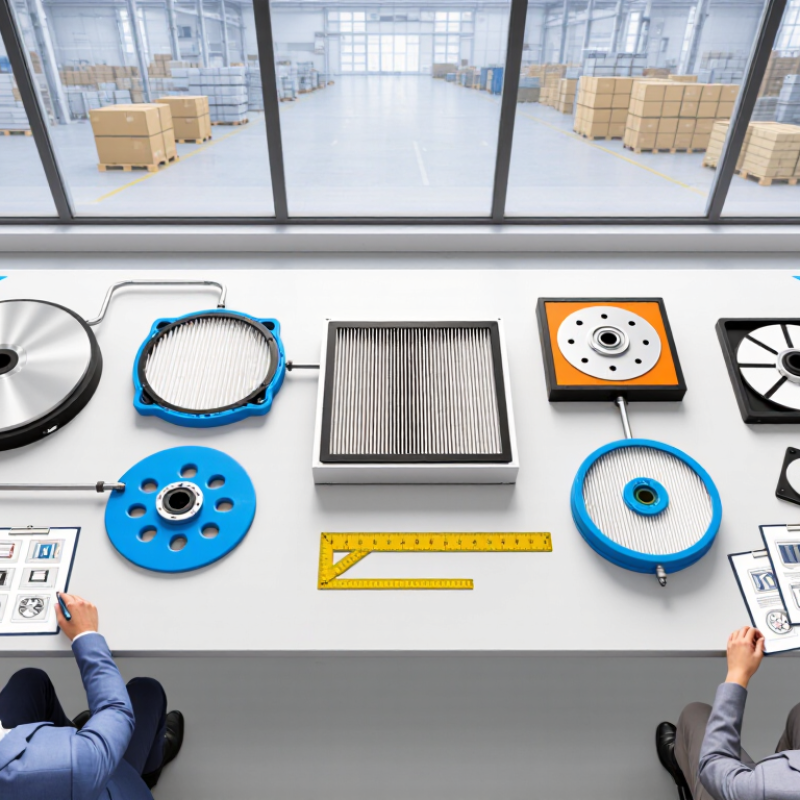
Plate filters separate suspended solids from liquids by pressing slurry through porous media held between rigid plates. In a plate-and-frame press, pressure forms a solid cake while filtrate drains through channels. These systems serve mineral processing, chemicals, food ingredients, and wastewater treatment. The term “plate filter” can describe different equipment, so confirm the exact configuration before comparing suppliers.
The broader industrial filtration market offers useful context, though it is not specific to plate filters. Grand View Research estimated that market at USD 34.68 billion in 2022 and projected a 4.6% compound annual growth rate from 2023 to 2030. Actual performance depends on slurry properties, cloth choice, pressure, and cleaning routines. A neat catalogue number rarely tells the whole story; plant trials can reveal details that specifications miss.
Tips: Ask suppliers to test your actual slurry. Check cake moisture, filtrate clarity, cycle time, and cloth life. Small differences matter. Record operating conditions, since results from a different feed may not transfer reliably.
When evaluating plate filter suppliers, begin with the actual process conditions: slurry characteristics, operating pressure, temperature, and required cake dryness. A supplier should ask for these details before recommending a filter or plate material. Ask for drawings, material specifications, and documented pressure ratings, then check that they match your operating requirements. Small details matter.
Review plate construction, sealing surfaces, cloth compatibility, and the availability of replacement parts. Ask for a sample plate or arrange a technical inspection where practical. A clean-looking unit is not proof of consistent manufacturing; inspect welds, dimensions, and finish against agreed specifications. Request references from applications with similar feed materials, not simply a list of well-known customers.
Technical support matters after delivery. Confirm response times, installation guidance, troubleshooting options, and access to spare parts in your region. Compare the full ownership cost, including freight, maintenance, cloth changes, and expected downtime. A checklist can still miss things. Buyers sometimes focus on purchase price and overlook how difficult it is to clean or service a unit on site. Ask suppliers to explain assumptions in writing, and treat vague performance promises cautiously.
Seven leading plate filter suppliers for global buyers are best compared by verified process fit, not catalog claims. Build a shortlist around seven capabilities: recessed-chamber units, membrane squeeze presses, corrosion-resistant designs, mining-scale systems, food-contact equipment, compact pilot presses, and strong local service. Match each option to slurry solids, particle size, temperature, and washing needs. The World Bank Group’s 2020 Minerals for Climate Action report estimated a sharp rise in demand. Demand for key minerals used in clean-energy technologies could grow nearly 500% by 2050. This supports the case for scalable dewatering, but does not prove any supplier’s performance. Test the slurry.
Ask suppliers for cycle-time records, cake-moisture results, filtrate clarity, cloth-life assumptions, and references with similar feed. Request a trial using your actual slurry; laboratory samples can miss seasonal variation. Compare plate area and hydraulic pressure with footprint, energy use, spare-part lead times, and cross-border service coverage. A low purchase price may become expensive when delayed seals stop a line. No shortlist is perfect. Clean comparisons can still miss operating realities. Check documentation, operator training, and maintenance access before award. Suppliers should state test conditions and tolerances, not only ideal results. Ask what changes when feed chemistry shifts.
7 Best Plate Filter Suppliers for Global Buyers
Comparing Product Range, Quality, and Service
A useful supplier comparison starts with the process, not a catalogue. Check available plate sizes, filtration area, pressure ratings, and cloth options against your slurry and target cake moisture. UN-Water’s 2024 World Water Development Report notes that agriculture accounts for about 70% of global freshwater withdrawals. For water-intensive operations, reliable solids separation can support reuse and reduce avoidable water demand. The exact benefit depends on the process.
Quality claims need evidence. Ask for material traceability, pressure-test records, and cloth compatibility data, then compare them with your operating conditions. ISO 9001 certification can indicate a quality-management system, but it does not prove that a filter press suits your application. Request test results using a representative slurry where possible. A clean catalogue is not enough.
Service can decide whether equipment stays productive after installation. Compare spare-parts availability, commissioning support, troubleshooting response times, and documentation in the languages your operators use. Ask how the supplier handles cloth blinding or uneven cake release; these details often matter more than a polished brochure. One caution: a supplier’s quoted cycle time may not match a real plant. Pilot results are more useful, though they can still miss seasonal feed changes.
Suggested evaluation weighting for comparing suppliers: product range (20%), material compatibility (18%), quality and traceability (16%), customization (14%), delivery and logistics (12%), after-sales service (12%), and lifecycle cost (8%). These are planning weights, not supplier-specific ratings or verified market data.
When comparing plate filter suppliers, begin with the process, not the catalogue. Record slurry type, solids concentration, operating temperature, target cake moisture, and required throughput. Then confirm plate dimensions, chamber volume, filtration pressure, and cloth material. Small mismatches can slow a line or leave wet cake behind. Details matter.
Ask suppliers to explain how they would test your actual feed, including sample size, test conditions, and reported results. Request drawings, material specifications, inspection records, and a clear list of wear parts. A polished datasheet is useful, but it cannot replace a trial. Check whether the supplier can support installation, operator training, and replacement cloth delivery in your region. Compare lead times and shipping terms in writing; vague promises are hard to plan around. References from facilities with similar slurries can reveal practical issues that sales documents may miss.
Price deserves scrutiny. Compare the full cost of plates, cloth, maintenance, and downtime, not just the machine quote. Ask what is excluded, and who handles commissioning if schedules change. I would also challenge my own shortlist: the most familiar specifications may not suit a different feed. Supplier responses to difficult questions can be informative, though not conclusive.
| Supplier Profile | Typical Plate Offering | Best Fit For | What to Verify Before Ordering | Potential Trade-Off |
|---|---|---|---|---|
| 1. Filter Press Equipment Manufacturer | Plates designed for the manufacturer’s own press models; commonly recessed-chamber or membrane designs, depending on the product range. | Buyers purchasing a complete press, replacing plates on a known machine, or seeking one supplier for equipment and parts. | Confirm press model, plate dimensions, closing arrangement, feed and corner-port layout, operating pressure, temperature limits, and cloth fit. | Compatibility is usually clearest for its own equipment; replacement options for other press brands may be limited or require engineering review. |
| 2. Specialist Filter Plate Manufacturer | Replacement plates in materials such as polypropylene, with options that may include recessed, membrane, or plate-and-frame designs. | Buyers who need replacement plates, multiple plate configurations, or a plate-focused source rather than a complete press. | Request dimensional drawings, material and resin information, plate weight, tolerances, pressure and temperature ratings, and sample inspection records. | Product range and quality-control capability vary; confirm that the supplier can reproduce the required plate geometry consistently. |
| 3. Membrane Plate Specialist | Membrane plates with a flexible diaphragm for squeezing cake after the initial filtration stage; designs and materials vary by application. | Processes where additional cake dewatering may be valuable and the press, feed system, and cycle are suitable for membrane squeezing. | Check diaphragm material, squeeze-medium requirements, allowable squeeze pressure, temperature and chemical compatibility, and the matching fixed-plate arrangement. | Requires compatible press controls and operating procedures; membrane performance should be validated using the actual slurry and cycle conditions. |
| 4. Recessed-Chamber Plate Specialist | Recessed plates that form filtration chambers when assembled as a plate pack; configurations include different feed, drainage, and cloth arrangements. | Routine solid-liquid separation applications where a conventional chamber press is already in use or specified. | Match chamber depth, plate thickness, sealing surface, feed opening, drainage pattern, handles, and plate-pack dimensions to the press. | Chamber capacity and cake thickness are design-dependent; a visually similar plate is not necessarily interchangeable. |
| 5. Metal Plate and Severe-Service Specialist | Metallic plate or plate-and-frame components, often considered for applications where polymer plates may not meet temperature, strength, or process requirements. | Specified applications requiring a metallic construction, subject to process engineering review and equipment compatibility. | Confirm alloy grade, corrosion compatibility, pressure and temperature design limits, surface finish, gasket arrangement, and applicable inspection documentation. | Material suitability depends on the process chemistry; metallic construction can involve higher weight and different maintenance requirements than polymer plates. |
| 6. Regional Filter-Press Distributor or Stockist | Locally stocked or sourced replacement plates and related items, with availability dependent on the distributor’s supply network. | Buyers prioritizing local communication, shorter replenishment routes, or support with import and delivery coordination. | Ask who manufactures the plates, verify traceability and technical documentation, and obtain written confirmation of dimensions and compatibility. | Stock availability and technical support vary by distributor; confirm lead time, warranty responsibility, and the source of replacement parts. |
| 7. Custom Replacement and Engineering Supplier | Made-to-order plates or modifications based on drawings, samples, or measurements; feasibility depends on tooling and engineering capability. | Legacy presses, discontinued plate patterns, or applications needing a documented dimensional adaptation. | Provide a complete drawing or sample and check measurement method, tolerances, tooling charges, prototype approval, material data, and repeat-order controls. | Custom tooling can affect cost and lead time; approve a first article and a fit check before placing a production-volume order. |
| These are supplier categories, not ranked or named companies. Select a supplier by matching the plate to the press and process. Before requesting a quotation, prepare the press make and model, plate dimensions, chamber depth, feed-port layout, plate material, cloth details, operating pressure and temperature, slurry chemistry, order quantity, and delivery destination. Request a dimensioned drawing, material documentation, inspection details, warranty terms, and a written lead time. | ||||

