

China Top 10 Ferrous Sulfate Pills Suppliers for Global Buyers
China is a major sourcing market for Ferrous Sulfate Pills, but a supplier list alone cannot establish product quality or reliability. Global buyers need to compare manufacturers and exporters against clear, verifiable criteria. These include active ingredient strength, tablet specifications, batch consistency, packaging options, production capacity, and export experience. Details matter. A stable product on paper may still require careful review of its batch records and shipping conditions.
This guide introduces ten China-based suppliers for buyers beginning that review. It considers the information companies make available about their products, manufacturing operations, quality systems, and international services. Buyers should request current specifications, certificates, sample documentation, and written answers about traceability before making a decision. Requirements can differ by destination and intended use, so confirm applicable local rules with qualified professionals. That step is not optional. Supplier claims should be checked against documents and, where appropriate, independent testing. A ranking is only a starting point, not an endorsement. Some public information may be incomplete or out of date, and that deserves attention rather than guesswork. By comparing evidence, communication, and practical supply terms, buyers can build a more informed shortlist of Ferrous Sulfate Pills suppliers.
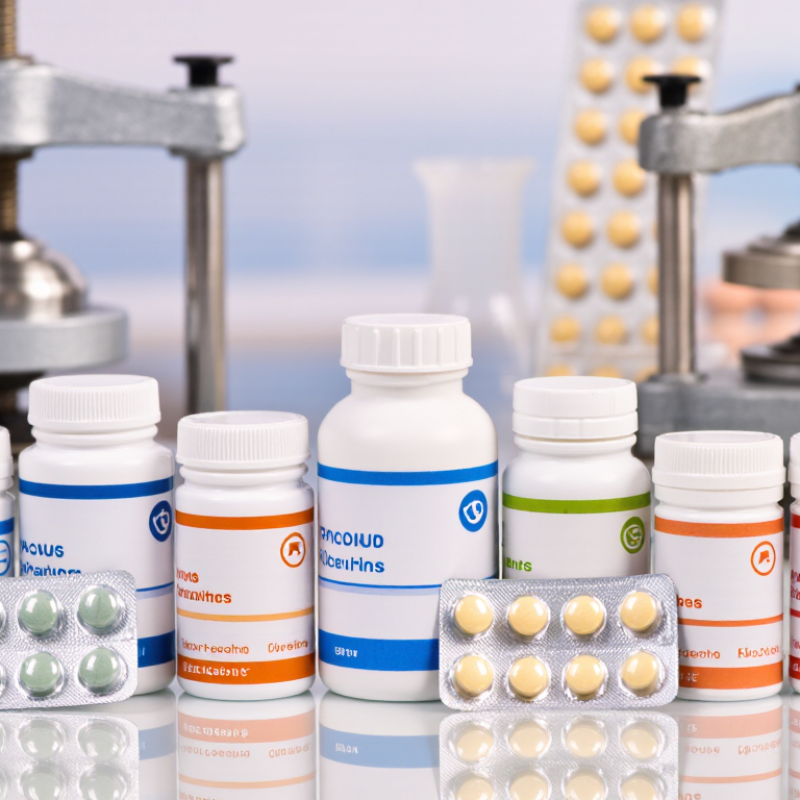
Understanding Ferrous Sulfate Pills and Their Global Uses
Ferrous sulfate pills provide iron in a form the body can use to make hemoglobin, the protein that carries oxygen in red blood cells. Clinicians may recommend them when tests confirm iron deficiency, including some cases of iron-deficiency anemia. Not every case of fatigue means low iron. Blood tests and medical history help distinguish deficiency from other causes.
The need is substantial. The World Health Organization’s 2023 Global Anaemia Estimates report that about 30% of women aged 15–49 had anemia in 2019; prevalence was about 37% among pregnant women. These figures describe anemia, not iron deficiency alone. The U.S. National Institutes of Health Office of Dietary Supplements lists daily iron requirements of 8 mg for adult men and 18 mg for adult women aged 19–50. Tablet strength and elemental iron content vary, so buyers and care teams should check the label rather than compare pill weight alone. Small detail. Oral iron can cause nausea, constipation, or dark stools, and absorption may be affected by food or other medicines. A reliable supply matters, but appropriate testing, clear labeling, and professional guidance matter just as much. WHO estimates are useful, yet they cannot explain every patient’s needs.
China Top 10 Ferrous Sulfate Pills Suppliers for Global Buyers - Understanding Ferrous Sulfate Pills and Their Global Uses
Supplier evaluation framework for global buyers — company names are omitted; entries are selection criteria, not a verified supplier ranking.
| No. | Supplier Evaluation Dimension | Relevant Data or Buyer Guidance | Why It Matters |
|---|---|---|---|
| 1 | Active ingredient identity | Ferrous sulfate is iron(II) sulfate, with the formula FeSO4. Confirm the exact hydrate form stated in the product specification. | Hydration state affects molecular mass and the amount of elemental iron supplied per unit weight. |
| 2 | Hydrate form and iron content | Theoretical iron content is approximately 20.1% for ferrous sulfate heptahydrate (FeSO4·7H2O) and 32.9% for the monohydrate (FeSO4·H2O). | Compare elemental-iron content, not just the mass of ferrous sulfate, when reviewing tablet strengths. |
| 3 | Tablet strength and labeling | Ask whether the declared strength refers to ferrous sulfate salt or elemental iron. Verify the amount per tablet and serving on the approved label. | Strength conventions and labeling requirements can differ by market and product category. |
| 4 | Quality documentation | Request a lot-specific certificate of analysis (CoA), specification, safety data sheet (SDS), and applicable test methods. | These records support identity, assay, impurity, traceability, and safe-handling checks. |
| 5 | Pharmaceutical quality system | For medicinal tablets, confirm the manufacturing authorization, site quality controls, and good manufacturing practice (GMP) evidence required by the destination market. | A raw-material or food-grade certificate alone does not establish that a finished medicine meets local requirements. |
| 6 | Pharmacopoeial or market specification | Specify the applicable standard, such as a relevant national pharmacopoeia, where required, and confirm the current edition and test scope. | Standards and registration requirements vary by jurisdiction and intended use. |
| 7 | Tablet performance | Review finished-product data for uniformity of dosage units, disintegration or dissolution, and stability using methods appropriate to the product and market. | Tablet performance depends on the complete formulation and manufacturing process, not solely on the active ingredient. |
| 8 | Packaging and shelf life | Check proposed packaging, storage conditions, expiry date, and stability support. Iron(II) compounds can be sensitive to oxidation under some conditions. | Appropriate packaging and validated storage conditions help preserve product quality during distribution. |
| 9 | Global use and regulatory classification | Ferrous sulfate tablets are used as an oral iron source, including in the prevention or treatment of iron deficiency when clinically appropriate. Classification and permitted claims vary by country. | Confirm whether the product is regulated as a medicine, supplement, or another category in the target market. |
| 10 | Export and supply capability | Assess batch traceability, export documentation, lead time, minimum order quantity, shipping conditions, and the supplier’s process for handling complaints or recalls. | Operational readiness helps buyers manage import compliance, continuity of supply, and post-market responsibilities. |
Note: The iron percentages above are theoretical values calculated from the chemical formulas; actual product specifications and tablet content should be verified against lot-specific documentation and applicable regulations.