

Choosing a China Top Mother Roll Reel Manufacturer and Supplier requires more than comparing prices. It requires clear specifications, stable production, and dependable communication. A Mother Roll Reel may look simple, yet its width, thickness, winding tension, core size, and surface quality affect every converting stage. One small variation can create wrinkles, uneven feeding, or material waste. That is why experienced manufacturers confirm application details before recommending a production solution.
Reliable suppliers usually provide practical evidence of their capabilities. This may include raw material inspection, production records, sample testing, and shipment checks. Buyers should ask about tolerance control, roll hardness, joint management, packaging, and traceability. Factory experience matters, but it should be supported by measurable processes. Photos are useful. Test data is better. A clear quality agreement is better still.
No supplier is perfect. Even careful production can face changing material behavior or transport conditions. We have learned that honest communication prevents larger problems. A responsible manufacturer explains limitations instead of promising everything. It also responds when a customer reports an unstable roll, unclear label, or damaged edge. Small details matter. Protective wrapping, firm pallets, moisture control, and accurate markings can protect the reel before it reaches the customer.
For overseas buyers, supplier reliability also includes export experience, consistent documentation, and responsive after-sales service. The right partner should understand both manufacturing and practical use. This article examines the qualities that define a capable Chinese Mother Roll Reel manufacturer and supplier, helping buyers evaluate performance, consistency, and long-term cooperation with greater confidence.
China Top Mother Roll Reel Manufacturer and Supplier
What Is a Mother Roll Reel?
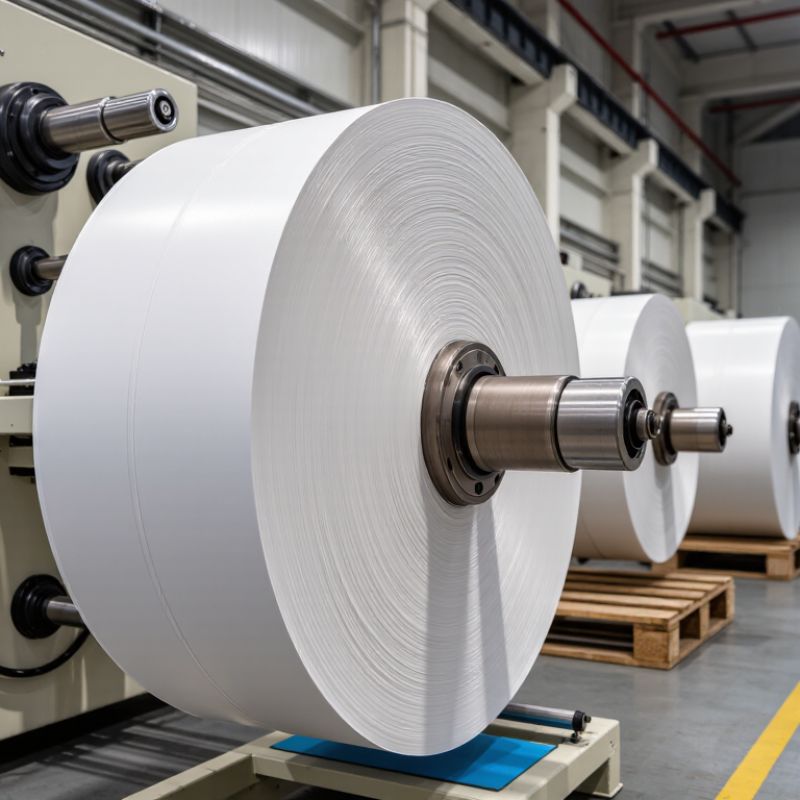
A mother roll reel is a large, continuous roll of packaging film, paper, foil, or coated material. It is not a finished pouch. Converting lines slit, laminate, print, or rewind it into smaller production reels. In practical terms, it resembles a wide film cylinder, often several meters across. Its width, diameter, core size, and winding tension must match the customer’s equipment.
According to The Future of Flexible Packaging to 2029, global flexible packaging demand is forecast to grow by about 4% annually through 2029. Another 2024 flexible packaging market outlook reports a projected compound annual growth rate near 4.8% through 2030. These figures increase pressure on reel consistency. A single uneven edge can cause web wrinkles, telescoping, or machine stoppages.
For a dependable mother roll reel, material thickness needs tight control. A 12-micron film may expose defects faster than a thicker structure. Winding tension must remain stable from the core to the outer layer. Core alignment matters too. Small errors become expensive at high speed. Production inspection should include width, gauge, splice quality, surface appearance, and roll hardness.
Experience shows that “large” does not mean “ready.” A technically strong reel can still fail when its core or width mismatches the converter. Forecasts also contain uncertainty. Demand may change with food packaging, transport costs, and recycling requirements. That is why specifications should be confirmed before production, not corrected afterward.
Mother roll reels are the starting point for stable industrial production. They hold large, continuous webs of paper, film, foil, or nonwoven material before slitting, coating, printing, or laminating. A properly wound reel reduces splice frequency and supports longer machine runs. The 2024 Flexible Packaging Association industry overview places flexible packaging at about 21% of the U.S. packaging market by value. Smithers also forecasts continued global growth through 2028. That growth increases pressure on reel quality and delivery consistency.
In practical production, reel performance depends on web width, basis weight, moisture, core strength, outside diameter, and winding tension. Poor tension can create telescoping edges, crushed cores, or wrinkles near the unwind stand. These defects waste material and slow operators. A reliable supplier should provide dimensional inspection, mass records, batch traceability, and suitable protective packaging. ISO-based quality procedures help, but they do not replace real production testing. The calculation is not always clean. A lighter reel may reduce handling energy, yet it can require more frequent changes. Operators must compare total downtime, not only purchase price.
Tips: Confirm the reel’s maximum mass, core dimensions, and allowable tension before ordering. Request a trial reel when material sensitivity is high. Store reels upright, dry, and away from direct heat. Small storage mistakes can damage a carefully manufactured product.
| Production Dimension | Typical Industrial Data | How the Mother Roll Reel Supports Production | Operational Benefit |
|---|---|---|---|
| Web Material Compatibility | Paper, film, foil, nonwoven materials, laminates, and other flexible webs | Provides controlled unwinding and guiding for continuous roll-fed converting lines. | Supports stable feeding across printing, coating, laminating, slitting, and packaging processes. |
| Roll Width | Common converting range: approximately 600–2,500 mm | Matches the reel structure to the width of the mother roll and the downstream machine. | Improves material utilization and reduces the need for repeated web-width adjustments. |
| Roll Diameter | Typical range: approximately 800–1,800 mm, depending on material and equipment | Accommodates large parent rolls before they are slit or processed into smaller rolls. | Increases the amount of material processed per loading cycle and can reduce changeover frequency. |
| Core and Shaft Arrangement | Core sizes commonly include 3 in and 6 in; shaftless systems may also be used | Supports different roll cores through expandable chucks, mechanical shafts, or hydraulic clamping. | Allows one production line to handle multiple roll specifications with less setup time. |
| Web Tension Control | Closed-loop control commonly uses load cells, dancer rolls, or torque feedback | Regulates unwinding torque as the roll diameter and roll weight decrease during production. | Helps limit wrinkles, telescoping, stretching, and web breaks. |
| Line Speed | Many industrial converting lines operate from about 100 to 600 m/min; actual speed depends on the process | Maintains controlled material delivery at the required machine speed. | Supports higher throughput while helping preserve web alignment and surface quality. |
| Roll Loading | Large mother rolls may weigh from several hundred kilograms to multiple tonnes | Uses powered lifting, cradle, shaft-loading, or shaftless roll-handling systems. | Reduces manual handling and improves loading consistency and operator safety. |
| Automatic Splicing | Flying-splice and zero-speed-splice systems are used according to material and line design | Joins the end of one roll to the next with limited interruption to the continuous web. | Reduces downtime and helps maintain continuous production during roll changes. |
| Edge Guiding | Ultrasonic, optical, or infrared sensors can monitor web-edge position | Corrects lateral movement through an actuator or steering guide. | Improves registration, slit accuracy, coating alignment, and finished-roll quality. |
| Slitting Preparation | Mother rolls are converted into narrower rolls using razor, shear, or crush-cut methods | Delivers a centered and tension-stable web to the slitting section. | Supports consistent slit widths and reduces scrap caused by unstable unwinding. |
| Drive and Braking | Electric drives, pneumatic brakes, hydraulic systems, or regenerative controls may be used | Controls acceleration, deceleration, torque, and stopping during roll handling. | Provides smoother starts and stops while protecting the web and mechanical components. |
| Production Changeover | Changeover time varies with roll weight, automation level, core design, and line layout | Quick-loading mechanisms and preset recipes simplify roll replacement and machine adjustment. | Improves equipment availability and supports smaller production batches. |
| Quality Protection | Common control targets include stable tension, centered tracking, and controlled acceleration | Minimizes contact damage, edge deformation, wrinkles, and uneven roll build. | Helps maintain consistent appearance, dimensions, and downstream process performance. |
| Safety Functions | Typical safeguards include emergency stops, guarding, interlocks, overload protection, and chocks | Controls access to rotating parts and stabilizes heavy rolls during loading and operation. | Reduces risks associated with stored mechanical energy, moving webs, and heavy roll handling. |
| Energy and Maintenance | Efficient motor control, accessible components, and condition monitoring are common design priorities | Reduces unnecessary idling, simplifies inspections, and helps identify wear in bearings, brakes, and drives. | Supports predictable maintenance planning and long-term production reliability. |
China Top Mother Roll Reel Manufacturer and Supplier
Key Features of a Leading Chinese Manufacturer
A leading Chinese mother roll reel manufacturer starts with stable raw materials and measurable process control. Paper, film, foil, and nonwoven substrates need different tension settings. One careless adjustment can create telescoping edges, wrinkles, or uneven winding. That is why experienced factories record roll hardness, web tension, moisture, and core alignment for every production batch.
Smithers’ global flexible packaging research valued the market at about USD 201.8 billion in 2023. The report also highlights lightweight structures and efficient converting as major industry directions. A capable Chinese supplier should therefore offer accurate slitting, clean edges, and consistent reel diameters. Practical details matter. Operators should inspect knife wear, remove dust near the winding station, and protect finished reels with moisture-resistant packaging. Small controls prevent expensive production stoppages.
Quality evidence should be visible, not merely promised. Reliable manufacturers provide material certificates, inspection records, traceability codes, and sample approval before mass production. ISO 9001-based procedures can strengthen this system, but certification alone is not enough. FAO data recorded global paper and paperboard production above 400 million tonnes in recent years, showing the scale of demand and competition. Export experience also requires careful labeling, pallet balance, and documentation. No factory is perfect. Even a well-controlled line may need adjustment when humidity changes, so honest suppliers explain limits and corrective actions.
Material selection directly affects mother roll weight, rigidity, corrosion resistance, and operating performance. The chart compares approximate room-temperature densities of commonly considered roll-construction materials. Carbon steel and stainless steel provide high structural strength, aluminum supports lightweight designs, and carbon-fiber composites offer the lowest density among the listed materials.
A reliable mother roll reel begins with controlled material selection. Common substrates include BOPP, PET, PE film, aluminum foil, and coated paper. Each material responds differently to heat, tension, humidity, and adhesive contact. Smithers’ The Future of Global Flexible Packaging to 2028 reported continued growth in flexible packaging demand, increasing pressure on converters to reduce waste and improve roll consistency.
Material certificates should identify thickness, tensile strength, surface treatment, and batch traceability. Recycled content may support sustainability goals, but it can also create wider thickness variation. That trade-off deserves careful testing.
Production normally includes unwinding, coating or laminating, slitting, edge trimming, and controlled rewinding. Experienced operators monitor web tension continuously. Excessive tension can deform the core or cause telescoping edges. Insufficient tension may create wrinkles, air pockets, and unstable rolls. Core concentricity matters too. Small alignment errors become obvious on larger reels.
Quality control should combine laboratory testing with visual inspection. ISO 9001 provides a practical framework for documented processes, corrective actions, and traceability. The ISO Survey 2022 recorded more than 1.2 million ISO 9001 certificates worldwide, showing its broad industrial acceptance. Relevant tests may follow ASTM or ISO methods for thickness, bond strength, coefficient of friction, and winding hardness. A perfect reel is an attractive phrase, not a measurable manufacturing reality. Even strong suppliers should review defects, not hide them.
How to Choose a Reliable Mother Roll Reel Supplier in China
Choosing a reliable mother roll reel supplier requires more than comparing prices. Start by checking production experience, material knowledge, and quality control procedures. A capable supplier should explain reel dimensions, core options, load capacity, and suitable packaging without vague promises. Ask for recent product samples. Inspect the winding tension, edge protection, surface finish, and label accuracy. Small defects often appear during transport, not during a quick factory visit.
Request clear technical documents, including material specifications, inspection reports, and tolerance standards. A trustworthy manufacturer should provide traceable batch records and explain how workers handle moisture, dust, and deformation risks. Factory communication matters too. Delayed replies may become serious problems during production changes. Video audits can help, but they cannot replace physical inspection. This is easy to overlook.
Tips: Compare at least three suppliers using the same specification sheet. Confirm sample approval before mass production. Ask how rejected reels are recorded and corrected. Check whether packaging suits your shipping route and warehouse conditions. Discuss lead times in writing, including inspection and replacement procedures. Price is important, but an unusually low quotation may hide thinner materials or weaker protection. I have seen buyers focus too heavily on unit cost, then spend more on delays and rework. A careful supplier should welcome practical questions, even uncomfortable ones.

