

Fiberglass Drill Bits serve a demanding role: they must cut reinforced laminates without leaving rough edges, frayed fibers, or excessive heat. For buyers, the choice is not simply about price. Bit geometry, abrasive resistance, shank stability, and consistent production all matter. A clean hole begins with the right tool.
The broader market is growing. MarketsandMarkets’ Fiberglass Market report estimated global market value at $13.1 billion in 2023 and projected $17.3 billion by 2028. This figure covers fiberglass materials, not drill bits, so it should not be mistaken for drill-bit market data. Still, it points to expanding demand across applications that require reliable composite machining.
Dr. John Summerscales, a composites researcher, has contributed extensively to composites engineering. A practical takeaway from his work is that machining performance depends on the material system and process—not the tool alone. This is a paraphrase, not a verified direct quotation. That distinction matters. A supplier’s claims deserve the same scrutiny as its sample bits.
This guide compares Chinese manufacturers by product specifications, quality controls, customization, and export experience. Look closely at the hole edge. Check the bit after repeated cuts. Ask how performance is tested. A polished catalog is not proof. Even a strong sample may not reflect every production batch, and that uncertainty deserves attention.
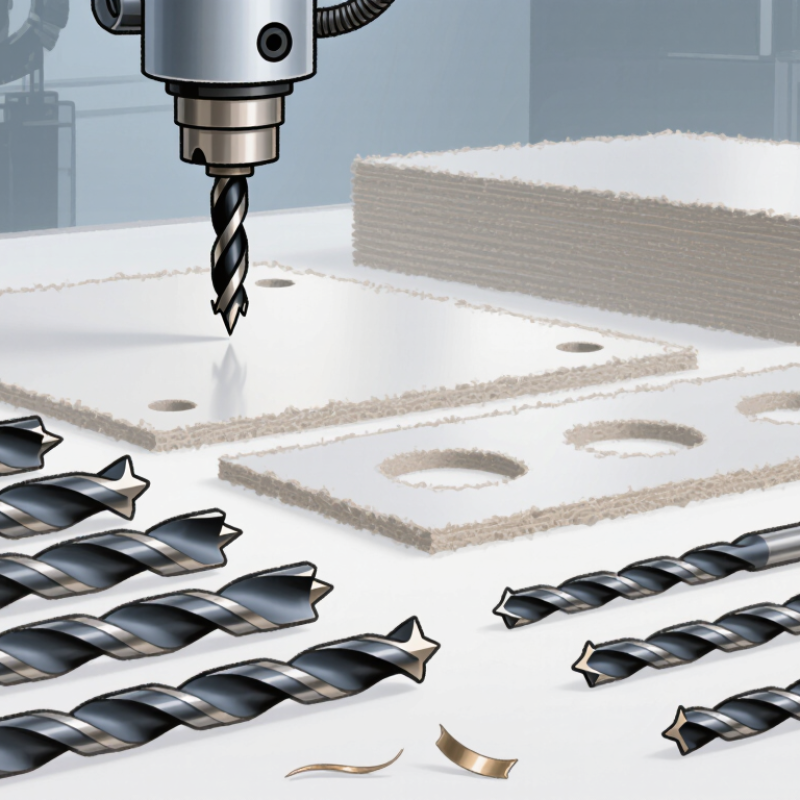
Fiberglass drill bits are designed to cut reinforced plastic without tearing its brittle surface. Many are sharp-pointed high-speed steel or carbide bits. A clean cutting edge matters more than a special label.
Fiberglass is abrasive, and a dull bit can heat the resin or lift fibers. Use a steady, moderate speed and light pressure. Place scrap wood behind the panel to reduce breakout. That sounds simple. It is not always.
For a hand drill, mark the hole and cover the spot with masking tape to limit surface splintering. Start with a small pilot hole when accuracy matters, then enlarge it gradually. Keep the panel supported and clear dust with suitable extraction and eye and respiratory protection.
One caveat: bit geometry and panel construction vary, so test on an offcut when possible.
Industry demand offers useful context, not a drilling rule. GWEC’s Global Wind Report 2024 recorded 117 GW of new wind capacity in 2023, while the IEA’s Renewables 2023 forecast 3,700 GW of renewable capacity additions by 2028. Wind blades use composite materials, including fiberglass, but these figures do not specify drill-bit demand. A bit’s packaging alone cannot tell you whether it will leave a clean hole.
A high-quality fiberglass drill bit starts with a tip that cuts cleanly instead of forcing fibers apart. For many panels, a sharp carbide-tipped or abrasion-resistant point holds its edge better than ordinary steel. The right geometry still depends on laminate thickness and hole size. That matters.
Well-formed flutes should clear fine dust without clogging, since packed debris increases friction and can scorch resin. A rigid shank and concentric tip help the bit track across a slick surface. Visible runout may leave oversized, ragged holes. Small details count. There is no single tip shape that suits every fiberglass layup, so clear material and size guidance from a manufacturer is valuable.
Durability is not the only test. On a scrap offcut, a good bit should leave a round hole with little breakout or fuzzy fiber. Use controlled speed, light pressure, and a backing board to support the exit side. Keep it steady. Even a well-made bit can damage a brittle panel if pushed too hard. In regular shop use, inspect the cutting edge after several holes; fiberglass can wear it faster than wood. A polished surface may reduce resin buildup, but it cannot rescue a dull edge.
Manufacturing fiberglass drill bits in China starts with choosing a geometry suited to brittle, abrasive laminates. Factories typically form the cutting edge from high-speed steel or carbide blanks, then use precision grinding to create the point and flute. The edge must cut cleanly without pulling glass fibers from the panel. Small details matter: a polished flute helps clear pale fiberglass dust, while controlled point geometry reduces wandering on a smooth surface.
Production then moves through heat treatment, optional surface finishing, and inspection. Operators may check diameter, concentricity, edge symmetry, and hardness using gauges and test drilling. Not every supplier uses the same inspection plan, so buyers should request documented tolerances and sample results. A bit can look sharp and still cause fraying. That is easy to miss.
The wider material market helps explain the demand for specialized tooling, but it does not measure drill-bit output. Grand View Research’s Fiberglass Market Size, Share & Trends Analysis Report estimated the global fiberglass market at USD 13.1 billion in 2023, with projected growth through 2030. For manufacturers, that signals a broad material base—not a guarantee of consistent bit quality. Trial drilling on the buyer’s actual laminate remains useful; sometimes the first test exposes a flaw the checklist missed.
Comparing Chinese fiberglass drill bit manufacturers requires more than checking catalog photos and quoted prices. Ask for the intended panel thickness, drill diameter, shank type, and recommended operating speed. A suitable bit should cut cleanly without excessive heat or edge breakout. Small details matter. Compare tip geometry, cutting-edge material, dimensional tolerance, and runout data. A neat catalog is not proof of consistent production.
Request samples and test them on the same fiberglass panel, using identical speed, feed pressure, and backing support. Record hole diameter, fraying, cutting time, and visible wear after repeated holes. One clean cut proves little. Ask how the manufacturer inspects batches, controls tool dimensions, and handles inconsistent results. Review sample inspection records, packaging, lead times, and the clarity of technical replies. If answers stay vague, treat that as a risk. Price still matters, but a cheaper bit may cost more through rework or short service life. And no test setup is perfect; document your conditions before comparing suppliers.
| Evaluation Dimension | Weight | Basic Capability | Strong Capability | Evidence to Request |
|---|---|---|---|---|
| Fiberglass-specific product experience | 20% | Offers general-purpose drill bits and can explain whether they are suitable for glass-fiber-reinforced plastic (GFRP). | Can recommend bit geometry and cutting material for the buyer’s laminate, thickness, and drilling method. | Product drawings, application guidance, and test results on a comparable GFRP material. |
| Cutting material and construction | 15% | Identifies the substrate material, such as high-speed steel or carbide, and provides a clear product description. | Can explain the trade-offs between carbide-based cutting edges and diamond-abrasive options for the intended application. | Material specification, product construction details, and a sample for evaluation. |
| Tip geometry and edge quality | 15% | Provides basic point and flute information and confirms the intended workpiece material. | Offers suitable geometry options and can assess entry and exit quality on the buyer’s actual laminate. | Dimensioned drawings, sample drilling, and inspection of hole edges for breakout or delamination. |
| Size range and dimensional control | 10% | Publishes available diameters, overall length, and shank dimensions. | Provides agreed tolerances and inspection records for the dimensions that affect the buyer’s process. | Product specification sheet, tolerance agreement, and sample measurement report. |
| Customization capability | 10% | Can quote standard products and clarify which dimensions or packaging options can be changed. | Can review custom drawings, confirm manufacturability, and document approved revisions before production. | Quotation against a drawing, revision-controlled sample, and written confirmation of specifications. |
| Quality management and traceability | 10% | Describes its inspection process and can identify the production batch for an order. | Provides documented incoming, in-process, and final inspection controls appropriate to the product. | Current quality-system documentation, inspection records, and batch identification details. |
| Sampling and application testing | 10% | Can supply samples and agree on the basic conditions for a buyer-run trial. | Supports a controlled trial using the buyer’s material, machine setup, and acceptance criteria. | Sample plan and a written test record covering hole quality, process conditions, and observed tool wear. |
| Order terms and delivery planning | 5% | States the minimum order quantity, production lead time, and shipping terms in its quotation. | Confirms timing by order stage and communicates how changes or delays will be handled. | Written quotation, order confirmation, and shipment documentation. Compare like-for-like terms. |
| Communication and technical support | 5% | Responds to specification questions and provides a clear point of contact. | Gives consistent technical answers and records agreed requirements in a written specification. | Response to a technical inquiry and confirmation of the final product requirements. |
Scoring method: Rate each manufacturer from 1 to 5 for every dimension, multiply each rating by its weight, and compare the totals. The weights are a practical evaluation rubric, not measured results for specific manufacturers. Confirm performance with samples and tests using the intended GFRP material; suitability can vary with laminate construction, thickness, machine setup, and drilling conditions.
Before choosing a fiberglass drill-bit manufacturer in China, verify its actual production site, not just its sales office. Request a current ISO 9001 certificate and check the issuing body, factory address, and certified scope. The ISO Survey 2022 recorded 1,265,216 valid ISO 9001 certificates worldwide. That figure reflects adoption, not drill-bit performance. Paper is not proof.
Ask for batch traceability linking the fiberglass reinforcement, bit material, heat treatment, and inspection records to a sample order. Request measurements for diameter, runout, and cutting geometry, plus test results from a laboratory whose ISO/IEC 17025 accreditation covers the relevant tests. Check that reports show methods, dates, and sample identification. Vague “passed inspection” statements are weak evidence.
Order samples from normal production, then test them on the same fiberglass-reinforced panel your customers use. Record hole quality, edge chipping, heat, and bit wear across several holes; one clean cut proves little. A neat sample can still hide inconsistent batches. Ask to witness a production run or arrange an independent factory audit, and compare the delivered batch with the approved sample. If a supplier resists basic traceability, that deserves a second look.
A practical buyer’s checklist: the bars show the number of distinct evidence items to request in each area—not supplier ratings or market statistics.
Request current records and verify that they match the product, facility, and production batch being offered. For fiberglass drilling, ask for product-specific trial results and clear guidance on dust control and safe use.

