

Choosing the right Detachable Sunroom supplier in China is not just a price comparison. It is a check on engineering, documentation, and after-sales support. A low quotation can look attractive beside a neat aluminum frame and clear glass panels. Yet the real test comes with drainage, hardware alignment, replacement parts, and weather exposure.
The United Nations Environment Programme’s 2023 Global Status Report for Buildings and Construction estimates that buildings and construction accounted for 34% of global energy demand and 37% of energy- and process-related carbon dioxide emissions in 2022. These figures cover the wider sector, not detachable sunrooms alone. Still, they underline why material choices and thermal performance deserve careful questions. Ask suppliers for verified product specifications, test records, drawings, glass details, and clear warranty terms. Request photos of completed projects, not only polished renderings. Small details matter.
Architect Louis Sullivan’s famous principle, “form ever follows function,” offers a useful lens for comparing designs. It is an architectural principle, not a product-specific endorsement. A supplier should explain how the structure performs, not only how it looks. Can the roof shed water? Are connectors easy to inspect? What happens when a panel needs replacing? There may be no single best supplier for every project. I would also admit one limitation: brochures rarely show how smoothly a real installation proceeds. This guide will help buyers assess evidence, compare practical capabilities, and spot unanswered questions before choosing a Detachable Sunroom partner.
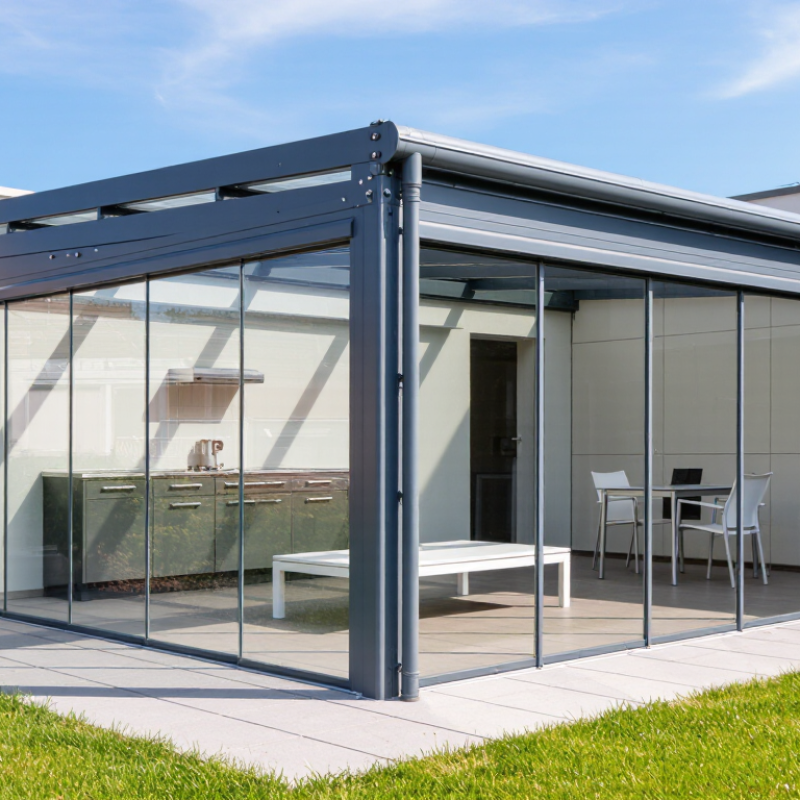
A detachable sunroom uses modular parts, such as framed panels, roof sections, and connectors, to create an enclosed outdoor space. Unlike a permanent extension, it can often be dismantled or relocated. Designs vary, though. Ask how the frame, glazing, seals, and drainage work together in the specific model you are considering.
A capable supplier should provide clear specifications, assembly drawings, material details, and maintenance guidance. Check frame dimensions, panel thickness, connector types, and available replacement parts. Ask how the roof handles rain and where water drains. A brochure is not enough. Request close-up photos or samples of corner joints and seals; small gaps can lead to drafts or leaks. Also confirm whether the quoted configuration suits your site, since wind exposure, foundation level, and installation conditions differ.
Define the project before comparing detachable sunroom suppliers. Record the opening width, projection, roof pitch, attachment points, and intended use. A three-season lounge needs different insulation and ventilation from a heated living area. Note the site’s exposure, too: a coastal balcony and a sheltered garden impose different demands. Small details matter.
The U.S. Department of Energy’s Energy Saver guidance estimates that windows account for 25–30% of residential heating and cooling energy use. This is not a sunroom-specific figure, but it highlights why glazing performance deserves scrutiny. Request documented U-factor and solar heat gain coefficient (SHGC) values, plus test methods for the complete assembly. The National Fenestration Rating Council uses these metrics to report product performance. A glass sample alone cannot tell the whole story.
Tips: Send suppliers a marked-up drawing and a written compliance checklist. Specify the project location, design wind and snow loads, drainage, corrosion exposure, thermal targets, and any applicable safety-glazing or egress requirements. Ask which standards and accredited test reports support each claim, then have a local building professional review the proposed system. Factory certificates may help, but they do not automatically establish local approval. I would verify this early; it can feel tedious, yet late changes are worse.
Check relevant management-system credentials alongside project-specific design and compliance evidence.
The chart shows the publication years of selected ISO standards. These management-system standards do not certify a sunroom product or demonstrate compliance with local building codes. Request project-specific structural calculations, material documentation, and applicable test or conformity records.
Sources: ISO 9001:2015, ISO 14001:2015, and ISO 45001:2018.
Choosing a detachable sunroom supplier in China means checking how products are made, not just how they look online. A factory visit, or a live video walkthrough, can reveal more than polished catalogue photos. Inspect frame joints, corner cuts, weld consistency, and coating around drilled holes. Small details matter. Ask how profiles are measured and how glass or panels are protected during handling. Request current inspection records and a production sample, then compare them with delivered units. One sample is not proof.
Customization should begin with clear drawings and written specifications. Confirm dimensions, roof pitch, opening direction, glazing type, colors, and hardware before production. Ask which changes affect cost or delivery time. An unusual shape may look simple on screen but require extra structural checks. Clear limits are useful. A capable supplier should explain what can be changed and where standard components are safer.
A tidy showroom is not a guarantee; batch consistency still needs checking. Ask how the factory controls tolerances and inspects finished orders. Photos of completed units can help, but confirm they match your chosen configuration. Keep decisions in a shared specification sheet, including packing details and replacement-part availability. Be candid about uncertainty. A missed measurement can cause more trouble than a minor finish flaw.
A detachable sunroom quote should be compared by specification, not headline price. Check the frame material, panel thickness, door hardware, and included accessories line by line. A low offer may exclude anchoring parts or weather seals. Ask for a written bill of materials and clarify whether installation guidance is included. Small omissions add up.
Logistics can change the real cost. Request packed dimensions, gross weight, and the number of crates before comparing freight estimates. Confirm who handles loading, customs documents, and delivery to your site. A narrow driveway or limited unloading space may require a smaller vehicle or extra handling. Details matter. I would not assume a quoted shipping price covers every step; even careful suppliers can leave that unclear.
After-sales support is easier to assess when terms are specific. Ask how quickly the supplier responds to damaged-panel reports, which photos or documents are needed, and whether replacement parts can be shipped separately. Get the warranty period and exclusions in writing, including coverage for seals and hardware. Ask for evidence. A few clear answers before payment are more useful than broad promises, though response times can still vary during busy seasons. Keep the contact person and service process in your order records.
Before selecting a detachable sunroom supplier in China, verify that its factory can build the exact configuration quoted. Ask for a live video walkthrough of the workshop, then compare the aluminum profile dimensions, corner joints, roof panels, and drainage channels with your drawings. Request recent inspection records and a sample assembly video. Check how quickly the frame can be dismantled and whether fasteners remain accessible. Paper is not proof.
A certificate is useful, but it does not confirm that a sunroom will fit your site or withstand local weather. The ISO Survey of Management System Standard Certifications counted about 1.27 million ISO 9001 certificates worldwide in 2022. Treat certification as one screening signal, not a product guarantee. Ask for material specifications, coating details, packing photos, and test reports tied to the quoted model. Where possible, arrange an independent pre-shipment inspection and confirm its checklist in writing. I still find small details easy to miss.
Finalize selection with a contract that names dimensions, glass or panel type, hardware, finish, packaging, delivery milestones, and remedies for defects. Clarify who pays for replacement parts and how warranty claims are documented. Have the supplier mark a production sample against the approved drawings before full production. Keep payment milestones tied to verifiable progress. A rushed decision can still happen. Check every line item before signing.
| Evaluation Dimension | What to Verify | Evidence to Request | Selection Standard | Suggested Weight |
|---|---|---|---|---|
| Business Identity and Export Readiness | Confirm the supplier’s registered business details, manufacturing or trading role, and ability to handle export documentation. | Current business license, company details matching the quotation and contract, export references, and a sample set of shipping documents with sensitive information redacted. | Business details are consistent across documents, and the supplier clearly identifies which activities are performed in-house and which are subcontracted. | 10% |
| Product Specifications | Check the proposed dimensions, frame design, glazing or panel type, roof construction, drainage, connectors, and detachable assembly method. | Dimensioned drawings, bill of materials, installation instructions, product photos, and a written list of standard and optional features. | Specifications are complete, internally consistent, and aligned with the intended site conditions and project requirements. | 12% |
| Materials and Component Traceability | Verify the stated frame material, surface finish, glazing or panel material, seals, fasteners, and other weather-exposed components. | Material specifications, supplier or batch records where available, finish details, and product samples for critical components. | Material descriptions are specific enough to compare offers; vague terms such as “high quality” are not accepted without measurable specifications. | 10% |
| Structural and Site Suitability | Establish whether the design is suitable for the project’s wind, snow, rain, temperature, and installation conditions. | Design loads and assumptions, engineering calculations or test reports where applicable, anchoring details, and installation requirements. | Loads and assumptions are stated for the intended location; obtain review by a qualified local professional when required by local rules or project risk. | 12% |
| Regulatory and Safety Documentation | Identify the destination-market requirements that apply to the complete product and its components. Requirements vary by country and product configuration. | Relevant declarations, test reports, certificates, and the issuing or testing body’s details. Verify document scope, product model, validity, and issuer independently. | Do not treat a generic certificate or a component document as proof that the complete sunroom complies with every destination-market requirement. | 10% |
| Quality Management and Inspection | Review incoming-material checks, in-process controls, final inspection, defect handling, and record keeping. | Quality procedures, inspection checklist, sample inspection records, and corrective-action examples with confidential information removed. | Controls cover measurable product requirements, and inspection results can be linked to the order or production batch. | 10% |
| Factory and Production Capability | Confirm that the stated production process, equipment, staffing, and capacity are consistent with the proposed order and schedule. | Live video walkthrough or independent factory audit, production-flow description, equipment list, and a production schedule for the quoted order. | Observed or independently verified capability matches the supplier’s description; clarify subcontracted work and who controls its quality. | 8% |
| Packaging and Shipping Readiness | Assess protection against handling and transit damage, package identification, loading plan, and shipping responsibilities. | Packing specification, package dimensions and weights, loading photos from comparable shipments, and a written Incoterms® rule and named place. | Packaging suits the product and transport route; responsibilities, costs, and delivery point are stated clearly in the quotation and contract. | 8% |
| Commercial Terms and Cost Transparency | Compare the full scope, exclusions, tooling or sample charges, payment milestones, warranty terms, and quote validity. | Itemized quotation, draft contract, payment schedule, warranty conditions, and a written list of exclusions and optional items. | Compare like-for-like specifications and total landed-cost components; resolve unexplained price differences before placing an order. | 8% |
| Communication and Project Management | Evaluate response quality, technical understanding, document control, and escalation arrangements. | Written answers to the same technical questions, named project contact, revision-controlled drawings, and a communication or approval schedule. | Responses are clear and consistent, and changes to specifications, drawings, and delivery dates are documented. | 5% |
| References and After-Sales Support | Check experience with comparable products and destination markets, plus the process for spare parts, claims, and installation questions. | Verifiable customer references where available, anonymized project records, spare-parts list, and written warranty and claims procedures. | References can be checked with permission; support scope, response process, and responsibility for replacement parts are defined in writing. | 7% |
| Total Suggested Weight | Use the weights as a project-specific comparison framework. Adjust them to reflect the destination market, design complexity, and risk level. | 100% | ||
Final selection method: First exclude suppliers that cannot provide essential business, specification, or compliance evidence for the project. Score the remaining suppliers against the same criteria, verify key documents independently, and approve a production sample or pre-production drawing before confirming the order. A high weighted score supports comparison but does not replace technical review or local regulatory checks.

