

Selecting an Explosion Proof Cctv Camera is a safety decision, not merely a surveillance upgrade. In refineries, chemical plants, grain facilities, and offshore platforms, one loose gland can create serious consequences. The enclosure may look strong. The certification details matter more.
MarketsandMarkets projects the global video surveillance market to grow from about USD 53.7 billion in 2023 to USD 83.3 billion by 2028. That growth increases equipment choices, but it also increases confusion. Meanwhile, the IEC 60079 series defines essential requirements for equipment used in explosive atmospheres. IECEx certification provides an internationally recognized route for demonstrating compliance. These references support careful selection, yet paperwork alone does not guarantee a suitable installation.
As hazardous-area engineer Markus Brunner explains, “A camera is only as safe as its complete certified installation.” That principle shapes the seven practical tips ahead. We will examine hazardous-area classification, enclosure materials, temperature ratings, ingress protection, cable glands, image performance, and maintenance access. Small errors matter. A camera rated for dust may not suit gas. A stainless-steel housing may still fail when its cable entry is incorrectly matched. Infrared lighting can also affect temperature calculations, especially inside compact enclosures.
The recommendations are useful, but not perfect. Site conditions change. Certifications have boundaries. Engineers should verify every marking against the area classification, project specification, and applicable local requirements. A cheaper camera can become expensive after installation changes, replacement delays, or repeated inspections. This guide therefore focuses on evidence, field practicality, and cautious judgment before purchase.
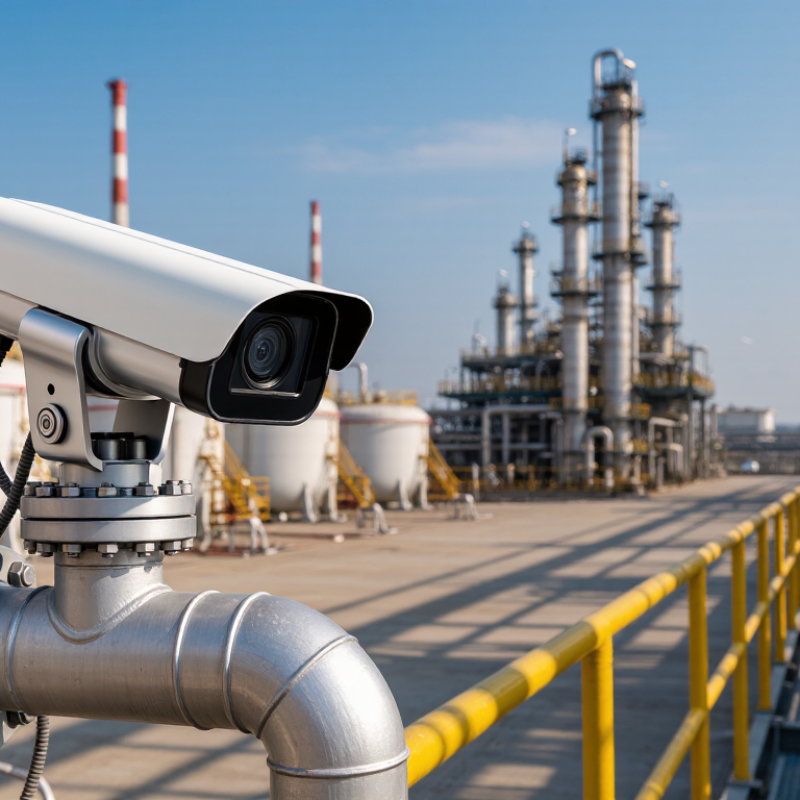
Before choosing an explosion-proof CCTV camera, define the hazardous area precisely. Start with the material: flammable gas, vapor, liquid, or combustible dust. Record its release points, ventilation, operating temperature, and cleaning routine. A leaking pump seal may create a different risk from dust settling on a beam.
IEC 60079-10-1 classifies gas and vapor locations as Zone 0, Zone 1, or Zone 2. IEC 60079-10-2 covers combustible dust zones, including Zones 20, 21, and 22. The camera’s certification must match the zone, gas or dust group, temperature class, equipment protection level, and ambient temperature.
“Explosion-proof” alone is not a sufficient specification. It can hide an expensive mistake.
The surrounding risk deserves attention. NFPA analysis of 2011–2015 data estimated 37,910 industrial and manufacturing fires annually in the United States, causing about 16 civilian deaths, 273 injuries, and 1.2 billion dollars in direct property damage. Those figures do not prove that cameras prevent fires, but they show why area classification cannot be casual.
This step is often underestimated. A camera may meet the zone requirement yet fail because its surface temperature exceeds the process limit.
Review the decision with a competent hazardous-area engineer and challenge assumptions before installation.
7 Tips for Choosing an Explosion Proof CCTV Camera?
Select the Suitable Camera Protection Certification
Choose certification before comparing image resolution or zoom. The camera must match the hazardous area classification at the installation site. Check whether the location involves explosive gas, vapour, dust, or fibres. These conditions require different protection methods. Confirm the zone, equipment protection level, gas or dust group, and temperature class. A camera certified for one environment may be unsuitable elsewhere.
Review recognized certification documents carefully. IECEx or ATEX certification can provide useful technical evidence, but the certificate scope matters more than the logo. Check the exact model, enclosure, power supply, and permitted ambient temperature. Some certificates exclude specific accessories or installation methods. Small details matter. Ask for current certificates, not product-page summaries. The wording should match the proposed installation.
Examine the enclosure rating as well. A strong IP rating helps resist dust and water, but it does not replace explosion protection certification. Inspect cable glands, connectors, viewing windows, and mounting hardware. They must maintain the certified protection system. Consider corrosion, cleaning chemicals, vibration, and direct sunlight. These factors can weaken performance over time. It is easy to overlook the cable entry. That mistake can undermine the entire installation. I would also question unclear claims, especially when a supplier provides impressive specifications without test details. A qualified safety engineer should verify the final selection against local requirements and the site’s risk assessment.
| No. | Selection Tip | What to Check | Relevant Certification or Marking | Typical Hazardous Area | Practical Recommendation |
|---|---|---|---|---|---|
| 1 | Identify the Hazardous Location | Confirm whether the risk involves flammable gas, vapor, liquid mist, combustible dust, or fibers. Review the site classification prepared by a qualified safety professional. | IEC 60079 area classification; ATEX zones; NEC Class/Division or Class/Zone classification, depending on the installation jurisdiction. | Gas or vapor: Zones 0, 1, 2. Dust: Zones 20, 21, 22. North American systems may use Class I, II, or III and Division 1 or 2. | Never select a camera from the product name alone. The camera certification must match or exceed the actual hazardous-area classification. |
| 2 | Verify the Protection Certification | Check that the certificate is issued under a recognized conformity system and that the complete marking covers the intended gas or dust environment. | IECEx certification; ATEX certification under Directive 2014/34/EU; or an applicable national certification such as an approved North American hazardous-location listing. | International projects often specify IECEx or ATEX. North American projects generally require certification accepted for the local electrical code. | Request the certificate number, marking, schedule of limitations, installation instructions, and details for all accessories connected to the camera. |
| 3 | Match the Protection Concept to the Risk | Review the protection method shown in the marking, such as flameproof enclosure, increased safety, intrinsic safety, or a combination of methods. | Common IEC 60079 protection concepts include Ex db, Ex eb, Ex ia, Ex ib, Ex ic, Ex p, and protection concepts for combustible dust such as Ex tb. | Flameproof protection is commonly used for equipment that may contain an ignition source. Intrinsic safety is commonly applied to appropriately designed low-energy circuits. | Do not assume that a sealed housing alone is explosion protection. The complete certified construction, cable entries, joints, and installation method are important. |
| 4 | Check Gas Group and Temperature Class | Compare the site gas or vapor group and maximum surface-temperature requirement with the camera’s certified marking. | Gas groups may include IIA, IIB, and IIC. Temperature classes commonly range from T1 to T6, with T6 allowing the lowest maximum surface temperature. | More stringent groups and lower temperature limits require equipment with an equal or higher level of protection. | For example, equipment marked for IIC and T6 generally covers more demanding gas and temperature conditions than equipment marked only for IIA and T3, subject to the certificate. |
| 5 | Confirm EPL, Zone, and Dust Suitability | For dust-risk locations, verify the dust type, equipment protection level, maximum surface temperature, and protection against dust ingress. | Gas EPLs: Ga, Gb, Gc. Dust EPLs: Da, Db, Dc. Dust markings may include Ex t with a specified protection level and surface-temperature limit. | Zone 20 generally requires the highest dust protection level; Zones 21 and 22 require progressively different levels according to the risk assessment. | Ensure the certification covers combustible dust, not only flammable gas. Dust accumulation and cleaning procedures can affect the temperature risk. |
| 6 | Evaluate Ingress Protection and Environmental Conditions | Consider water, dust, salt spray, chemicals, vibration, impact, sunlight, corrosion, and the full operating-temperature range. | IP ratings are defined by IEC 60529. Common outdoor requirements include IP66; IP67 adds temporary immersion protection when specified by the manufacturer. | Outdoor process areas, washdown locations, coastal facilities, refineries, chemical plants, and dusty industrial environments. | IP protection is not a substitute for explosion protection. Select enclosure materials, coatings, seals, and mounting hardware for the actual environment. |
| 7 | Check Imaging, Installation, and Maintenance Needs | Assess resolution, low-light performance, infrared illumination, viewing angle, optical zoom, latency, network connection, power supply, mounting, and maintenance access. | Review the certified power input, approved cable glands, conduit requirements, equipment protection level, ambient-temperature range, and any certificate limitations. | Continuous monitoring of tanks, loading bays, pipelines, production areas, storage facilities, and perimeter zones. | Use only certified accessories and follow the installation manual. Maintenance, opening, cable replacement, and inspection must follow site permit and hazardous-area procedures. |
7 Tips for Choosing an Explosion Proof CCTV Camera
Tip 1: Define the monitoring task before selecting resolution. A wide loading area may need broad coverage, while an access point needs clear facial detail. Tip 2: Check pixel density at the target distance, not only the advertised megapixel number. More pixels do not fix poor lens selection.
Tip 3: Choose a lens that matches the scene. A fixed lens can work well for a stable doorway, but a varifocal lens allows field adjustments. Tip 4: Test image quality in difficult light. Strong backlighting, dust, glare, and sudden darkness can hide important details. Wide dynamic range and suitable night imaging help, but they are not magic. I have seen excellent cameras fail because the mounting angle was wrong.
Tip 5: Confirm the camera’s hazardous-area certification matches the site conditions and installation zone. Certification details should be verified through official technical documents. Tip 6: Consider enclosure material, temperature limits, cable entries, and cleaning access. A sealed housing is useful only when installed correctly. Tip 7: Calculate storage and network needs from the selected image quality. High detail requires more bandwidth and recording space. Keep some coverage overlap between cameras. It reduces blind spots, though it may increase costs. A practical test with temporary mounting often reveals problems that a specification sheet misses.
Recommended minimum pixel density varies by task. Identification requires the highest image detail, while general observation can cover a larger area with lower pixel density. Use these values to balance camera resolution, lens selection, mounting distance, and coverage in hazardous areas.
Tip 1: Examine the enclosure material carefully. Stainless steel 316L resists salt, moisture, and chemical corrosion in demanding locations. Aluminum can reduce weight, but its coating must remain intact. Look for sealed joints, strong glass, and certified protection for the intended hazardous area. A heavy housing alone proves little.
Tip 2: Treat installation as part of the camera’s safety performance. Use approved cable glands, suitable conduit, and reliable grounding. The mounting surface should resist vibration and support the camera’s full weight. Leave enough space for inspection and cleaning. A qualified technician should verify the installation against local requirements. I once underestimated cable entry quality; moisture entered through a tiny gap.
Tip 3: Match durability to the real environment, not the product sheet alone. Check the operating temperature range, humidity, dust, salt spray, vibration, and possible chemical exposure. An IP66 or IP67 rating helps, but it does not replace correct area certification. Test infrared lighting at night, because nearby metal can create glare and obscure faces. It can be surprisingly difficult.
Keep a simple maintenance record. Note gasket condition, lens clarity, corrosion, and cable wear during each inspection. Weather changes may reveal weaknesses that a factory test misses. I would also review the mounting angle after heavy vibration or storms. Small shifts can reduce coverage, even when the camera still appears fully operational.
Choosing an explosion-proof CCTV camera starts with evidence, not attractive specifications. Check the hazardous-area classification against the installation site. Ask for current compliance certificates from recognized testing authorities. Confirm the enclosure rating and allowable temperature range. Make sure cable glands, connectors, and mounting parts match the same requirements. A document trail matters. Do not rely on a sales sheet alone.
Examine maintenance before installation. Check whether technicians can inspect the lens window, seals, and cable glands easily. Review the recommended cleaning schedule, especially where dust, salt, or chemical vapors are present. Ask about replacement parts and service intervals. Corrosion can appear around small fasteners first. I have seen clear images become useless because the protective window was neglected. That detail is easy to underestimate.
Calculate total operating cost over five years. Include installation, certified cabling, storage, software, inspections, energy use, and replacement parts. Compare the cost of planned maintenance with potential downtime. Test night footage through the protective glass, not only in a showroom. Verify image performance during temperature changes and poor visibility. Consider whether remote diagnostics can reduce site visits. One weakness in this process is trusting estimated service life too quickly. Actual conditions may be harsher than the test environment. Keep a written maintenance record and review it after the first operating season.

