What Is a Chrome Kitchen Faucet?
A Chrome Kitchen Faucet is a kitchen tap with a reflective, chrome-colored finish. The finish is often applied over a base material such as brass or stainless steel, though construction varies by model. Chrome describes the visible surface, not necessarily the faucet’s inner structure. That distinction matters when comparing durability, price, and care instructions.
In a bright kitchen, chrome can catch light from a window and complement stainless-steel appliances. Its smooth appearance also makes water spots and fingerprints easier to notice. Regular wiping with a soft cloth can help maintain the finish; abrasive cleaners may cause damage, so check the manufacturer’s care guidance. Small details count.
This guide looks at how chrome finishes are made, what benefits and limitations they offer, and which features deserve attention before buying. These may include handle style, spout reach, mounting setup, water flow, and compatibility with your sink. A lower price does not always mean lower quality, and a polished look alone cannot tell you how a faucet will perform. It is worth checking the product specifications and warranty rather than relying on appearance. One point is easy to overlook: chrome faucets are not all built the same. Knowing what the finish does—and what it does not tell you—can make the choice clearer.
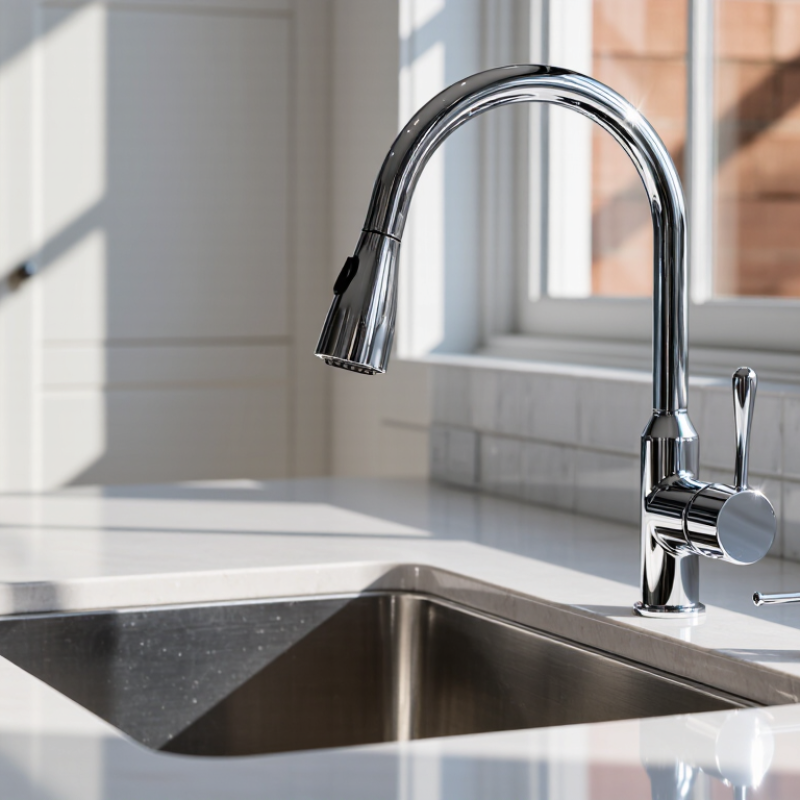
What a Chrome Kitchen Faucet Is
A chrome kitchen faucet is a faucet with a bright, reflective chromium finish, usually electroplated over a base metal such as brass or stainless steel. “Chrome” describes the visible surface, not the faucet’s internal construction, flow rate, or durability. The smooth finish suits many sink styles and is easy to wipe clean, though dried droplets can still leave marks. Showroom shine is not maintenance-free.
The Water Research Foundation’s 2016 Residential End Uses of Water, Version 2 report found that faucets accounted for about 19% of indoor household water use in the homes studied. That figure covers faucets throughout the home, not kitchen faucets alone, so it is useful context rather than a kitchen-specific measurement. For a kitchen fixture, check the stated flow rate and whether its spray head, handle, and mounting arrangement fit your sink and daily tasks. A chrome surface can resist corrosion, but harsh cleaners or abrasive pads may dull or scratch it. Small detail. The underlying material and cartridge matter too, and the finish alone cannot tell you how well a faucet will perform.
How Chrome Faucets Are Made and Finished
A chrome kitchen faucet gets its reflective finish through several controlled steps. The body is commonly made from brass or zinc alloy, then ground and polished to remove casting marks. Workers clean and rinse the surface carefully; leftover oil can cause plating defects. The faucet is then electroplated, often with a nickel layer beneath a thin chromium topcoat. The nickel helps create a smooth, bright appearance, while chromium adds hardness and resistance to tarnishing. It’s a layered finish, not solid chrome.
The raw-material supply chain is large. The U.S. Geological Survey’s Mineral Commodity Summaries 2025 estimates that mines produced about 44 million metric tons of chromite ore worldwide in 2024, including roughly 20 million tons in South Africa. That figure describes ore, not the small amount of chromium in a faucet’s finish. After plating, manufacturers inspect for uneven color, pits, and poor adhesion. Even a tiny surface flaw can show clearly under kitchen lighting. The final look depends on preparation as much as plating, a detail that’s easy to overlook. An attractive finish alone, though, doesn’t reveal how carefully each production step was controlled.
Common Chrome Faucet Styles and Configurations
Chrome describes the faucet’s finish, not its handle layout or internal construction. A polished chrome surface reflects light clearly and can make a compact sink area feel brighter. It also shows water spots and fingerprints, so a quick wipe may be part of regular care.
Common styles include single-handle faucets, which combine temperature and flow control in one lever, and two-handle designs, which adjust hot and cold water separately. Centerset models place handles close to the spout on one base, while widespread models use separate pieces across the sink. Wall-mounted faucets keep the deck clear, but they require compatible plumbing inside the wall. Check the sink’s hole count and spacing before choosing. Small details matter.
Configurations affect daily use as much as appearance. A high-arc spout leaves room for filling a tall pot, while a lower spout may reduce splashing in a shallow basin. Pull-down and pull-out sprayers add reach for rinsing corners, though their hoses need enough clearance below the sink. A style can look right in a photo and still feel awkward at your basin. Measure the sink depth and note where the handle will move; installation diagrams are useful, but they can be easy to overlook.
Common Chrome Kitchen Faucet Styles and Configurations
Typical deck-hole requirements for popular faucet configurations
Single-hole faucets use one deck opening; centerset and widespread faucets typically use three, while bridge faucets commonly use two. Requirements vary by model, and an optional deck plate may cover extra sink or countertop holes. Chrome describes the faucet’s finish and can be used across these configurations.
Key Features and Practical Benefits
A chrome kitchen faucet has a metal body or finish coated with a bright, reflective layer. The smooth surface suits many kitchen styles, from simple white cabinets to darker stone counters. It also reflects light, which can make a small sink area feel brighter. The finish is generally easy to wipe with a soft cloth and mild dish soap. Avoid abrasive pads, which may dull the shine over time. Small detail, but it matters.
Practical benefits depend on the faucet’s design as much as its finish. A single-handle model lets you adjust water flow and temperature with one hand, useful when the other is holding a pot. A high, curved spout can make room for tall cookware, while a pull-down spray head helps rinse leafy greens and clean sink corners. Check the spout reach against your sink before choosing; a faucet that looks generous online may splash if it sits too close to the basin. Chrome can show fingerprints and water spots, especially in hard-water areas. A quick wipe helps, though it may not stay spotless. Also check that the handle moves smoothly and that replacement parts are available before purchase.
What Is a Chrome Kitchen Faucet? - Key Features and Practical Benefits
| Feature | What It Means | Practical Benefit | Useful Consideration |
| Chrome finish | A bright, reflective chromium-plated surface applied over the faucet’s base material. | Pairs easily with many sink styles and other common kitchen fixtures. | The exact base material and finish construction vary by faucet; check the product specifications. |
| Single-handle control | One lever typically adjusts both water flow and temperature. | Allows quick, convenient adjustment, often with one hand. | Handle position and movement differ by design; confirm that the faucet suits the available clearance. |
| Pull-down or pull-out spray | Some models have a spray head that detaches from the spout on a flexible hose. | Can make rinsing produce and cleaning different areas of the sink easier. | This is an optional feature, not a feature of every chrome kitchen faucet. Check hose reach and spray modes. |
| Ceramic-disc cartridge | A common valve design uses closely fitted ceramic discs to control water flow. | Provides smooth handle operation and helps control dripping when the valve is functioning properly. | Cartridge design and replacement availability vary; follow the manufacturer’s maintenance instructions. |
| Aerated water flow | Many faucets use an aerator at the outlet to mix air into the water stream. | Creates a more controlled stream for everyday tasks such as handwashing and rinsing. | Flow rate depends on the model and local requirements; an aerator may need occasional cleaning. |
| Straightforward surface care | The smooth, nonporous-looking plated surface is generally easy to wipe with a soft cloth. | Routine wiping can help remove everyday splashes and keep the finish looking bright. | Chrome can show water spots and fingerprints. Avoid abrasive pads and harsh cleaners that may damage the finish. |
| Installation compatibility | Faucets are made for particular mounting configurations, such as one-hole or multi-hole sinks. | Choosing a matching configuration can simplify installation and help avoid extra sink-hole fittings. | Measure the sink or countertop holes and check the faucet’s mounting requirements before purchase. |
Note: Features, materials, flow rates, and installation requirements vary by model. Check the product specifications and care instructions before choosing a faucet.