How to Choose Automatic Weigh Price Labelling Machines 2026?
Choosing the right Automatic Weigh-Price Labelling Machines can shape daily efficiency, product presentation, and customer trust. These systems weigh goods, calculate prices, and print labels within seconds. In a busy meat counter, a small accuracy error can affect hundreds of packages. The decision deserves more than a quick comparison of purchase prices.
This guide examines practical factors for selecting reliable equipment in 2026. We will consider weighing precision, label speed, printer performance, touchscreen usability, data connectivity, and cleaning requirements. A machine should match your products, package sizes, staff skills, and working environment. Stainless-steel surfaces matter in damp production areas. Clear displays help operators work accurately during peak hours. Stable software integration also supports inventory records and pricing updates.
Real-world testing remains essential. Ask suppliers for demonstrations using your own trays, labels, and product weights. Check how the machine handles irregular portions, condensation, and repeated label changes. Confirm calibration procedures, technical support, warranty coverage, and operator training. No machine is perfect. That matters.
Some specifications look impressive but offer little value in actual production. A faster printer may not help if weighing becomes inconsistent. A cheaper model may create higher maintenance costs later. These are easy points to overlook. Reliable selection requires evidence, not assumptions. By comparing verified performance, hygienic design, service quality, and long-term operating costs, buyers can choose Automatic Weigh-Price Labelling Machines with greater confidence and fewer unpleasant surprises.
What Is an Automatic Weigh Price Labelling Machine?
How to Choose Automatic Weigh Price Labelling Machines 2026?
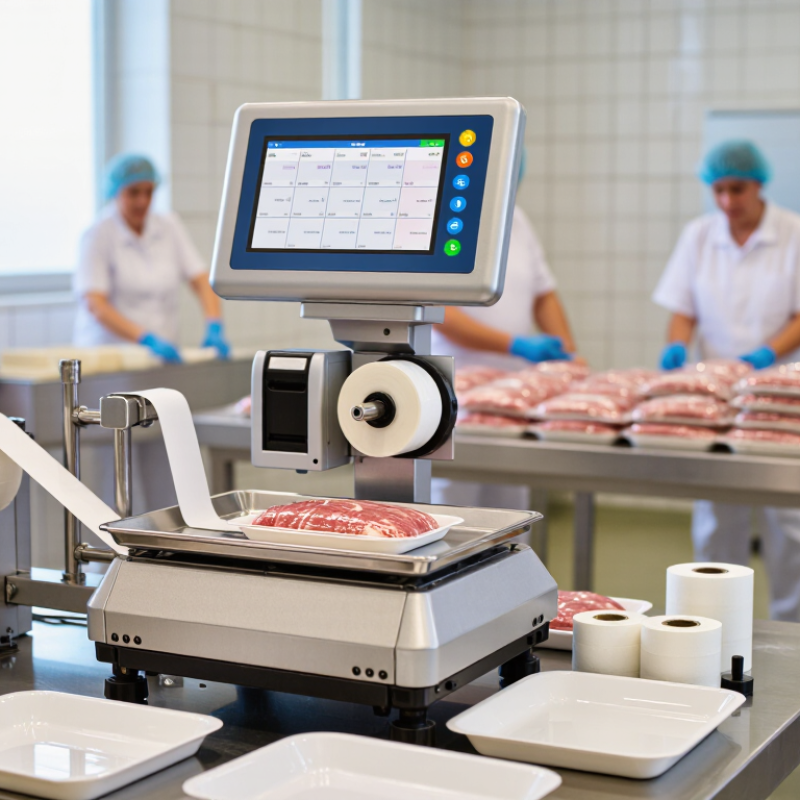
An automatic weigh price labelling machine combines weighing, pricing, printing, and label application. It receives a variable-weight product, such as a meat tray or produce pack. A load cell measures the product’s weight within seconds. Software then multiplies that weight by the stored unit price. The printer creates a label showing weight, price, product details, and traceability information. An applicator places it consistently on the package. No guesswork should be involved.
The FAO’s The State of Food and Agriculture 2019 report estimated that 14% of global food is lost between harvest and retail. Accurate weighing and clear labelling cannot solve every cause, but they can reduce pricing errors and rejected packages. The UNEP Food Waste Index Report 2024 also estimated 1.05 billion tonnes of food waste in 2022. These figures make reliable portion control more than a convenience. It becomes an operational concern.
When choosing a 2026 model, check weighing capacity, speed, label accuracy, cleaning access, and software integration. Test it with cold, moist packages, not only ideal samples. Confirm calibration procedures and readable labels under bright store lighting. A machine may claim high throughput, yet slow down during label-roll changes. That detail is easy to miss. Operators still need training, inspection, and maintenance. “Automatic” does not mean maintenance-free. A practical trial often reveals more than a brochure.
How to Define Your Product, Capacity, and Labelling Requirements
Choosing an automatic weigh price labelling machine starts with the product, not the machine. Record weight range, package shape, surface moisture, temperature, and product movement. Soft meat, loose produce, and rigid trays behave differently on the conveyor. The label must adhere to cold, wet, or oily surfaces. Small details matter.
FAO’s The State of Food and Agriculture 2019 estimated that 14% of food is lost between harvest and retail. Accurate weighing and clear date or price information can reduce avoidable handling errors, although they cannot solve every waste problem. UNEP’s Food Waste Index Report 2024 estimated 1.05 billion tonnes of food waste in 2022. That figure makes traceable, readable labelling more than a cosmetic concern.
Define capacity using real production conditions. State average packs per minute, peak demand, product weight variation, changeover frequency, and acceptable rejection rates. A machine rated at 120 packs per minute may perform below that figure with irregular products or frequent label changes. Test your actual packs. Do not rely only on a catalogue sample. Specify label size, print resolution, barcode format, database connection, and inspection requirements. GS1 standards support consistent identification, but your software and weighing data still need validation. I have seen projects overestimate speed and underestimate cleaning time. That mistake is expensive. Reserve space for operators, label rolls, rejected packs, and maintenance access. A practical factory layout often matters as much as headline capacity.
How to Evaluate Compliance, Software Integration, and Total Cost
Choosing an automatic weigh price labelling machine starts with compliance, not the advertised speed. OIML R 51 covers automatic catchweighing instruments, while local metrology rules may require verification, sealing, and inspection records. Label content must also match applicable food-labelling regulations. Check product weight, price, date, lot, barcode, and traceability fields before testing hardware. Small omissions create expensive rework.
Software integration deserves equal attention. The 2024 MHI Annual Industry Report found that 55% of supply-chain respondents planned to adopt robotics and automation within two years. That investment only works when weighing data connects reliably with ERP, WMS, or production software. Ask for documented APIs, role-based access, audit trails, and offline recovery. Test a real label change, not a sales demonstration. GS1 guidance also supports consistent identification and data quality across trading partners. Connectivity can fail.
Evaluate total cost over five years. Include verification fees, thermal labels, ribbons, spare parts, calibration, operator training, cleaning, energy, and planned downtime. A low purchase price may hide slow changeovers or proprietary consumables. Measure actual throughput with irregular products and wet surfaces. I would not pretend every forecast is precise. Maintenance estimates often feel optimistic. Request service-response data and references from similar production environments. Then compare cost per correctly labelled pack, not cost per machine.
How to Choose, Install, and Maintain the Right 2026 Model
How to Choose, Install, and Maintain the Right 2026 Model
Choosing an automatic weigh price labelling machine starts with real production data. Record product weights, label sizes, line speed, and daily operating hours. The 2024 International Federation of Robotics report recorded 541,302 industrial robot installations worldwide in 2023, a 10% annual increase. This growth reflects a clear direction: modern lines need faster, better-connected equipment. Still, speed alone is a poor buying criterion. Check weighing accuracy, print resolution, changeover time, sanitation access, and compatibility with existing software. My first selection mistake would be trusting a catalogue speed without testing irregular products.
Installation should include a level frame, stable power, grounded communication cables, and enough space for cleaning. Ask technicians to test ten consecutive products, not only one sample. Verify barcode readability, label placement, rejection timing, and data transfer during network interruptions. GS1’s 2024 barcode guidance continues to emphasize accurate, scannable identification across supply chains. That matters on a wet factory floor. Small errors become expensive.
Maintenance needs a written routine. Clean the weighing platform after each shift, inspect printheads weekly, and verify calibration using traceable test weights. Keep spare rollers, sensors, and thermal components nearby. The U.S. National Institute of Standards and Technology recommends documented measurement control through Handbook 44 requirements. Local rules may differ. Confirm them before commissioning. Leave room for improvement; operators often discover practical problems that engineers miss. Dark labels, sticky products, and rushed changeovers can expose weaknesses quickly.