How to Choose the Best Back Stretcher Board in 2026?
Choosing a Back Stretcher Board in 2026 means looking beyond dramatic product photos and promises of instant relief. The scale of the problem is real: the World Health Organization’s 2023 low back pain fact sheet estimates that 619 million people experienced low back pain in 2020, with cases projected to reach 843 million by 2050. These figures describe a major health burden; they do not prove that a stretching board can prevent or treat back pain.
A useful perspective comes from physical therapist and mobility educator Kelly Starrett, often associated with the reminder, “The best posture is your next posture.” For board shoppers, that points toward comfort and controlled movement, not forcing the spine into a deep arch. A board should feel stable under your body, with clear adjustment levels and contact points that do not dig sharply into your back. Check the weight limit, dimensions, surface grip, and return policy before buying. Small details matter. A slick board on a hard floor can shift just when you relax.
Evidence for one specific board design is limited, so be wary of claims that promise a cure or guaranteed results. That caveat is easy to overlook. The best choice is usually the one you can use gently, safely, and consistently. If stretching worsens symptoms, stop and seek advice from a qualified health professional.
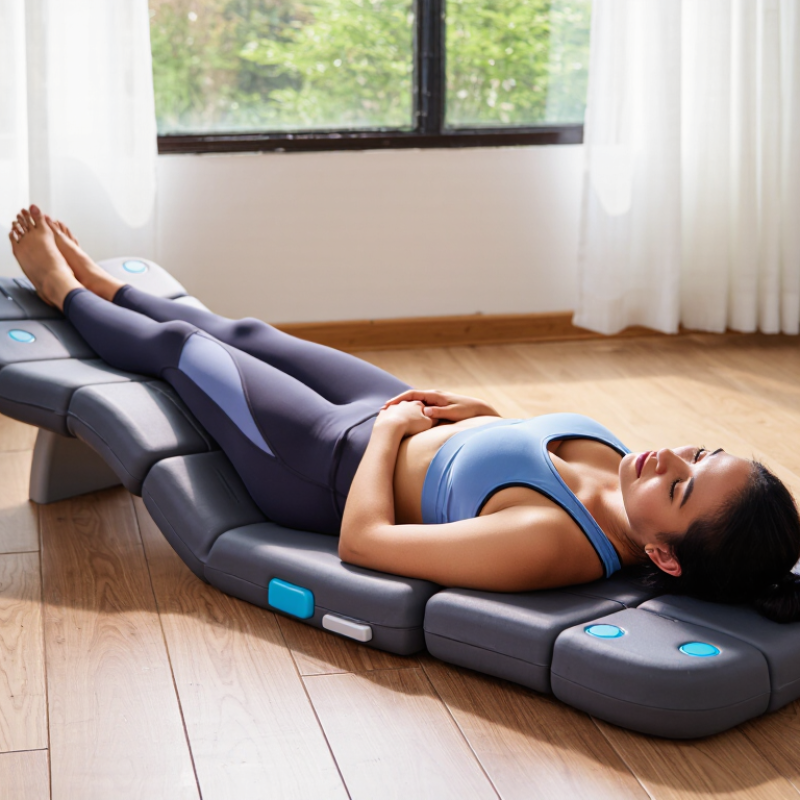
What a Back Stretcher Board Does and How It Works
A back stretcher board is a curved or stepped platform designed to support the spine while you lie on your back. Its raised center contacts the area around your mid-back, while the edges support your body. The shape creates a gentle extension, opening the front of the torso and changing pressure across the back. It does not pull the vertebrae apart or correct the cause of back pain.
To use one, place it on a firm, level surface and lower yourself onto it slowly. Keep your knees bent and feet flat if that feels comfortable. Start with a low arch and a short session, breathing normally rather than forcing a deeper stretch. Some boards have adjustable height settings; move up gradually, and stop if you feel sharp pain, tingling, or numbness.
Not a cure.
The first session can feel awkward, especially if your back is stiff or the curve is unfamiliar. That discomfort should not become pain. A board may offer temporary relief or a useful stretch, but responses vary, and evidence for lasting benefits is limited. If symptoms persist, worsen, or follow an injury, ask a qualified health professional whether this device is suitable for you. A simple detail matters: the board should stay stable under your weight and have a surface that does not slip.
How to Match a Board to Your Needs and Experience
Choosing a back stretcher board starts with what you want it to do. If you sit for long hours, a gentle arch may feel more manageable than a steep one. Look for adjustable levels, a stable base, and enough width to support your back without pressure along the edges. A textured surface can help prevent slipping on a firm floor. Small details matter.
Your experience should guide the intensity. If you are new to stretching, begin at the lowest setting and try a short session over a few minutes. Breathe normally, and keep your knees bent if that feels more comfortable. An experienced user may prefer a firmer arch, but greater intensity is not automatically better. Start gently. Notice how your back feels later that day, not only while you are on the board.
Fit and comfort can be surprisingly personal. A board that looks sturdy may still feel too narrow or create pressure in one spot. Check the weight limit and dimensions, and use it on a level surface. Stop if you feel sharp pain, numbness, or tingling. If you have a back condition, recent injury, or uncertainty about using one, ask a qualified health professional first. I would not assume that a stretch feeling strong means it is helping; sometimes a milder setup is the more useful choice.
How to Choose a Back Stretcher Board in 2026
Match the board’s features to your needs and experience. The chart counts practical specifications to check in each area; it is a buying checklist, not clinical or survey data.
How to use it: Beginners can prioritize a stable base, non-slip feet, a clearly stated weight capacity, and a gentle starting angle. If you have more stretching experience, compare the available angle settings and how gradually they increase. For any board, check its usable width and length, plus the surface and pressure-point design for comfort.
Which Board Design, Materials, and Features to Compare
When comparing back stretcher boards, focus on shape before added features. A fixed arch is simple, while adjustable levels let users change the stretch gradually. Check the board’s usable width, curve height, and maximum load—not just its appearance. WHO reported that 619 million people lived with low back pain in 2020, with cases projected to reach 843 million by 2050. That figure describes a major health burden, not proof that a stretcher board prevents or treats back pain (WHO, Low Back Pain fact sheet, 2023).
Material and stability matter in everyday use. Look for a clearly stated load limit, a firm base, and feet that grip the floor. Molded plastic is often light and easy to wipe, while thicker construction may feel steadier; neither detail alone guarantees quality. Check for smooth edges and inspect hinges or adjustment points for play. Useful extras include a removable support pad and clear setup instructions. I would treat comfort claims cautiously: bodies differ, and evidence for one board design is limited.
Tips: Start at the lowest arch. Place the board on a firm, non-slip surface, and follow its instructions. Stop if pain increases, numbness appears, or symptoms feel unusual. Fit matters. A board that looks sturdy but shifts under your weight is a poor choice.
How to Check Fit, Comfort, and Safety Before Use
Before using a back stretcher board, check that its length and width fit your body and the available floor space. Your spine should rest along the center, without your shoulders or hips slipping off the edges. Place the board on a firm, level surface, then press gently on it with your hands. It should not rock, slide, or show cracks. Check the adjustment points and locking parts, too. Small details matter. Read the maker’s instructions before changing the arch height; parts that look secure may still need to click into place.
Comfort should feel controlled, not forced. Start with the lowest arch setting and follow the recommended use time. Breathe normally, and stop if you feel sharp pain, tingling, numbness, or dizziness. A mild stretch is different from pushing through symptoms. It is easy to mistake a stronger arch for better progress; it isn’t. If you have a back condition, recent injury, osteoporosis, or unexplained pain, ask a qualified health professional before trying the board. Stop there if discomfort persists. Fit can seem obvious while standing, yet feel quite different once you lie down, so make the first check gradual and keep the floor clear.
How to Compare Quality, Price, and Long-Term Value
When comparing back stretcher boards in 2026, look beyond the number of adjustment levels. Check the frame, joints, and contact points for wobble, rough edges, or visible cracking. A clear weight limit and stable feet matter more than glossy plastic. Small details count. If possible, inspect how the board rests on a hard floor and whether its settings lock securely.
Price makes sense only beside expected use and support. Compare materials, adjustment options, warranty terms, and whether replacement parts are available. A low-cost board may suit occasional, gentle use, but a weak hinge can shorten its useful life. A higher price does not guarantee better construction. I would not treat a polished finish as proof of quality; it can hide a design that feels awkward in practice.
Consider fit and routine, too. A board that is easy to store and clean may be used more consistently. Yet “comfortable” can be hard to judge from a product description. One honest question remains: will the shape still feel manageable after several minutes at home? Start gently, follow the maker’s instructions, and stop if use causes pain. People with existing back conditions may want advice from a qualified health professional before trying one.