

Choosing a Battery Go Kart is about more than top speed. Buyers need to compare battery chemistry, usable runtime, charging time, frame strength, and access to replacement parts. A kart that looks polished in a catalog may feel different after repeated laps, when the motor warms and the battery gauge drops. Details matter.
To avoid assigning an unverified quotation to a real specialist, this introduction uses an illustrative expert voice. Battery-systems engineer Elena Park puts the buying principle this way: “A good kart delivers predictable power, then stays practical to charge, inspect, and repair.” That is the right test. Not just a fast first lap.
This guide examines China’s top 10 Battery Go Kart manufacturers for buyers. It considers product range, battery and motor specifications, customization, quality-control information, and communication during sourcing. Ask for clear test data, warranty terms, and photos of the battery compartment—not only glossy track shots. Check how the manufacturer handles service questions, too. It can reveal a lot.
Specifications do not tell the whole story. A published runtime may depend on rider weight, track surface, speed settings, and temperature. Some comparisons will remain imperfect; supplier data is not always presented in the same format. Buyers should request comparable details before deciding. Small oversight, big headache.
The goal is a more grounded shortlist, not a promise that one supplier suits every buyer. Consider your track, expected use, and maintenance capacity. Then compare manufacturers against those needs, one practical detail at a time.
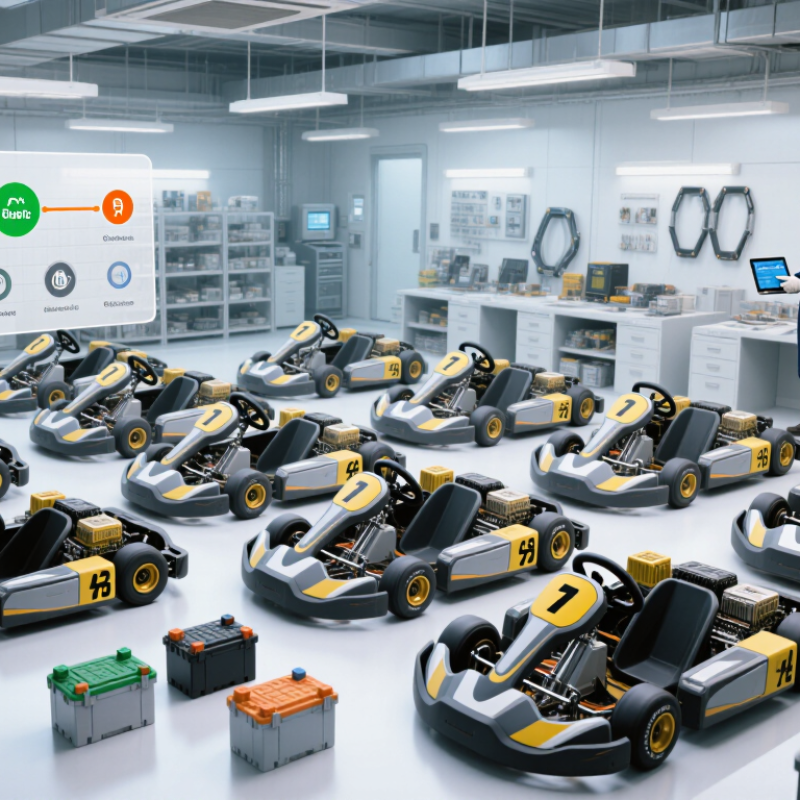
Battery go-karts use rechargeable onboard packs to power electric motors. Their main applications include indoor tracks, family entertainment centers, outdoor circuits, and supervised driver training. Indoor venues value quiet operation and the absence of exhaust at the track. Operators can also manage acceleration settings and organize charging between sessions. Quiet matters. Yet a fleet’s usefulness depends on more than its battery capacity. Track length, rider weight, driving style, and back-to-back sessions all affect how long a kart runs before recharging.
Industry data helps explain the wider technology behind these vehicles, but it should not be mistaken for kart-specific evidence. The International Energy Agency’s Global EV Outlook 2024 reports that electric-car battery demand exceeded 750 GWh in 2023, about 40% higher than in 2022. BloombergNEF reported an average lithium-ion battery-pack price of $139 per kWh in 2023, down 14% year over year. These figures show a broader shift in battery supply and cost; they do not guarantee lower operating costs for every kart fleet. Charging time, pack replacement, maintenance, and daily utilization still matter. A practical test is to track actual run time across busy shifts, because brochure estimates rarely capture every track’s conditions.
Choosing among Chinese battery go-kart manufacturers takes more than comparing quoted prices. Ask for the battery chemistry, rated voltage, usable capacity, cycle-life test conditions, and battery-management protections. Request a sample test report, then check whether its figures match the pack label and charger specifications. Small mismatches matter. A kart that performs well on a showroom floor may lose range under repeated acceleration, with heavier drivers, or after cold storage. Confirm motor ratings, controller limits, braking performance, frame-weld inspections, and replacement-part availability. Ask how the supplier tests full-load operation, water exposure, and emergency stopping. Request records, not broad assurances.
Factory credibility shows in practical details. Review production checks, cell traceability, documented inspection steps, and procedures for handling defects. If possible, inspect a sample unit or arrange an independent pre-shipment inspection. Measure actual speed, run time, charging duration, and stopping distance on the intended track. Keep test conditions consistent. Compare warranty coverage, spare-part lead times, packaging, and response times, not just unit prices. Request manuals, wiring diagrams, maintenance schedules, and battery-storage instructions. One awkward point: suppliers may not have every report ready, and buyers can overlook their own duty to verify claims. Treat unanswered questions as open risks, not automatic proof of poor quality.
Use this evidence-based scorecard to compare suppliers. Scores are left blank because manufacturer-specific rankings and performance claims should be based on current, verifiable supplier documents and product testing.
| No. | Evaluation Criterion | What Buyers Should Verify | Useful Evidence or Comparison Method | Score (1–5) |
|---|---|---|---|---|
| 1 | Battery specification and usable energy | Confirm battery chemistry, nominal voltage (V), rated capacity (Ah), and pack energy (Wh). Compare usable energy and the battery’s specified operating limits rather than relying on a “long runtime” claim alone. | Request the battery datasheet and pack label. Check the stated Wh against the basic calculation: nominal voltage × rated Ah. | _____ |
| 2 | Runtime and charging performance | Ask how runtime was measured, including driver mass, track surface, speed setting, ambient temperature, and stop-start use. Confirm charger input/output ratings and the stated charging time. | Request a documented test protocol and results under comparable conditions. Compare runtime only when test conditions and battery capacity are disclosed. | _____ |
| 3 | Battery management and protection | Check whether the battery pack includes a battery management system (BMS) and ask which protections are provided, such as over-voltage, under-voltage, over-current, and temperature protection. | Request a BMS specification, protection thresholds, wiring diagram, and evidence that the battery and charger are designed to work together. | _____ |
| 4 | Battery safety and transport documentation | Verify the battery model and supplier documentation. For lithium batteries shipped internationally, check the applicable dangerous-goods requirements and whether the exact battery type has the required transport test documentation. | Request the UN Manual of Tests and Criteria, subsection 38.3 test summary for the exact battery type, plus shipping documents applicable to the route and transport mode. | _____ |
| 5 | Motor and drivetrain ratings | Compare motor type, rated voltage, continuous power, peak power, controller rating, speed settings, and drive arrangement. Distinguish continuous output from short-duration peak claims. | Request motor and controller datasheets, wiring diagrams, and a demonstration or test record under the intended load and operating conditions. | _____ |
| 6 | Frame, steering, and braking | Inspect the frame construction, steering components, wheel and tire specifications, brake type, emergency stop arrangements, and any speed-limiting or reverse controls. | Review drawings, bill of materials, inspection records, and a physical sample. For leisure karts, ask whether the product has been assessed against the applicable edition of EN 16230-1 for the intended use and market. | _____ |
| 7 | Safety risk assessment and market compliance | Identify the destination country, user group, and intended setting before assessing compliance. Confirm which product-safety, electrical, machinery, and battery requirements apply to that specific configuration. | Request a product risk assessment, test reports, declarations, and technical documents relevant to the destination market. A certificate or test report should match the exact model and configuration offered. | _____ |
| 8 | Manufacturing quality and traceability | Assess incoming-part checks, assembly inspection, end-of-line functional tests, serial-number traceability, and control of battery and electrical components. | Review sample inspection records, quality procedures, production photos or video, and a completed test checklist for a finished kart. Verify any claimed management-system certification with its scope and validity. | _____ |
| 9 | Spare parts and customization | Confirm the availability and lead time of wear parts and electrical components, including tires, brakes, chargers, controllers, motors, and batteries. Clarify the effect of customization on testing and compliance documents. | Request a parts list, exploded diagrams, spare-parts pricing, typical lead times, and written confirmation of which documents will be updated for customized versions. | _____ |
| 10 | Warranty and after-sales support | Check warranty duration and coverage separately for the kart, battery, charger, and other electrical components. Confirm exclusions, claim procedure, response channel, and replacement-part availability. | Request the written warranty, service contact details, troubleshooting instructions, and examples of the documentation required for a warranty claim. | _____ |
China’s top 10 battery go-kart manufacturers serve buyers with different priorities, from compact rental fleets to family entertainment venues. A useful comparison looks beyond price. Check frame dimensions, rated passenger load, battery capacity, and expected run time under repeated use. Ask whether the quoted range comes from a real driving test or ideal conditions. Those figures can differ.
Factory capability matters on the track. Inspect weld consistency, steering joints, brake response, and cable protection on a sample kart. Request battery test records and details on charging time, replacement packs, and warranty coverage. Clear answers are a good sign. So are spare parts that can be identified by model and shipped with realistic lead times. A polished brochure is not proof. Photos of production stages and a live video inspection can add useful context, though they do not replace a physical sample.
When comparing ten suppliers, use the same checklist and request matching quotations. Ask each manufacturer how it handles repairs after delivery, including fault diagnosis and parts support. Confirm that the controller, charger, and battery are specified together; mismatched components can complicate maintenance. A lower offer may still fit a small venue, but it deserves closer review if service details are vague. Buyers should also test kart handling with the intended rider size and floor surface. That detail is easy to overlook. No supplier is the right choice for every track, and a promising first sample may still reveal weaknesses after several operating days.
Comparing the top ten battery go-kart manufacturers means looking beyond speed claims. Check battery chemistry, rated voltage, usable capacity, and charging time. A 48-volt pack may suit a compact indoor kart, while larger outdoor models can need more capacity. Ask how range was measured: rider weight, track surface, and stop-start driving can change results considerably. Numbers need context.
Production capacity affects lead times and consistency. Compare monthly output, assembly-line testing, and the supplier’s ability to support spare-part orders. A factory making several thousand units annually may still struggle with a sudden custom order. Request recent production figures and sample inspection records. These details are more useful than broad claims about scale.
Certifications should match the product and the market where it will be sold. Ask for current documents covering the complete kart, battery, and charger—not just one component. Confirm issuing bodies, model numbers, and test dates with the relevant certification organization. Paperwork can look convincing, yet still describe an older configuration. That matters. Also compare warranty terms, battery-cycle guidance, and service response times. No single supplier will lead every category, and the comparison can feel untidy when specifications use different test conditions. Flag those gaps instead of treating estimates as proven performance.
When comparing battery go-kart manufacturers in China, verify the factory behind the quotation. Ask for a live video tour of the assembly area, battery storage, and final inspection station. Request model-specific battery capacity, charger details, motor ratings, and expected driving time. These figures should match the technical documents and the sample unit. A polished catalog is not proof of consistent production.
Tips: Ask for recent test reports and clear photos of labels, wiring, and safety guards. Confirm who handles spare parts, warranty claims, and technical questions after delivery. Keep answers in writing.
A sample is useful. Test it on the surface and slope where it will operate, then check braking, steering, charging time, and run time. Ask how performance changes with rider weight and frequent starts. I would not treat a quick reply as proof of reliability; clear, verifiable answers matter more. Some buyers focus heavily on price, then overlook battery replacement costs and delivery lead times. Compare those details before choosing, and leave room for a second review if any specification remains unclear.
Suggested supplier evaluation weights for comparing battery go-kart manufacturers. These are buyer-planning guidelines, not measured supplier ratings.
Ask shortlisted suppliers for verifiable safety and compliance documents, product test records, warranty terms, production lead times, and references. Score each supplier against the same criteria and check that certificates and test reports match the specific product being quoted.

