

Choosing a Bending Machine for a global factory is a production decision, not just a price comparison. A machine must match the material, bend length, thickness, required angle, and daily workload. A glossy brochure cannot confirm how consistently it will bend a real part. Details matter.
Manufacturing engineer Shigeo Shingo offered a useful warning: “The most dangerous kind of waste is the waste we do not recognize.” For buyers, hidden waste can mean slow changeovers, unavailable tooling, repeated setup trials, or long waits for service. His observation is not specific to press brakes, but it applies directly to evaluating machine performance beyond the purchase price.
This guide examines manufacturers that serve international buyers and the practical questions worth asking before requesting a quotation. Compare working length, tonnage, control systems, backgauges, safety features, and tooling compatibility. Ask how suppliers verify repeatability, provide operator training, and stock replacement parts. A machine that performs well in a demonstration may behave differently with your material and operator. That assumption can fail. Request sample bends or a documented acceptance test when possible, and check what commissioning support includes. Delivery schedules, language support, and access to technicians also shape long-term value. No single brand suits every workshop. The right choice depends on the parts you make, the skills available, and the support you can actually reach.
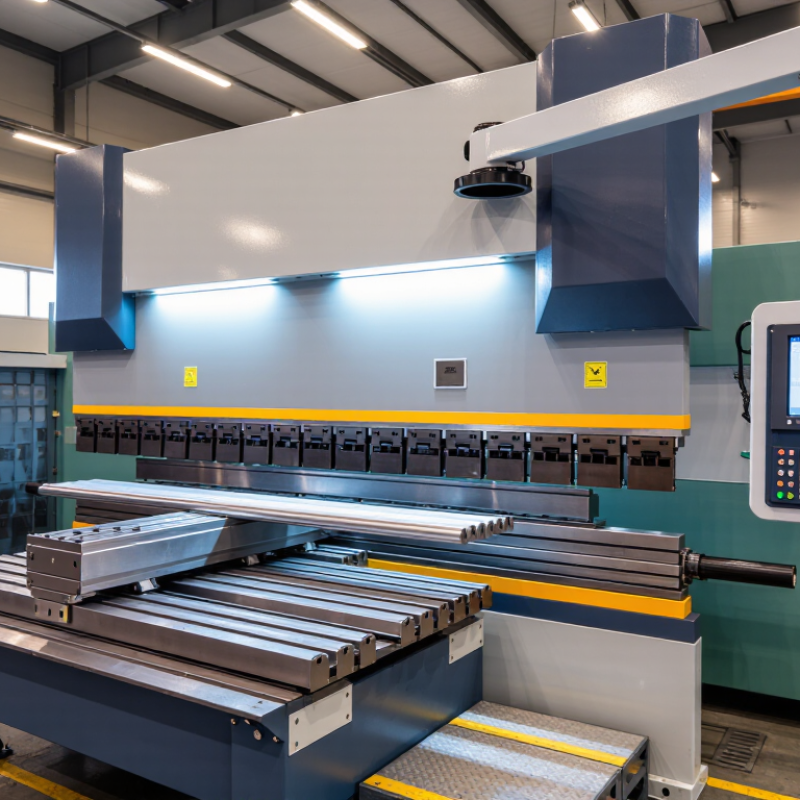
A bending machine shapes sheet metal or profiles by applying controlled force along a chosen line. A press brake makes straight, precise folds, while a roll-bending machine forms broad curves in tubes or plates. The workpiece, tooling, and machine must suit one another. Small details matter.
These machines serve many industries. Fabricators use press brakes to make electrical enclosures, equipment cabinets, vehicle brackets, and building panels. Roll bending is useful for curved handrails, structural sections, and large tanks. Operators consider material type, thickness, bend radius, and springback before setting the machine. A thin aluminum panel, for example, may need different tooling and pressure from a steel plate.
Good results also depend on setup and measurement, not just machine capacity. The operator aligns the sheet against a back gauge, checks the tooling, and tests a sample piece when the job requires close tolerances. In practice, the first setup is not always perfect; a small test bend can reveal a springback issue before a full batch is processed. That takes practice. For buyers, understanding the intended materials, part sizes, and production volume helps identify which machine features matter most.
Nominal punch included angles used in press brake tooling, measured in degrees.
Punch angles are tooling specifications, not guaranteed finished bend angles. The resulting bend depends on factors such as material, thickness, die opening, and machine setup.
A supplier’s catalogue may look impressive, but the right machine depends on your actual parts. List the alloys, thickness range, bend length, and daily production volume you expect. Ask whether the stated capacity assumes a particular material or tooling setup. A machine that bends a thick plate once may not suit repeated production shifts. Small details matter.
Test repeatability with a sample part, not just a demonstration video. Measure angle variation across several bends, and inspect the back gauge, crowning system, and control interface. Confirm that your existing tools fit, or include new tooling in the price comparison. Ask about operator training, installation support, spare-part lead times, and maintenance schedules. These affect uptime.
Review the safety features and the quality of manuals and wiring diagrams. Request references from workshops making similar components, and clarify warranty exclusions in writing. A factory acceptance test using your material can expose handling issues that brochures miss. Still, no checklist predicts every problem. Local service response is easy to overlook, yet delays can make a capable machine costly. Compare power, tooling, training, and downtime alongside the purchase price.
Top Bending Machine Manufacturers for Global Buyers
Leading Manufacturers by Region, Technology, and Specialization
Bending machine suppliers differ not only by location, but by the work their machines are built to handle. Many European manufacturers focus on CNC control, energy-efficient drives, and precise angle repeatability. Across East Asia, buyers can find broad production ranges, from compact press brakes to automated bending cells. North American suppliers often offer heavy-duty configurations and application-specific engineering. These are useful patterns, not guarantees.
Technology matters more than a polished specification sheet. Electric and hybrid systems may reduce energy use in suitable applications, while hydraulic machines remain common for demanding workloads. Check the rated tonnage, working length, backgauge range, and tooling compatibility against actual parts. Ask for a sample bend using your material and thickness. Small angle changes can affect fit later.
Specialization should guide the shortlist. Sheet-metal shops may prioritize quick setup and flexible tooling; high-volume plants may need robotic tending and dependable cycle times. Request references from similar applications, local service response times, and operator training details. A clean demo is not a production shift. Fit matters more. Even experienced buyers can overlook maintenance access or software usability, so inspect both before committing.
Regional overview, not a ranked list: capabilities vary by manufacturer and product line. The entries describe commonly available machine types and applications, without identifying companies or brands.
| Manufacturing Region | Common Machine Types | Technologies Commonly Offered | Typical Specializations | What Global Buyers Should Compare |
|---|---|---|---|---|
| Europe | CNC press brakes, panel benders, plate rolls, and automated bending cells | Hydraulic and servo-electric drives; CNC control; automatic tool changing and robotic integration on selected systems | Precision sheet-metal production, repeatable high-mix work, and automated production lines | Accuracy specifications, automation compatibility, tooling availability, service coverage, and applicable conformity documentation |
| East Asia | Hydraulic and CNC press brakes, panel benders, tube benders, and plate-bending equipment | Hydraulic, servo-hydraulic, and servo-electric configurations; CNC backgauges and programmable controls | Production equipment for sheet-metal fabrication, enclosures, appliances, and automotive supply chains | Rated tonnage and bending length, control language, tooling standards, commissioning support, and spare-parts lead times |
| North America | Press brakes, tube and pipe benders, plate rolls, and section-bending machines | CNC programming, hydraulic systems, electric or servo-driven options, and cell-level automation | Job-shop production, custom fabrication, structural components, and heavy plate or profile work | Local technical support, safety provisions, material and thickness range, software workflow, and integration with existing equipment |
| Türkiye and nearby markets | Hydraulic CNC press brakes, shears, plate rolls, and related sheet-metal equipment | Hydraulic drives, CNC control, programmable backgauges, and optional automated handling | General metal fabrication and equipment for small-to-medium and export-oriented production operations | Machine configuration, electrical requirements, documentation, installation support, and availability of regional service |
| South Asia | Hydraulic press brakes, plate rolls, and machinery for sheet, plate, and profile bending | Hydraulic and CNC configurations, with automation options depending on machine type and production requirements | Fabrication for construction, infrastructure, industrial equipment, and general manufacturing | Build specification, duty cycle, control and programming features, operator training, warranty terms, and lifecycle support |
Technology note: press brakes form bends by pressing sheet or plate between a punch and die; panel benders use folding tools to form sheet edges; plate rolls curve plate through rollers; tube benders form tube or pipe around a bend die.
For global buyers, compare bending machines by repeatability, usable capacity, control flexibility, and service—not headline tonnage alone. Ask manufacturers for test results using your material, thickness, bend length, and target angle. A sample part with measured angles and flange dimensions is more useful than a showroom demonstration. Check whether the machine supports offline programming, tooling changes, and integration with existing production systems. The International Federation of Robotics reported 4,281,585 industrial robots operating worldwide in 2023, highlighting the growing importance of automation compatibility. Yet a connected machine is not automatically an easy one to operate.
Quality standards matter. Request documented inspection procedures, calibration records, and traceable component specifications. Confirm which safety and quality systems apply, such as ISO 9001 for quality management and ISO 12100 for machinery risk assessment. These standards support disciplined processes, but they do not guarantee that every machine suits your workflow. After-sales support deserves equal scrutiny: ask about technician response times, spare-parts availability, remote diagnostics, and operator training. A low purchase price can become expensive when a critical sensor takes weeks to replace. One detail buyers sometimes overlook: support hours may follow the supplier’s time zone, not yours.
Tips: Ask for a written service-level commitment and a list of commonly replaced parts. If possible, inspect a machine running a job similar to yours. Brochures rarely show the awkward setup steps.
Choosing a bending machine manufacturer starts with the parts you actually make. Share material type, thickness, bend length, target angles, and daily production volume. A machine rated for a certain tonnage may still struggle with your tooling or workpiece geometry. Ask the manufacturer to explain its capacity calculations, not just quote a headline figure. Numbers can mislead.
Request a live demonstration using a sample part close to your own. Check angle consistency across the bend, backgauge repeatability, setup time, and how easily operators can change tooling. Ask for drawings, installation requirements, training details, and a written list of included components.
Confirm how service requests are handled and whether common replacement parts are available in your region. These details affect downtime as much as the machine’s purchase price.
Compare quotations line by line. Clarify warranty coverage, delivery terms, commissioning, and the cost of optional features. Talk with customers who use similar materials and production volumes, if references are available. A polished demonstration is useful, but it cannot answer every question. Some buyers focus heavily on speed and overlook operator access or floor-space limits. That can become an expensive correction later. I would also leave room for uncertainty: forecasts change, and a machine sized perfectly for today may not suit next year’s orders.

