

Choosing a Fence Machine manufacturer involves more than comparing catalog prices. Global buyers must match equipment to the fence products they actually plan to make. A line for welded wire panels may not suit chain-link production, while differences in wire diameter, mesh opening, and finished roll size can change the required configuration. Small details matter.
This guide introduces ten manufacturers for buyers evaluating production equipment across different markets. It considers product range, stated machine capabilities, automation options, technical support, spare-parts access, and commissioning arrangements. These factors can affect daily output as much as the quoted machine price. A fast line is less useful if its setup does not fit the buyer’s wire specifications or available floor space.
The list is a starting point, not a universal ranking. Manufacturer claims and machine specifications should be checked directly, because models and service coverage may vary by region. Ask for a written configuration, expected output under defined conditions, and references relevant to your product type. Requesting a sample run can also reveal practical issues, such as changeover time or operator training needs. No shortlist is perfect. Some buyers may value local service more than maximum speed, and that trade-off deserves careful thought. Use the profiles to prepare better questions before requesting quotations or making a purchase decision.
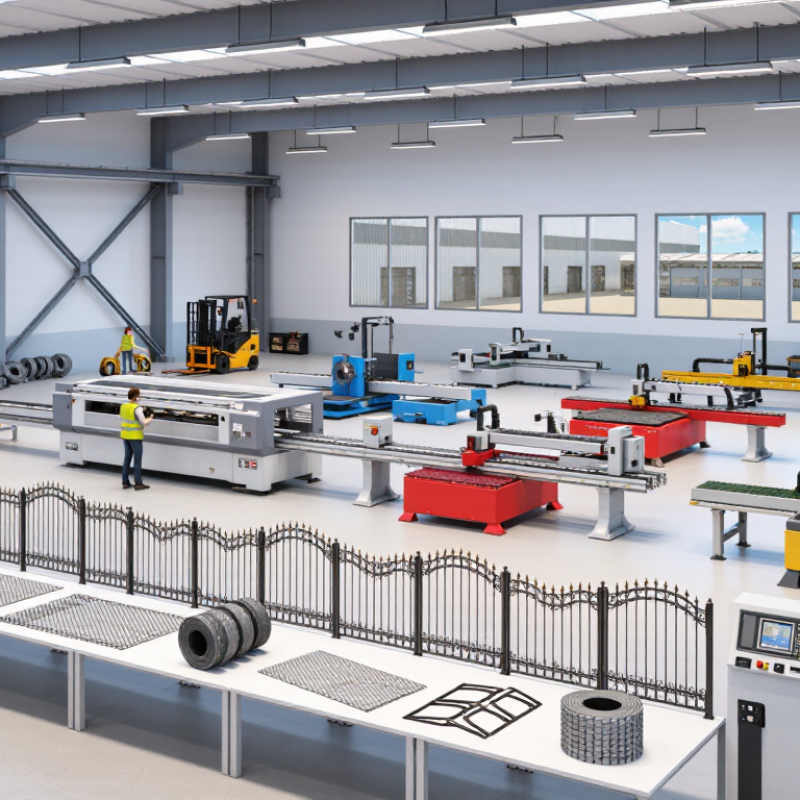
Fence machine manufacturing covers equipment that forms wire, joins intersections, and prepares finished panels or rolls for installation. Common systems produce chain-link mesh, welded wire panels, field fencing, and expanded metal fencing. Each product needs different tooling, feed control, and finishing steps. Small adjustments matter.
A welded mesh line, for example, feeds straightened wire through a grid of electrodes. Consistent pressure and timing help create uniform joints. Operators may check wire spacing with a ruler and inspect welds for weak spots. For roll fencing, tension control helps keep openings even as the mesh winds. These details affect handling, installation, and durability.
The industry serves farms, construction sites, roads, gardens, and industrial facilities. Buyers often compare output speed, wire diameter range, changeover time, maintenance access, and operator training needs. A fast machine is not always the best fit. Actual production can vary with material quality, setup, and maintenance—sometimes more than a brochure suggests. That is easy to overlook. A practical evaluation should include sample runs using the buyer’s intended wire and product dimensions. Even then, results need review over time, because workshop conditions are rarely perfect.
Fence machines differ by the structure they produce. Chain-link machines weave wire into flexible diamond mesh, commonly supplied in rolls. Their useful capacity depends on wire diameter, opening size, roll width, and changeover time. Operators should check whether the machine maintains even tension across the full width. Small variations can make the finished fence look uneven.
Welded wire mesh machines join crossing wires at fixed points. They suit panel or roll production, with output shaped by mesh spacing, wire thickness, and welding speed. A stable feed system matters; misaligned wires can cause weak joints and scrap. Some lines include automatic cutting and stacking, while simpler setups need more manual handling. The difference is visible on the shop floor.
Other equipment includes barbed-wire twisting machines and fence-post forming lines. These serve different stages of a fencing project, so buyers should compare complete production needs rather than a single machine’s advertised speed. Ask for sample runs using the intended wire and mesh dimensions. Actual output may fall below a brochure figure during frequent size changes. That is worth questioning. No machine removes the need for setup checks, maintenance, and skilled operators. A practical evaluation should include those costs, even when they are less exciting than headline capacity.
When comparing fence machine manufacturers for global purchases, begin with the product you actually plan to make. Ask whether the equipment handles your wire diameters, mesh openings, roll widths, and expected daily output. Request a sample run using your specifications, not only a standard demonstration. Details matter. Observe how operators load wire, adjust settings, and clear routine faults. A high quoted speed may look attractive, but frequent changeovers can reduce practical output.
Check build quality through specific evidence: frame construction, guarding, electrical components, and documented inspection procedures. Ask for commissioning plans, operator training, spare-parts lead times, and remote support hours in your time zone. Request references from buyers using similar materials and production volumes. Compare the full cost, including installation, shipping, tooling, and maintenance—not just the purchase price. One point deserves a second look: a machine that performs well in a showroom may not suit a small team or an inconsistent power supply. I would treat impressive promises cautiously until they are matched by test results and clear service commitments. A supplier’s response to detailed questions can reveal as much as its equipment specifications.
The ten profiles below describe manufacturer types, not named companies. A high-volume line builder may offer welded-mesh machines with automatic wire feeding and fast roll changes. Ask for output figures under conditions close to your wire diameter and mesh size. Numbers without test conditions are weak evidence. A compact-equipment maker may suit smaller workshops, where floor space and operator access matter. A custom engineering shop can adapt feed systems, but changes may extend delivery times. A regional fabricator may provide easier on-site service. Check spare-part availability, not just the sales promise.
A specialist in chain-link equipment typically focuses on wire forming, weaving, and coil handling. A panel-line producer may integrate mesh welding, cutting, and stacking. Integration helps, though a fault in one section can stop the whole line. A fencing-post machinery maker may supply roll-forming or punching equipment alongside fence production systems. A wire-processing manufacturer may excel at straightening and cutting, yet offer limited downstream automation. Ask for a sample run. Small tests reveal practical issues.
Other profiles include makers of automated gate-frame equipment, modular production cells, heavy-duty industrial lines, and entry-level machines for new workshops. Compare guarding, changeover steps, control-panel language, and training materials. Request drawings, a clear warranty scope, and references from buyers using similar materials. Factory visits can help, but they do not replace documented acceptance tests. I would not choose on price alone; maintenance access is easy to underestimate. A machine can look efficient in a demonstration and still require frequent manual adjustment.
When comparing the top ten fence machine manufacturers, look beyond quoted price and rated output. Ask what wire diameters, mesh sizes, and production speeds the machine can handle, then request a sample run using your material. A clear test report is more useful than a broad performance promise. Check certifications carefully: confirm the issuing body, validity dates, and whether the documents cover the actual machine model. Details matter.
Support can determine how quickly a line returns to work after a fault. Ask who provides installation guidance, how spare parts are identified, and what response time buyers can realistically expect. For export readiness, confirm voltage options, clear operating manuals, protective packaging, and experience preparing shipment documents for your destination. Request references from buyers in similar markets, but speak with them directly if possible. A polished brochure can still leave gaps. I would not treat one reference as proof of consistent service.
Tips: Put key specifications, delivery terms, training, and warranty conditions in writing. Ask for recent machine photos and a live demonstration. Compare answers side by side; vague replies deserve a follow-up.
Selected international standards used as references when evaluating machinery suppliers
The bars show the publication year of each listed standard edition, not a supplier score or evidence of certification. Ask suppliers to provide current, verifiable certificates and confirm which standards apply to the machine and destination market.

