

A dependable Nozzle Hydrant is not defined by its catalogue photo. Buyers need verified flow and pressure ratings, compatible connections, corrosion-resistant materials, and clear maintenance instructions. These details matter when crews connect equipment in poor light, with wet gloves and limited time. Fit must be tested, not assumed.
The NFPA estimated that U.S. fire departments responded to about 1.39 million fires in 2023. That figure describes fire-service demand, not hydrant or nozzle performance, but it underlines why equipment specifications deserve careful review. This guide compares ten suppliers for global buyers, focusing on product range, technical documentation, customization, quality controls, and export support. A low quoted price can still carry hidden costs. Check the details.
Supplier claims should be weighed against test records, recognized standards, and service capacity. Ask for drawings, rated operating limits, material specifications, and spare-parts availability before placing an order. Regional connection requirements vary, so confirm compatibility with the intended system and local project specifications. Small mismatches can delay installation.
A named expert quotation was not supplied with this brief, and I cannot verify a suitable source. Inventing one would weaken buyer trust. This comparison therefore relies on traceable standards and published data, while noting where supplier information needs independent confirmation. No single ranking fits every project. The right choice depends on duty, climate, and maintenance resources.
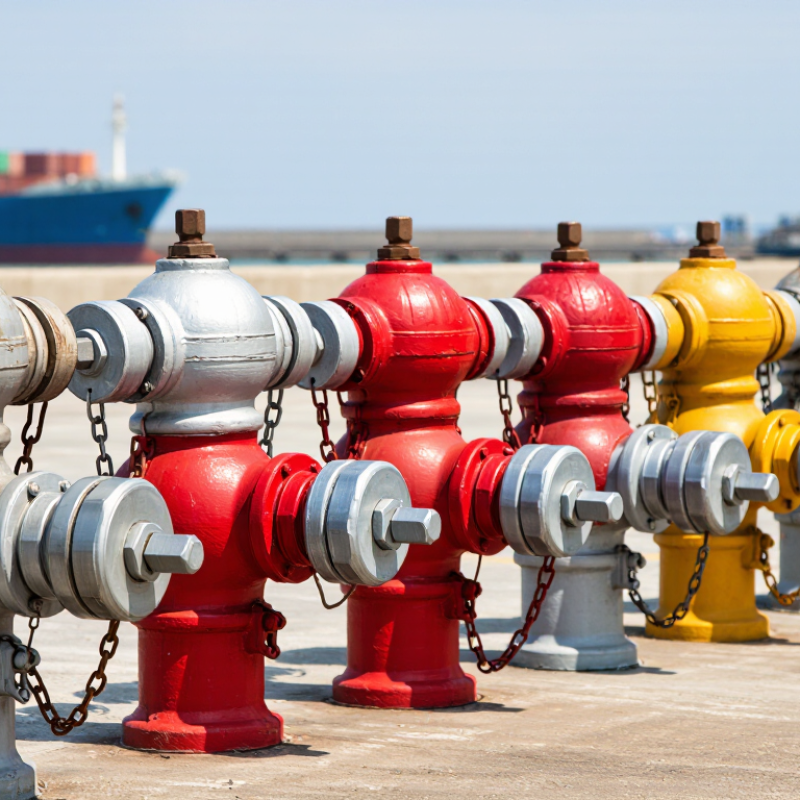
A nozzle hydrant is a fixed water outlet connected to a pressurized supply main. Fire crews attach hoses to its outlets and draw water for firefighting or system testing. Outlet size, coupling type, operating pressure, and access clearance affect how quickly crews can use it.
Small details matter. A blocked cap or a vehicle parked too close can delay a connection.
These hydrants commonly serve streets, industrial sites, warehouses, ports, and large campuses. Dry-barrel designs are often selected where freezing is a concern; wet-barrel models suit milder climates.
NFPA 291, Recommended Practice for Water Flow Testing and Marking of Hydrants, describes testing hydrant flow and pressure to help assess available supply. Testing matters: a hydrant’s appearance alone cannot confirm what its network can deliver.
NFPA’s 2023 U.S. Fire Experience report estimated 1.39 million fires in the United States. That figure is not a hydrant-use count, but it shows why dependable water access remains important.
A practical site review checks hydrant spacing, vehicle access, outlet compatibility, and flow-test records. Still, plans can look better than the pavement: construction, parked equipment, or seasonal conditions may obstruct access.
For global buyers, a hydrant nozzle must match the water system, not just the catalog photograph. Check inlet size, coupling type, thread profile, and rated working pressure before comparing prices. These details vary by region. A connection that looks close may still leak or fail to fit.
Look for corrosion-resistant materials, such as suitably specified bronze or stainless steel, and seals that tolerate the expected water conditions. Confirm that the nozzle’s flow pattern can be adjusted and that its shutoff operates smoothly under pressure. Small details matter. Ask suppliers for pressure-test records, material documentation, and clear instructions for inspection and maintenance. Standards for hydrants and couplings differ across markets, so verify the required local specifications with the project engineer or authority having jurisdiction. Do not assume one certificate covers every component.
A useful supplier should explain operating limits, available adapters, and replacement-part support in plain terms. Request dimensional drawings and sample test data before approving a large order. Field experience matters here: grit, hard water, and repeated handling can wear seals faster than expected. Even strong documentation cannot predict every site condition. That is an honest limitation, not a reason to skip checks. Compare the stated performance with the system’s actual pressure and intended use.
Choosing among nozzle hydrant suppliers takes more than comparing unit prices. Check the intended pressure range, inlet size, connection type, and flow requirements. Ask for current drawings, material specifications, and documented pressure or leakage test results. A polished brochure proves little.
Inspect details crews handle: grip texture with wet gloves, smooth shutoff movement, and readable position markings. Request a sample when practical, then check its finish, thread fit, and valve operation against your acceptance criteria. Small inconsistencies can matter. Ask how production batches are inspected and how defects are traced.
A reliable supplier should answer technical questions clearly and provide lead times, warranty terms, spare-parts availability, and packaging details. Verify certificates with the issuing body when applicable; paperwork can be outdated. Request references from buyers with similar equipment and operating conditions. Do not rely on one testimonial. Compare the substance of responses, not just their speed. Some details may remain uncertain before installation, so record assumptions and confirm them in writing. This takes time, but it can prevent avoidable surprises.
Suggested evaluation weights for comparing suppliers. These are a practical assessment framework, not survey results or market statistics.
Compare documented certifications, test reports, product specifications, material details, delivery terms, and warranty coverage. Confirm that each product meets the requirements of the destination market and installation.
Profiles of Ten Nozzle Hydrant Suppliers
These ten supplier profiles reflect different strengths buyers may encounter. A hydrant specialist may offer matched outlets and nozzle fittings; a fire-equipment maker may bundle hoses and adapters. A foundry-led supplier can control brass casting, while a precision machine shop may focus on threads and sealing faces. Details matter. Ask for material certificates and dimensional inspection records.
An export-focused supplier may provide several connection options, but confirm compatibility with local equipment before ordering. A regional distributor may offer faster spare-part access. An engineered-to-order producer can address unusual flow or mounting needs, though custom designs need careful review. High-volume manufacturers may suit standard projects; testing-led suppliers may provide clearer performance records. Service-focused firms can help with replacement parts. Small details can be missed.
NFPA’s U.S. Fire Loss in 2023 report estimated 1,389,000 fires and $23 billion in property damage. Those figures describe the wider fire-protection context, not nozzle performance. Buyers should compare flow-test methods, pressure ratings, corrosion resistance, and warranty terms. Check the actual test documentation, not just a catalogue claim. One limitation: supplier descriptions alone cannot verify field reliability; independent inspection and user references add useful evidence.
The entries below are anonymized sourcing profiles, not a verified ranking of named companies. Regional descriptions identify common sourcing markets; buyers should confirm each supplier’s product range, certifications, and export capability directly.
| No. | Supplier Profile | Common Sourcing Region | Typical Product Scope | Potential Buyer Fit | Key Items to Verify |
|---|---|---|---|---|---|
| 1 | Large-scale casting manufacturer | East Asia | Fire hydrant bodies, caps, bonnets, and related cast components; some manufacturers also offer assembled hydrants. | Buyers seeking a broad product range and high-volume production options. | Material and coating specifications, pressure-test records, dimensional drawings, production capacity, and inspection arrangements. |
| 2 | Export-oriented valve and hydrant producer | South Asia | Hydrants, waterworks valves, flanged fittings, and related municipal water-supply products. | Importers comparing multiple waterworks product categories from one source. | Product-specific test reports, applicable market approvals, traceability, packaging, and export documentation. |
| 3 | Fire-protection equipment specialist | North America | Fire-service hydrants, hydrant accessories, and equipment intended for fire-protection systems. | Projects requiring products matched to local fire-service practices and specifications. | Applicable listing or approval for the exact model, outlet configuration, operating details, and compatibility with local connections. |
| 4 | European-standard hydrant manufacturer | Western and Central Europe | Pillar hydrants and associated waterworks components, commonly offered in configurations for regional infrastructure projects. | Buyers working on projects with European technical specifications. | Relevant product-standard evidence, declared performance, connection dimensions, materials, and project-specific compliance documents. |
| 5 | Regional municipal waterworks supplier | Middle East | Hydrants, gate valves, fittings, and other products used in municipal water networks. | Contractors and distributors sourcing for local utility or infrastructure projects. | Local registration or approval requirements, operating conditions, corrosion protection, delivery schedule, and after-sales support. |
| 6 | Hydrant and valve producer serving multiple export markets | Türkiye and nearby markets | Fire hydrants, water valves, and related pipeline products in a range of connection and configuration options. | Buyers seeking an export-capable source serving markets across more than one region. | Destination-market conformity, production origin, product-specific inspection reports, shipping terms, and spare-parts availability. |
| 7 | Infrastructure-focused manufacturer | Latin America | Hydrants and water-distribution components designed for utility, public-works, and construction applications. | Local distributors and project buyers prioritizing regional service and logistics. | Utility specifications, connection compatibility, local language documentation, installation guidance, and maintenance support. |
| 8 | Compact hydrant and accessory producer | Southeast Asia | Hydrants, outlet components, caps, and accessories; product scope varies by manufacturer. | Buyers seeking a regional source for standard configurations or accessory replenishment. | Exact outlet and inlet dimensions, interchangeability, material grades, coating system, and sample approval before production. |
| 9 | Project-oriented waterworks fabricator | Africa | Hydrants and related water-network products supplied for public infrastructure and construction projects. | Project teams needing coordination with local contractors, distributors, or installation requirements. | Manufacturing capability, quality-control documentation, project references, delivery capacity, and access to replacement parts. |
| 10 | Specialized hydrant assembly supplier | Australia and Oceania | Hydrant assemblies and accessories configured for regional connection, operating, and installation requirements. | Buyers sourcing for local network upgrades, maintenance, or replacement projects. | Acceptance by the relevant authority or utility, exact configuration, testing evidence, installation instructions, and warranty terms. |
Top 10 Nozzle Hydrant Suppliers for Global Buyers
Comparing Suppliers by Quality, Service, and Delivery
A useful supplier comparison starts with the nozzle itself, not a polished catalogue. Check the stated working pressure, connection size, spray pattern, and materials. Ask for current test records and confirm they match the exact model being quoted. For outdoor installations, corrosion resistance matters; a small coating defect can become a maintenance issue after repeated exposure to rain and grit. Details count.
Service is easier to judge through specific questions. Can the supplier review a technical drawing, explain compatibility, and identify replacement parts? Note response times and whether answers address your site conditions, rather than repeat general claims. A sample can reveal grip, valve movement, and finish quality. It cannot prove long-term durability. That takes evidence.
Delivery comparisons should include more than an estimated shipping date. Confirm production lead time, available stock, packaging protection, and how changes are handled if a shipment is delayed. Ask for written specifications and a clear inspection process before placing a large order. A simple scorecard helps, but it is imperfect: urgent availability may outweigh a minor feature difference, while a low quote can hide added freight costs. Leave room for judgment.

