

China’s rubber oil seal suppliers serve demanding markets, from automotive repair shops to industrial pump manufacturers. Yet a polished catalog does not prove consistent performance. Buyers should compare compound options, shaft-speed limits, temperature ranges, dimensional controls, and inspection records. A seal that looks correct on a drawing can still leak when its lip profile, elastomer, or fit is wrong.
This guide examines how to assess Chinese suppliers beyond price and delivery promises. Ask for material data, sample seals, production details, and test results relevant to your operating conditions. Look closely at the sealing lip and spring, too. Small details matter. Supplier audits and clear communication can help, though neither guarantees trouble-free service. There is no perfect checklist.
A source-verified quotation from a real industry expert was not supplied, so I won’t attribute invented words to a named specialist. For editorial use only, this fictional technical reviewer, Dr. Lin Wei, offers a framing line: “A reliable seal starts with matching the material and design to the real working conditions.” Treat that as an original draft, not a documented expert quotation. The comparisons ahead focus on practical evidence, useful questions, and the trade-offs buyers should examine before selecting a Rubber Oil Seals supplier.
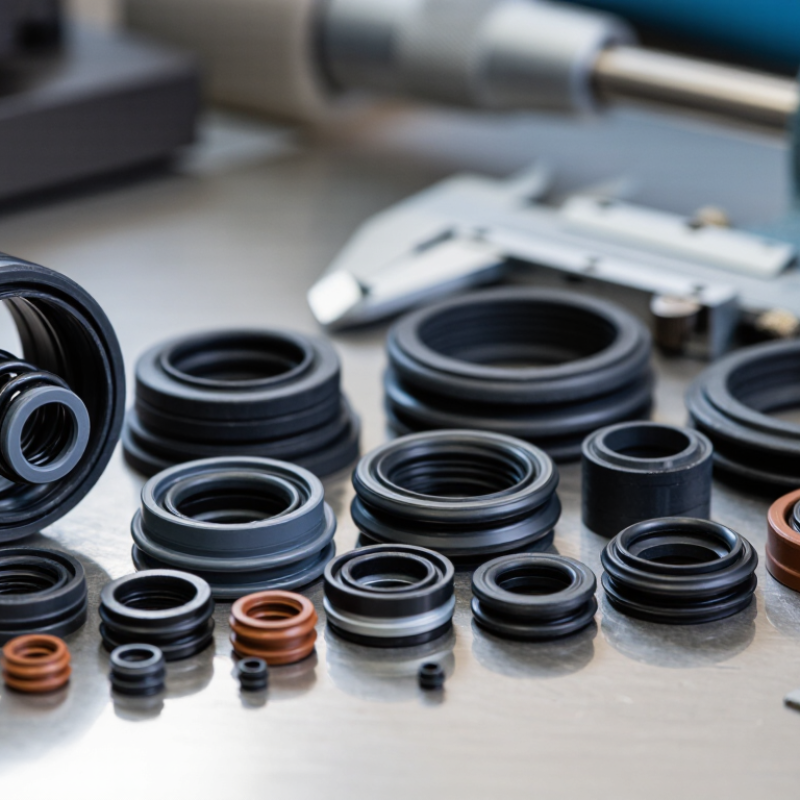
Rubber oil seals are compact barriers fitted around rotating or moving shafts. Their flexible lip presses against the shaft, retaining lubricant while limiting dust and moisture entry. You’ll find them in engines, gearboxes, pumps, wheel hubs, and industrial hydraulic equipment. A seal’s rubber compound must suit the oil, temperature, shaft speed, and surrounding conditions; nitrile rubber is common, while higher heat or chemical exposure may call for another compound.
Selection starts with measurements, not guesswork. ISO 6194-1:2007 sets out nominal dimensions and tolerances for rotary shaft lip-type seals, including shaft and housing dimensions. That makes accurate measurement essential: a small mismatch can cause leakage, excessive lip wear, or difficult installation. The standard is a technical reference, not a guarantee of service life. A common blind spot is focusing on seal material while overlooking shaft finish, runout, or installation damage.
Tip: Measure the shaft and bore, check operating temperature and fluid compatibility, then confirm the seal’s direction and fit. Keep the lip clean during installation. Even a good seal can fail early if the shaft has a sharp edge or a worn groove.
Rubber oil seals made in China come in several practical designs. Radial shaft seals are widely used around rotating shafts in pumps, gearboxes, and motors. A spring-loaded lip presses against the shaft to help retain oil. Double-lip versions add a secondary barrier against dust and light contamination.
Fit matters. Metal-cased seals suit firm housings, while rubber-covered cases can accommodate minor housing irregularities. The right choice depends on shaft speed, temperature, fluid, and surface finish—not just the seal’s outside dimensions.
Material options include nitrile rubber for many general-purpose oil applications, fluoroelastomer for higher temperatures, and silicone for selected low-temperature uses. Each has limits.
An axial seal works against a face rather than a rotating shaft, while valve stem seals meter oil around moving engine components. Some suppliers also make custom profiles from customer drawings.
Ask for dimensional tolerances, material data, and test conditions before comparing samples. A detail that is easy to overlook is shaft roughness; an unsuitable finish can shorten seal life even when the material seems correct.
I would not assume one design fits every machine. Check the actual operating conditions.
China’s rubber oil seal market includes dedicated seal manufacturers, broader rubber-product factories, and trading companies. Their roles can look similar online. In practice, production depth varies. Some factories mix compounds, mold seals, and inspect finished parts in-house. Others focus on molding and outsource material preparation or testing.
Suppliers often serve different needs. Standard oil seals are commonly made in repeatable sizes for machinery, pumps, and vehicles. Custom orders may require drawings, shaft dimensions, operating temperatures, and details about oil exposure. Small differences matter. A few millimeters can affect fit, while an unsuitable elastomer may harden or swell during use.
Buyers can assess suppliers by asking for material specifications, dimensional inspection records, and sample parts. It also helps to clarify minimum order quantities, tooling ownership, and production lead times before committing. Factory visits or live production checks can reveal more than a polished catalog. Still, supplier classifications are not always clear, and a company described as a manufacturer may rely on outside workshops. That uncertainty deserves a closer look, not an assumption.
When comparing Chinese oil seal suppliers, start with the seal’s working conditions, not the catalogue photo. Share the shaft diameter, housing bore, speed, temperature range, fluid type, and expected pressure. A seal for a dusty agricultural gearbox may need a different lip design from one used in a clean hydraulic assembly. Small details matter.
Check how suppliers control dimensions and materials. Ask for drawings, tolerance data, compound specifications, and inspection records for the parts you plan to order. For critical applications, request sample seals and measure them against your drawing. Look for consistent lip shape, a smooth sealing edge, and even spring placement. Ask how material batches are traced and how production changes are documented. Paperwork should match the actual product. It sometimes does not.
Testing and communication deserve equal attention. Ask what tests are available for leakage, heat aging, and endurance, and confirm the conditions used. A test result without temperature, duration, or test fluid gives limited evidence. Compare sample turnaround, production lead time, packaging, and response quality. Clear answers to technical questions are useful; vague promises are not. No checklist catches every mismatch. Even a well-made sample may not represent a full production run, so agree on inspection criteria before ordering and keep that process documented.
Before ordering rubber oil seals, verify the supplier against your actual operating conditions. Share the shaft size, fluid type, temperature range, pressure, and expected speed. A capable supplier should ask follow-up questions, not quote from a vague description. Request material specifications and a drawing showing dimensions and tolerances. Then compare them with your equipment requirements. A clean sample can look convincing. It proves little by itself. Not enough.
Check how the supplier controls production and inspection. Ask for batch traceability, incoming-material checks, and final dimensional records. For a trial order, measure several seals with suitable tools and inspect the lip, spring, and surface finish. If possible, test them in the real housing under representative heat and rotation. Keep notes on leakage, wear, and installation effort. One short test may miss seasonal or long-run problems. I would not treat a certificate as a substitute for evidence tied to the supplied batch.
Tips: Confirm lead time, packaging, replacement policy, and who handles technical questions. Ask for a recent inspection report and a sample from regular production, not a handpicked display piece. Save approved drawings and written specifications. If an answer remains unclear, pause before paying; one extra question can prevent a costly mismatch.
Use this checklist to assess a prospective supplier of rubber oil seals. It is a verification guide, not a ranking or endorsement of any supplier.
| Verification Stage | What to Verify | Practical Checks and Evidence | Warning Signs | Before Proceeding |
|---|---|---|---|---|
| 1. Company identity | Registered business and operating status | Request the supplier’s Chinese legal name and Unified Social Credit Code. Check the registration details and current status through China’s National Enterprise Credit Information Publicity System. Confirm that the contracting and payment entities are clearly identified. | Names or registration details differ across the quotation, contract, invoice, and payment instructions; the supplier will not provide verifiable registration information. | Resolve identity discrepancies before discussing payment. |
| 2. Manufacturing capability | Whether the supplier makes the seals or acts as a trading intermediary | Ask for a video walkthrough or arrange a site audit. Review relevant equipment, tooling, inspection facilities, production steps, and the supplier’s role in manufacturing. If production is outsourced, ask which processes are outsourced and how they are controlled. | Factory evidence is unavailable, unrelated to the quoted products, or inconsistent with the supplier’s stated role. | Document the actual manufacturing and subcontracting arrangement. |
| 3. Product specification | Dimensions, design, and operating requirements | Provide a controlled drawing or sample and confirm shaft diameter, housing bore, seal width, lip configuration, tolerances, and installation details. Specify operating temperature, pressure, shaft speed, and media where relevant. Confirm the applicable drawing revision before production. | The quotation uses vague descriptions such as “standard size” without a drawing, revision, or agreed tolerance. | Approve a written specification before requesting production samples. |
| 4. Rubber compound | Material suitability and compound control | State the required elastomer, such as NBR, FKM, or another specified compound, only where suitable for the application. Request compound identification, batch traceability, and test results relevant to the intended temperature and fluid exposure. Confirm any material substitutions in writing. | The supplier cannot identify the proposed compound or may substitute materials without approval. | Verify the material against the actual service conditions; do not rely on a generic material name alone. |
| 5. Quality management | Inspection process and quality-system evidence | Request the quality certificate, if claimed, and check its issuing body, validity, site, and scope with the issuer or its accreditation directory. Ask for the inspection plan, measuring equipment calibration records, nonconformance process, and sample inspection reports. | A certificate is expired, covers a different site or activity, or cannot be independently verified; inspection records are unavailable. | Confirm that documented controls apply to the products and production site being quoted. |
| 6. Sample evaluation | Fit, workmanship, and performance | Order samples made to the agreed specification. Check dimensions and visible defects, then conduct application-appropriate tests, such as fit checks, leakage checks, or material tests. Record the test method and acceptance criteria before comparing results. | The supplier offers only an unrelated stock sample or discourages inspection against the agreed drawing. | Approve and retain a reference sample where practical. |
| 7. Standards and test claims | Applicability of cited standards | If a supplier cites a standard, ask for its exact designation, edition, and the specific product requirements it is claiming to meet. For rotary shaft lip-type seals, confirm whether the relevant parts of the ISO 6194 series apply to the design and order. | A standard is mentioned without a designation, edition, test evidence, or explanation of applicability. | Put applicable standards and acceptance requirements in the purchase specification. |
| 8. Production and traceability | Batch control and change management | Ask how raw materials, production lots, inspection results, and finished goods are identified. Agree how the supplier will notify and obtain approval for changes to material, tooling, process, or production location. | Lots cannot be traced or changes may be made without customer notification. | Include traceability and change-control requirements in the order documents. |
| 9. Commercial terms | Quotation, contract, and payment arrangements | Check that product specifications, quantity, unit price, tooling charges, lead time, inspection rights, packaging, delivery terms, and remedies for nonconforming goods are written into the contract or purchase order. Verify beneficiary details through a trusted channel before payment. | Unexpected last-minute bank-account changes, unclear pricing, or pressure for full payment before basic verification. | Use a written contract and a payment method appropriate to the order risk. |
| 10. Shipment and export documents | Packaging, shipping records, and document consistency | Agree on packaging and marking to protect rubber parts from contamination, deformation, and unsuitable storage conditions. Check that the commercial invoice, packing list, transport documents, and purchase order show consistent product descriptions and quantities. | Shipping details or quantities conflict with the approved order, or packaging requirements are not documented. | Review document requirements before dispatch and retain shipment records. |
Suggested approach: Verify company identity, approve a detailed specification, evaluate production samples, and document inspection and change-control requirements before committing to a production order. The checks required will vary with the seal design, application, and order risk.

