

China’s transformer industry serves a power system under growing pressure. Electrification, renewable generation, and expanding industrial loads all depend on reliable grid equipment. The International Energy Agency’s 2023 report, Electricity Grids and Secure Energy Transitions, says annual grid investment must rise from about USD 300 billion to more than USD 600 billion by 2030. That shift matters for manufacturers of the Three Phase Transformer, a core component in commercial, industrial, and utility networks.
Scale alone does not make a supplier dependable. Buyers also need to assess rated capacity, insulation design, temperature rise, efficiency, testing procedures, and after-sales support. A well-built unit should arrive with clear test records and specifications that match the intended installation. Small details count. A vague data sheet can create real problems later.
This overview introduces three Chinese manufacturers and the factors that help distinguish them. It considers product range, engineering capability, production experience, and the clarity of available technical information. The comparison is a practical starting point, not a universal ranking: public company data can vary in scope and detail. That limitation deserves attention. A polished website is not proof of field performance, so buyers should verify current certifications, test reports, and project references directly before making a decision.
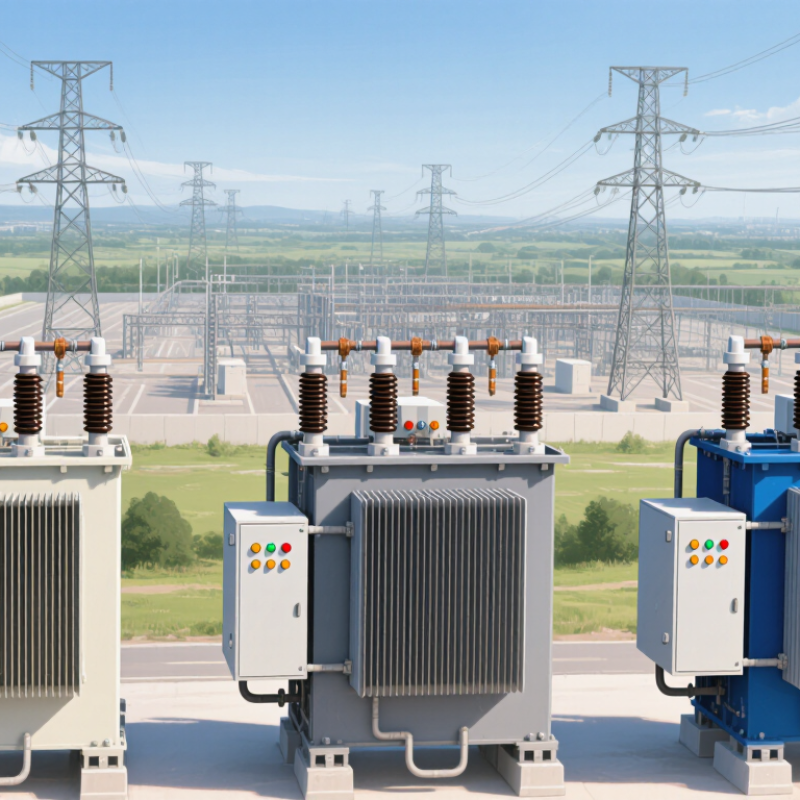
A three-phase transformer transfers electrical energy between circuits using three alternating currents, each offset by 120 degrees. This arrangement delivers steady power for large motors and equipment. It is common in factories, commercial buildings, water systems, and data centers. The difference is practical. Motors can run more smoothly, and power can be distributed with fewer conductors than in many single-phase setups.
Connections shape how a transformer behaves. Delta windings are often used where a neutral is not required, while wye windings can provide one for line-to-neutral loads. Voltage, frequency, insulation, and cooling method also affect the choice. A nameplate’s kVA rating is only part of the picture. Small details matter. For example, a workshop with several motor loads may experience different demand during startup than during steady operation.
Selection should reflect the actual site, not just a catalog figure. Engineers typically review load size, expected growth, ambient temperature, and available fault protection. Uneven phase loading can create extra heating, even when total demand seems acceptable. A perfectly balanced load is an ideal, not a daily guarantee. That assumption deserves a second look. Clear installation records and routine checks help identify loose connections, unusual noise, or rising temperatures before they become larger problems.
Evaluating three-phase transformer manufacturers in China requires more than comparing prices and rated capacity. Buyers should examine design calculations, core and winding materials, factory process controls, and documented routine and type tests. IEC 60076 provides a recognized framework for power-transformer requirements and testing. Ask for test records tied to the exact model, not just a catalogue sample. Small details matter: winding temperature data, sound levels, insulation results, and clearances in the inspection report can reveal how carefully a unit was built.
Demand context is growing. The IEA’s 2023 report, Electricity Grids and Secure Energy Transitions, says annual grid investment needs to rise from about US$300 billion to more than US$600 billion by 2030. That is a grid-wide estimate, not proof of transformer quality. Reliability evidence should include failure history, repair response times, spare-parts access, and realistic delivery schedules. A factory visit helps, but it can show a polished day rather than routine production. I would treat it as one check, not a verdict. Ask how rejected units are recorded, and whether corrective actions are verified. Good answers are specific, traceable, and consistent across documents. A neat certificate alone is not enough.
China’s three-phase transformer sector includes manufacturers with different strengths. One established profile is the utility-scale producer, serving substations and industrial networks. Its work often includes oil-immersed units, custom voltage ratios, and documented factory testing. Engineers should review temperature-rise results, insulation design, and short-circuit withstand data. A clean test report matters. So does a clear explanation of limits.
A second profile is the dry-type specialist, whose products suit indoor sites such as hospitals, commercial buildings, and factories. Cast-resin or ventilated designs can reduce concerns about oil handling, though installation conditions still matter. Ask about enclosure ratings, cooling methods, noise measurements, and maintenance access. A compact transformer is not automatically the best fit. Room for airflow can be easy to overlook.
The third profile is the export-focused manufacturer, often experienced with varied project specifications and international documentation. Its value depends on more than a long product list. Check whether drawings, routine-test records, and delivery schedules match the exact order. Ask how the factory manages design changes. Small details can slip. I would also compare service response times, not just purchase prices, because commissioning questions rarely arrive at convenient moments.
Anonymized, segment-level profiles of common manufacturer types in China’s three-phase transformer industry. These are not named suppliers or a verified company ranking; product specifications vary by manufacturer and project.
| Profile | Typical Product Focus | Common Applications | Typical Design Considerations | Relevant Standards | Information to Confirm When Sourcing |
|---|---|---|---|---|---|
| Profile 1: Utility and power-network specialist | Three-phase oil-immersed power transformers and network transformers for utility and transmission or distribution projects. | Substations, grid expansion, renewable-energy connections, and large commercial or industrial power systems. | Rated voltage and capacity, winding configuration, impedance, cooling method, insulation level, losses, and short-circuit withstand requirements. | Applicable parts of the GB/T 1094 series and, where specified, the IEC 60076 series. | Guaranteed load and no-load losses, temperature rise, routine and type-test reports, accessories, delivery scope, and after-sales support. |
| Profile 2: Distribution-transformer specialist | Three-phase oil-immersed and dry-type distribution transformers for stepping voltage down for end users. | Commercial buildings, public facilities, factories, housing developments, and local distribution networks. | Installation environment, indoor or outdoor use, noise limits, fire-safety needs, efficiency, enclosure protection, and maintenance access. | Applicable GB/T 1094 requirements; project specifications may also reference IEC 60076 requirements. | Site conditions, connection group, tap-changer requirements, efficiency data, noise declaration, fire and environmental requirements, and commissioning services. |
| Profile 3: Industrial and project-engineered specialist | Three-phase transformers configured for industrial processes, special loads, or project-specific electrical systems. | Manufacturing plants, mining operations, data centers, transport infrastructure, and renewable-energy projects. | Load profile, harmonics, duty cycle, voltage variation, ambient conditions, cooling, protection, and integration with the wider electrical system. | Applicable GB/T 1094 or IEC 60076 requirements, together with any project-specific standards and technical specifications. | Approved drawings, operating profile, interface requirements, test scope, documentation language, spare parts, and commissioning responsibilities. |
Top Three Phase Transformer Manufacturers in China
Comparing manufacturers starts with product range. Check whether each supplier builds oil-immersed and dry-type units, and supports the voltage and capacity your project needs. A broad catalogue is useful, but it does not prove every design is made in-house. Ask for model-specific drawings and recent test records. Details matter.
Technology affects losses, noise, temperature rise, and service life. Compare core materials, winding design, cooling methods, and monitoring options against the actual operating conditions. For example, a unit installed near occupied rooms may need tighter noise limits than one in an industrial yard. Request measured figures, not only catalogue claims. Numbers can vary.
Quality standards deserve equal scrutiny. Confirm which applicable IEC or GB requirements each model is tested against, then review routine and type-test documentation. Check that ratings, test conditions, and serial numbers match the offered unit. Factory visits can reveal winding cleanliness, assembly controls, and instrument calibration, though one visit cannot prove consistent production. I would also ask how faults are logged and corrected. That answer is sometimes vague. A clear process matters.
A standards-based snapshot of common Chinese grid voltage classes for evaluating three-phase transformer suppliers. The chart shows application voltage levels, not company-specific ratings or rankings.
Distribution, substation, and transmission applications commonly use 10 kV, 35 kV, and 110 kV system voltage classes, respectively. Actual product ranges, designs, and compliance should be confirmed against each supplier’s specifications and applicable GB/T or IEC 60076 requirements.
Choosing a Chinese three-phase transformer manufacturer takes more than comparing quotations. Check whether the proposed unit matches your voltage class, frequency, cooling method, impedance, and installation conditions. Ask for routine and type-test records, plus guaranteed no-load and load losses. Small differences matter: a transformer running continuously in a hot, dusty plant faces a different duty from one serving a seasonal facility. Inspect the factory’s winding area, core assembly, drying process, and test bay where possible. A polished brochure is not proof.
The International Energy Agency’s 2023 report, Electricity Grids and Secure Energy Transitions, says more than 3,000 GW of renewable projects are waiting in grid-connection queues worldwide. It also says annual grid investment needs to exceed $600 billion by 2030. These pressures make production capacity, component traceability, and realistic delivery schedules important checks—not just sales claims. Request a sample inspection plan, packing details, spare-parts availability, and a clear warranty process. Compare the quoted efficiency against the test standard and the actual operating load. Ask who handles commissioning questions across time zones. Even a strong factory can have gaps; I would verify response speed before signing, not assume it from a visit.

