What Is a Professional Kart?
A Professional Kart is more than a fast machine. It is a competition kart built around precise handling, repeatable performance, and parts matched to a defined racing class. The label itself has no single universal specification, so buyers should check the championship rules behind any claim. That detail matters.
FIA Karting’s 2024 technical regulations provide a useful reference point. They distinguish direct-drive categories, such as OK and OK-Junior, from gearbox classes including KZ and KZ2. In KZ racing, the regulated 125 cc engine uses a multi-speed gearbox, placing different demands on braking, corner entry, and driver control (FIA Karting, 2024 Technical Regulations). These are not just catalog distinctions. They shape how a kart accelerates out of a tight turn and how consistently it can complete a race distance.
Professional equipment also depends on more than the engine. The chassis, brakes, seat position, tires, and setup must work together for the driver, track, and class. FIA Karting’s technical documents specify equipment and eligibility requirements, giving teams a common basis for inspection and comparison. A regulation-compliant kart is not automatically the right kart for every driver, though. Fit and setup still matter, and even experienced teams make adjustments after testing.
This guide explains what separates a Professional Kart from recreational equipment, which specifications deserve attention, and how to assess claims using verifiable standards rather than appearance alone. Sources referenced: FIA Karting, 2024 Technical Regulations and championship regulations.
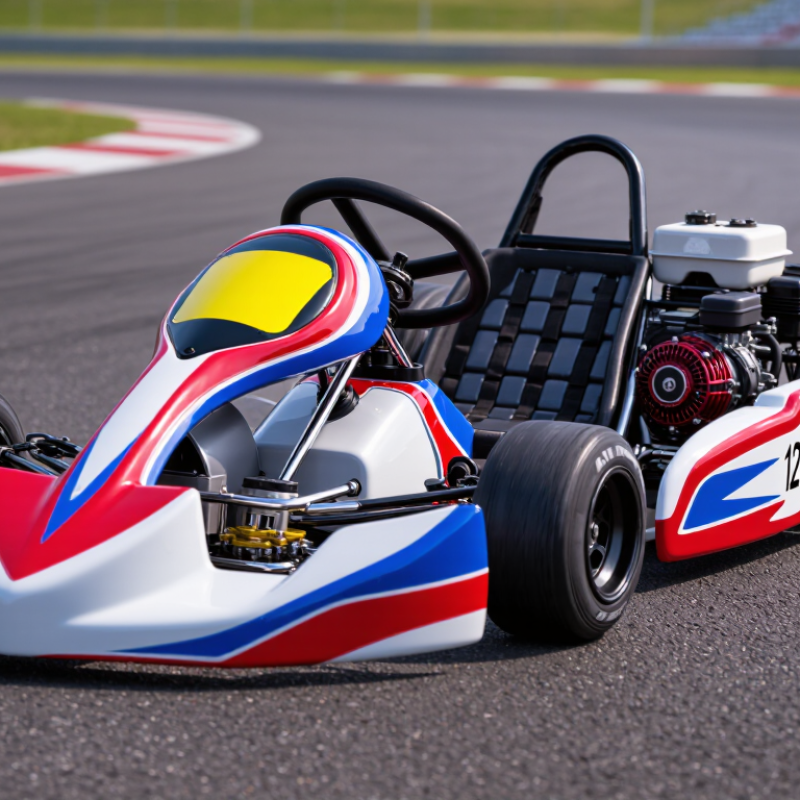
What Defines a Professional Kart in FIA Karting Competition?
In FIA Karting competition, a professional kart is not defined by speed alone. It is built and prepared to meet the technical rules of its specific class. Those rules can cover chassis dimensions, engine type, minimum weight, tyres, and homologated components. Details vary by category and season, so a setup that is legal in one class may not qualify in another. Scrutineers may inspect the kart before or after a session, checking measurements, seals, and safety-related parts. Small details matter. Rules are specific.
Professional preparation also shows in how consistently the kart behaves. A straight steering wheel, secure seat, properly adjusted chain, and clean braking surfaces are practical signs of careful maintenance. Drivers and mechanics record changes to tyre pressure, axle stiffness, and gearing, then compare lap times with handling notes. This process is rarely perfect. Track temperatures shift, and a quick adjustment can solve one problem while creating another. FIA regulations provide the framework; sound judgment and repeatable checks help make a kart race-ready. Polished bodywork may look impressive, but compliance, reliability, and driver control carry more weight. That distinction is easy to miss.
How 125cc Two-Stroke Engines Power Senior OK and KZ Classes
A professional kart is built for precise control, repeatable performance, and demanding competition. In Senior OK and KZ classes, a 125cc two-stroke engine delivers sharp acceleration and responds quickly to throttle input. Its power arrives across a relatively narrow rev range, so drivers must carry speed through corners and choose clean exits. Small changes matter.
Senior OK karts use a single-speed setup, without a gearbox. Drivers manage speed through braking, cornering, and engine response. KZ karts add a multi-speed gearbox, typically with six forward gears, and a clutch for starting. Gear selection can keep the engine closer to its useful power range, but it adds another task under pressure. More gears do not automatically mean faster laps. Chassis setup and driver consistency still count.
Tips: Warm the engine carefully and follow the class’s technical rules. Check chain tension, spark plug condition, and cooling before driving. Record gear choices and lap times. A setup that feels quick may not be consistent; that distinction is worth checking.
Why KZ Karts Use Six-Speed Gearboxes While OK Karts Are Direct-Drive
A professional kart is not defined only by speed; its transmission changes how the driver manages every corner. In KZ, a six-speed gearbox lets the driver select ratios for acceleration, braking, and track layout. FIA Karting’s 2024 technical regulations provide the reference point: KZ gearboxes may have up to six forward gears. On a tight circuit, the driver may shift several times between corners. You can feel each change through the lever and hear the engine note rise and fall.
OK karts take the opposite approach. Their direct-drive layout has no gearbox, so the engine drives through a fixed ratio, with a clutch for starting. FIA Karting’s technical regulations describe the OK engine and transmission specification; the result is fewer controls, not less skill. Drivers must carry momentum and keep the engine in its useful rev range. One missed turn-in can cost speed all the way down the straight. Simple on paper. Demanding on track. The comparison is not perfectly tidy: gearing, circuit shape, and driving style all affect lap times, so six ratios alone do not make a kart faster.
What Is a Professional Kart? — Why KZ Karts Use Six-Speed Gearboxes While OK Karts Are Direct-Drive | Feature | KZ Kart | OK Kart |
| Transmission | Six-speed sequential gearbox. The driver selects gears as speed and track conditions change. | Single-speed direct drive, with no multi-speed gearbox. Engine power is transmitted without gear changes. |
| Engine format | Typically a 125 cc, water-cooled, two-stroke engine in the KZ category. | Typically a 125 cc, water-cooled, two-stroke engine in the OK category. |
| Clutch and starting | A manually operated clutch is used for starting and maneuvering; the kart is generally started by pushing. | Uses a starting clutch, but has no gearbox for the driver to shift. OK karts are generally push-started. |
| Driver controls | The driver steers, brakes, operates the throttle and clutch, and changes gears using a sequential shift control. | The driver steers, brakes, and operates the throttle; there is no gear-shift control. |
| Driving emphasis | Requires gear selection and coordination with the clutch, especially through corners and during acceleration. | Focuses on maintaining momentum, choosing racing lines, and managing engine speed without shifting. |
| Typical use | A high-performance gearbox class used in national and international kart racing. | A high-performance direct-drive class used in national and international kart racing. |
| Key distinction | The six-speed gearbox lets the driver keep the engine in a useful operating range across different track sections. | The direct-drive layout is mechanically simpler to operate from the driver’s perspective because it requires no gear changes. |
| Performance note | Actual speed and lap time depend on the circuit, gearing, setup, weather, and regulations; neither class has one fixed performance figure. |
How FIA Homologation Regulates Kart Engines, Chassis, and Safety Equipment
A professional kart is not defined by speed alone. FIA homologation sets technical limits for specific karting categories. It identifies approved designs and the period in which they may be used. That distinction matters: a powerful engine or polished chassis is not automatically eligible for every event.
For engines and chassis, homologation documents describe key features such as construction, dimensions, and permitted components. Scrutineers can compare a kart with those specifications and check identification marks. Small details count. A modified part may affect eligibility, even when the kart feels unchanged on track. Requirements differ by class and competition, so teams should check current regulations rather than rely on old setup notes.
Safety equipment is also governed by defined standards and event rules. Drivers may need approved helmets, suits, gloves, and footwear, with labels or certification marks available for inspection. Exact requirements can vary. Paperwork can feel tedious, but it helps officials apply the same checks to everyone. It is not a guarantee that a kart is perfectly safe, either; maintenance, fit, and careful inspection still matter. That part is easy to underestimate.
How Race Teams Use Lap Times and Tire Pressures to Refine Kart Setup
A professional kart is rarely fast because of one clever adjustment. Race teams build a repeatable picture from lap times, driver notes, and tire-pressure readings. They compare several clean laps, not one hero lap. Sector times can show where pace disappears: a slow exit from a tight hairpin suggests a different issue than fading speed through a long bend. Crews also record fuel load, track temperature, and session conditions, because yesterday’s setup may not suit a cooler morning. Small details matter.
After each run, the team checks tire pressures promptly with the same gauge. The readings help show how much pressure changed during driving. If one tire gains more than the others, the crew may investigate grip, corner balance, or driving style before changing the setup. They adjust one variable at a time, then return to the track and compare the results. Lap time is evidence, not a verdict. A quicker lap can come from a better line or a small traffic gap, so the driver’s feedback matters too. Notes are not always precise; that is part of the process. Teams refine their judgment by looking for patterns across runs, rather than trusting a single number.