Why Do Insulin Syringes Come in Different Sizes?
An Insulin Syringe comes in different sizes because insulin doses, injection needs, and hand preferences are not the same for everyone. The barrel holds a set amount of fluid, often measured in units or milliliters, and its markings show the amount drawn up. Common U-100 syringes, for example, may hold 30, 50, or 100 units. Smaller barrels can make small doses easier to read, while larger barrels accommodate more fluid. But bigger is not automatically better.
The needle also varies. Its length affects how far it enters the skin, while its gauge describes thickness; a higher gauge number generally means a thinner needle. These details can change how an injection feels, though comfort is personal. Small differences matter. A marking can be easy to overlook, especially in dim light or when eyesight is strained. Syringe capacity and markings must match the insulin concentration prescribed, so never assume two devices are interchangeable. A pharmacist or diabetes care professional can confirm the right syringe for a specific insulin and explain its markings. This article explores why these sizes exist and what the numbers mean, without replacing individualized medical advice. Choosing a syringe may seem like a minor decision. It deserves a careful check.
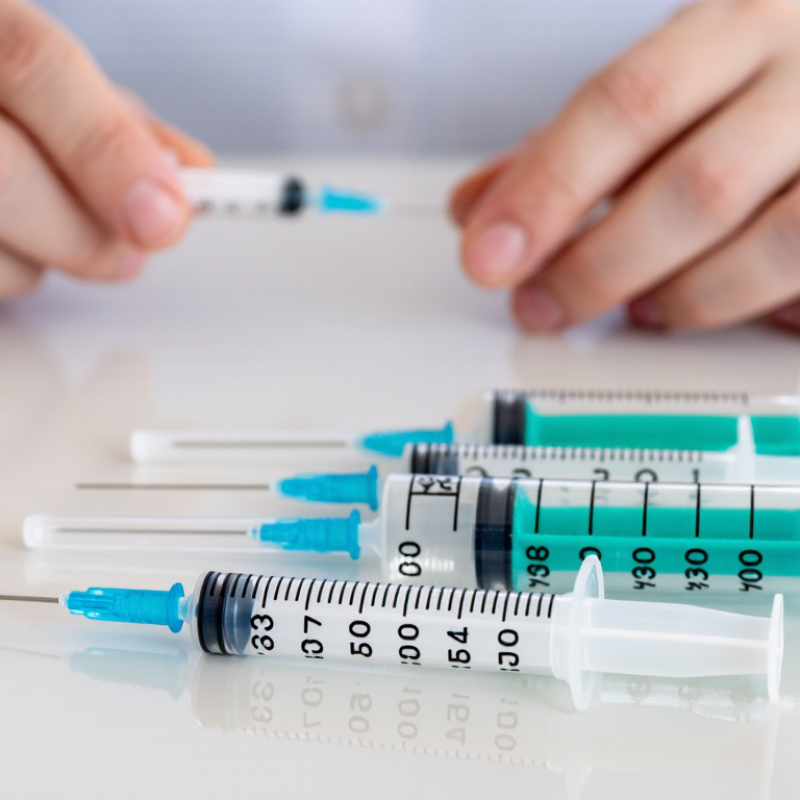
What “Syringe Size” Means: Capacity, Markings, and Needle Dimensions
“Syringe size” can refer to capacity, markings, or needle dimensions. Capacity is the maximum volume the barrel holds. For example, a 0.3 mL syringe calibrated for U-100 insulin holds up to 30 units; a 0.5 mL syringe holds up to 50. That distinction matters. The printed lines show dose increments, not needle length. On many syringes, finer markings make small doses easier to measure, but the scale and insulin concentration must match. U-100 insulin requires a syringe marked for U-100; check the label rather than relying on barrel size alone.
Needle dimensions are described separately by length and gauge. Length indicates how far the needle extends, while gauge relates to its thickness: a higher gauge number generally means a thinner needle. These features affect insertion, not the dose shown on the barrel. The packaging can be confusing, and even careful readers may need a second look. Read the markings at the plunger stopper’s edge, following the product instructions. If the syringe scale, insulin concentration, or prescribed dose seems unclear, ask a pharmacist or clinician before use.
FDA Defines U-100 Insulin as 100 Units per Milliliter
U-100 describes insulin concentration: 100 units in each milliliter of liquid. FDA labeling identifies this strength so patients and clinicians can distinguish it from other concentrations. It does not tell you how much liquid a syringe can hold. That distinction matters.
Syringes come in different capacities because prescribed doses vary. A smaller-capacity syringe may show finer spacing between marks, while a larger one can hold more liquid. Picture the barrel beside a dose instruction: its numbered lines represent insulin units when the syringe is designed for U-100 insulin. The markings are not interchangeable with milliliters.
The syringe and insulin concentration must match. Using the wrong type can cause a dosing error, even when the number seems familiar. Check the concentration on the insulin label and the syringe markings before use. If either is unclear, ask a pharmacist or clinician to verify them with you. Small print can be easy to misread, especially in poor light. It is worth checking twice.
Common U-100 Barrels Hold 30, 50, or 100 Units (0.3, 0.5, or 1 mL)
Insulin syringes come in different sizes because people may need different doses, and a smaller barrel can make some doses easier to measure. Common U-100 syringes hold 30, 50, or 100 units. These capacities equal 0.3, 0.5, and 1 milliliter, respectively. U-100 means the insulin contains 100 units per milliliter; it does not describe the syringe’s total capacity. That distinction matters.
A 30-unit syringe may suit a prescribed dose of up to 30 units, while a 50-unit or 100-unit barrel can hold more. Smaller barrels often have markings that make low doses easier to read, though the spacing varies by syringe. Look closely at the scale. A crowded row of fine lines can be hard to interpret, especially in dim light or when eyesight is strained. Small differences count. The appropriate size depends on the prescribed dose and the syringe’s markings, not simply on which barrel looks most convenient. Use a syringe intended for U-100 insulin, and ask a pharmacist or healthcare professional if the label, scale, or dose is unclear. I might assume a larger barrel is more flexible, but it can be less precise for a small dose. Don’t guess or convert units on your own.
Why Do Insulin Syringes Come in Different Sizes?
Common U-100 barrels hold 30, 50, or 100 units (0.3, 0.5, or 1 mL).
U-100 insulin contains 100 units per milliliter. Syringe sizes provide different maximum capacities, so the appropriate barrel size depends on the prescribed dose. Always use the syringe markings and insulin concentration specified for your treatment.
How Dose Range and Scale Markings Affect Measurement Precision
Insulin syringes differ in capacity and scale markings because prescribed doses vary. A smaller-capacity syringe may show finer increments, making small volumes easier to read. A larger one can hold more fluid, but its markings may be farther apart. Tiny lines matter. On a clear barrel, the space between marks can feel surprisingly narrow.
The printed scale must match the insulin concentration. For example, a syringe calibrated for U-100 insulin is intended for that concentration; using a mismatched syringe can lead to a serious measurement error. Do not estimate a dose from another syringe’s scale or convert markings on your own. A pharmacist or diabetes care professional can confirm that the syringe, insulin, and prescribed dose are compatible. Check the label and the scale in good light, and read the line at eye level. I’ve found that even familiar equipment can be misread when hands are rushed or vision is tired. That is worth admitting, not brushing aside. If markings are hard to distinguish, ask a qualified professional about a suitable syringe and show them how you read its scale.
Why Do Insulin Syringes Come in Different Sizes? - How Dose Range and Scale Markings Affect Measurement Precision
| Syringe capacity | Maximum on a U-100 scale | Common scale increments* | Volume represented by each increment at U-100 | Measurement consideration |
| 0.3 mL | 30 units | Often 1 unit; some models have 0.5-unit markings | 1 unit = 0.01 mL; 0.5 unit = 0.005 mL | A smaller capacity can make lower dose ranges easier to read, especially when the scale has finer graduations. |
| 0.5 mL | 50 units | Often 1-unit markings | 1 unit = 0.01 mL | Provides more capacity than a 0.3 mL syringe while retaining unit-by-unit markings on many models. |
| 1.0 mL | 100 units | Often 2-unit markings; graduations vary | 2 units = 0.02 mL | Offers the largest capacity in this comparison, but wider spacing between marks may make small amounts harder to estimate. |
*Scale increments differ by syringe design; check the markings and instructions on the specific syringe. These unit-to-volume equivalents apply to U-100 insulin only. Always match the syringe to the insulin concentration and prescribed dose, and ask a pharmacist or healthcare professional if the markings or compatibility are unclear.
Why Syringe Calibration Must Match the Insulin Concentration
Why Do Insulin Syringes Come in Different Sizes?
Syringes differ in capacity and scale, but the markings must also match the insulin concentration. A syringe calibrated for U-100 insulin is designed for insulin containing 100 units per milliliter. Other concentrations may require a different syringe. Matching them matters: the wrong combination can deliver too much or too little insulin, even when the plunger looks correctly aligned. Small markings can be easy to misread, especially in dim light or when someone is rushed. It is worth pausing.
Tips: Check the insulin concentration and syringe label before each dose. Use the syringe type specified by your clinician or pharmacist. If either label is unclear, stop and ask a qualified professional rather than estimating or converting the dose yourself.
Syringe capacity also affects readability. A smaller-capacity syringe may make a small prescribed dose easier to measure, while a larger one can hold more fluid. Neither is automatically right for every person or dose. Check that the numbered scale is intended for the insulin you use, and follow your care team’s instructions. Packaging can be confusing; that is a real limitation, not a personal failing. If your insulin concentration, syringe, or prescription changes, confirm the correct setup before injecting.