Why Is a Mini Fridge Compressor Not Working?
A mini fridge can go quiet without its compressor being faulty. The room may be too warm, the temperature control may be set incorrectly, or dust may be blocking airflow around the condenser. A click from the rear, a warm cabinet, and a silent motor each offer clues, but none proves the compressor has failed. Accurate diagnosis matters: replacing a sealed-system component can be costly, and the real fault may be a simple control or ventilation problem.
The U.S. Department of Energy’s appliance guidance emphasizes that refrigerator performance depends on suitable temperatures and clear airflow. ENERGY STAR’s compact refrigerator information also notes that certified models use less energy than standard models, underscoring why efficient operation matters even in a small appliance. These sources provide useful context, though they do not establish a failure rate for mini-fridge compressors. As refrigeration engineer Andy Pearson has put it: “Good diagnosis starts with understanding the whole system, not just one component.” Treat that as a practical principle, not a substitute for model-specific service information.
This guide examines why a Mini Fridge Compressor may not start, run, or cool properly. It will distinguish likely causes, such as a faulty thermostat, relay, overload protector, or obstructed condenser, from signs that suggest compressor trouble. Some symptoms overlap. That is where quick guesses can mislead. Before opening panels or ordering parts, check the power supply, settings, clearance, and visible dust. If the compressor repeatedly clicks, overheats, or remains silent despite a verified power source, a qualified appliance technician can test the electrical components safely and identify the next step.
How a Mini Fridge Compressor Works
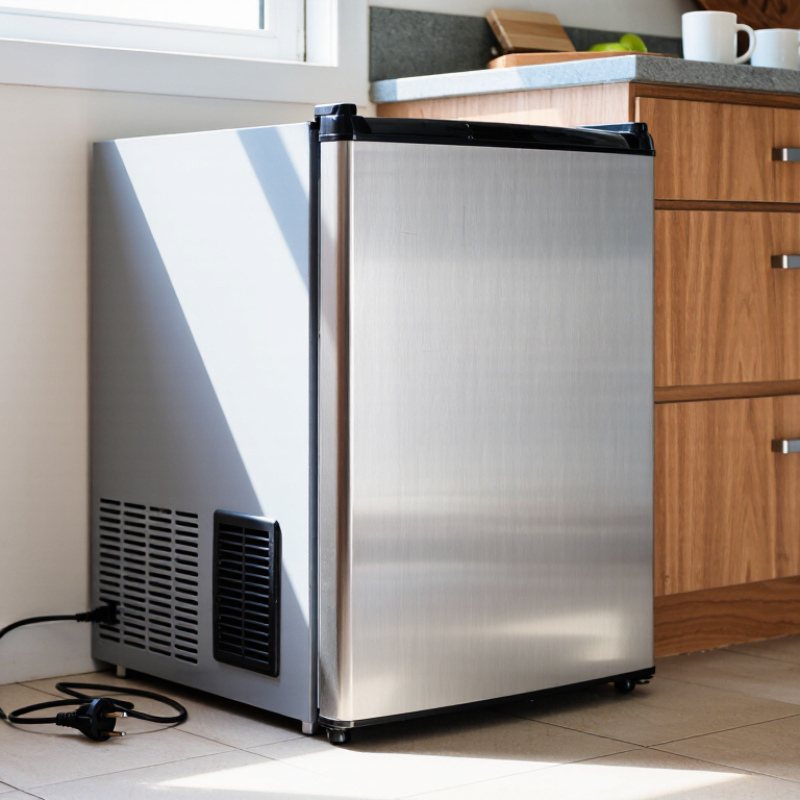
A mini fridge compressor is a small pump, not a cooling box by itself. It draws cool, low-pressure refrigerant vapor from the evaporator and squeezes it into hot, high-pressure vapor. That pressure change is the key. The hot vapor moves through condenser tubing, often along the cabinet walls, and releases heat into the room. Touch the sides after a long cooling cycle; they may feel warm. A narrow capillary tube then lowers refrigerant pressure before it enters the evaporator. There, the refrigerant absorbs heat from the fridge interior and returns to the compressor. The loop repeats.
A thermostat or electronic control starts and stops the cycle as temperatures change. A failed start relay, damaged wiring, or an overheated compressor can interrupt it. A repeated click may mean the compressor tries to start but cannot; it does not prove the compressor itself has failed. Dust-covered coils and blocked ventilation can also raise operating temperatures. ENERGY STAR’s published compact-refrigerator criteria set a 10% efficiency advantage over federal minimum requirements for qualifying models. That figure is an efficiency benchmark, not a guarantee of compressor life. And a cold freezer compartment can hide uneven cooling elsewhere. It is easy to miss. Check airflow and coil cleanliness first, but leave electrical testing to a qualified technician; the diagnosis is not always obvious.
What Happens When the Compressor Stops Working
When a mini fridge compressor stops, refrigerant no longer circulates through the cooling system. The cabinet gradually warms, even if the interior light still works. Milk, leftovers, and other perishables may become unsafe if the temperature stays too high. Check with an appliance thermometer; a cold-looking drink is not a reliable test. Not always obvious. A failed compressor may stay silent, while a clicking sound can mean the start components are struggling. A faint click can be misleading, so sound alone cannot confirm the fault.
The compressor may stop because of poor airflow, a faulty temperature control, an electrical connection problem, or a failed start component. The compressor itself can also fail, but that diagnosis usually needs a technician. Check that the fridge has space around its vents and that its control is set correctly. If it still does not cool, avoid opening the sealed refrigerant system or repeatedly switching the unit on and off. That can make troubleshooting harder. Record the temperature and any sounds, then seek qualified repair help if the fridge keeps clicking or warming. It is tempting to blame the compressor right away, but several smaller faults can produce similar symptoms.
Common Causes of Mini Fridge Compressor Failure
A mini fridge compressor may seem dead when the real fault is electrical. A failed start relay, overload protector, thermostat, or loose connection can prevent it from starting. Listen for a brief hum followed by a click. That clue is imperfect. Dust packed against the rear condenser, poor ventilation, or a hot room can also make the compressor overheat and cycle off. Leave space around the cabinet and check that the condenser area is clean and unobstructed.
A compressor that runs constantly but barely cools may point to a refrigerant leak, a blocked capillary tube, or worn compressor valves. These faults need a qualified refrigeration technician; repeated restarting can add strain. ENERGY STAR reports that certified refrigerators use about 9% less energy than models meeting the federal minimum standard. That efficiency figure is not a failure rate, but a sudden rise in a mini fridge’s power use can be a useful warning. The U.S. Department of Energy’s refrigerator standards analysis compares annual energy use under standardized test conditions, so real-world readings may differ. Check the temperature, airflow, door seal, and power supply before assuming the compressor itself has failed.
Safe Checks to Identify the Problem
A mini fridge that stops cooling may have a simple airflow problem, not a failed compressor. Check that its plug is fully seated and the outlet works, using a small lamp if needed. Set the thermostat to a middle setting, then listen for a gentle hum or a click. A click repeated every few minutes can suggest a start-component or compressor fault; it does not confirm one. Keep the unit upright and leave clear space around its vents.
Look for dust on accessible exterior vents and wipe it away with the fridge unplugged. Do not remove electrical covers, touch wiring, or bypass a relay. If the casing feels unusually hot, you smell burning, or the cord is damaged, unplug the fridge and arrange qualified service. Check the temperature with a separate appliance thermometer: the FDA advises keeping refrigerators at or below 40°F (4°C). Give the unit several hours after a setting change; a warm interior right after adjustment is not proof of compressor failure.
ENERGY STAR’s refrigerator criteria report that certified full-size models use about 9% less energy than models meeting the federal minimum standard. That figure is not a mini-fridge diagnostic, but it shows why energy use alone cannot identify a bad compressor. This check is easy to misread. If the light works but cooling never returns, note the sounds, temperature, and how long the unit has run before contacting a technician.
Why Is a Mini Fridge Compressor Not Working? Safe Temperature Checks
Use an appliance thermometer to check the temperature after the mini fridge has had time to stabilize. The refrigerator should stay at or below 4°C (40°F); a freezer compartment should be at or below −18°C (0°F). If temperatures remain too warm, check that the fridge has power, the thermostat is set correctly, and air can circulate around it. Avoid opening electrical panels or sealed compressor components.
When to Repair or Replace the Compressor
A mini fridge that hums briefly, clicks, then falls silent may have a compressor problem. But those symptoms do not prove the compressor has failed. A faulty thermostat, start relay, or wiring connection can produce similar behavior. Check that the outlet works and the temperature control is set correctly. Listen for repeated clicks, and note whether the compressor feels unusually hot. Diagnosis matters.
Repair may make sense when a technician confirms a failed start component rather than a damaged compressor. Replacing a relay or capacitor is often simpler than opening the sealed cooling system. If the compressor itself is weak, a technician can check its electrical readings and assess the refrigerant circuit. Do not attempt sealed-system repairs yourself; they require specialized tools and training. Even a careful diagnosis can uncover more than one fault.
Replacement is often the practical choice when a compressor repair approaches the cost of another comparable fridge. Consider the unit’s age, cooling performance, repair warranty, and the price of labor and parts. A newer fridge with a covered repair may be worth fixing. An older unit with rust, damaged wiring, or several failing parts may not be. It is easy to focus on the compressor and overlook those other costs.