
Why Choose Plastic Injection Molding Manufacturing?

Plastic injection molding manufacturing helps turn carefully designed parts into repeatable products at scale. It can produce a small, detailed connector or a sturdy appliance housing, often with consistent dimensions across large production runs. The process also supports varied resin choices, surface finishes, and part geometries. Those benefits depend on sound design and steady process control, not simply on owning a mold.

John Beaumont, an injection molding specialist and author, has emphasized the importance of treating mold design, material behavior, and processing conditions as connected factors. A practical paraphrase of his guidance is this: reliable parts come from controlling the whole molding system. That matters. A well-made tool can still produce defects if the resin is poorly dried or cooling is uneven. A visible sink mark near a thick rib is a small reminder that design decisions have real consequences.

For manufacturers, the choice is strongest when the part design suits the process and expected production volume justifies tooling. It can reduce per-part costs over time and support repeatable assembly. But the upfront mold investment, design changes, and setup work should not be minimized. Not every part is a fit. A careful feasibility review, material assessment, and prototype trial can reveal trade-offs before full production begins. This article explores why companies choose plastic injection molding manufacturing, where it performs well, and what to evaluate before committing.
Why Choose Plastic Injection Molding Manufacturing?

What Plastic Injection Molding Manufacturing Is

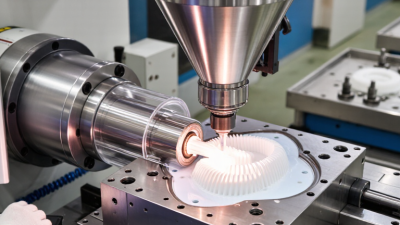
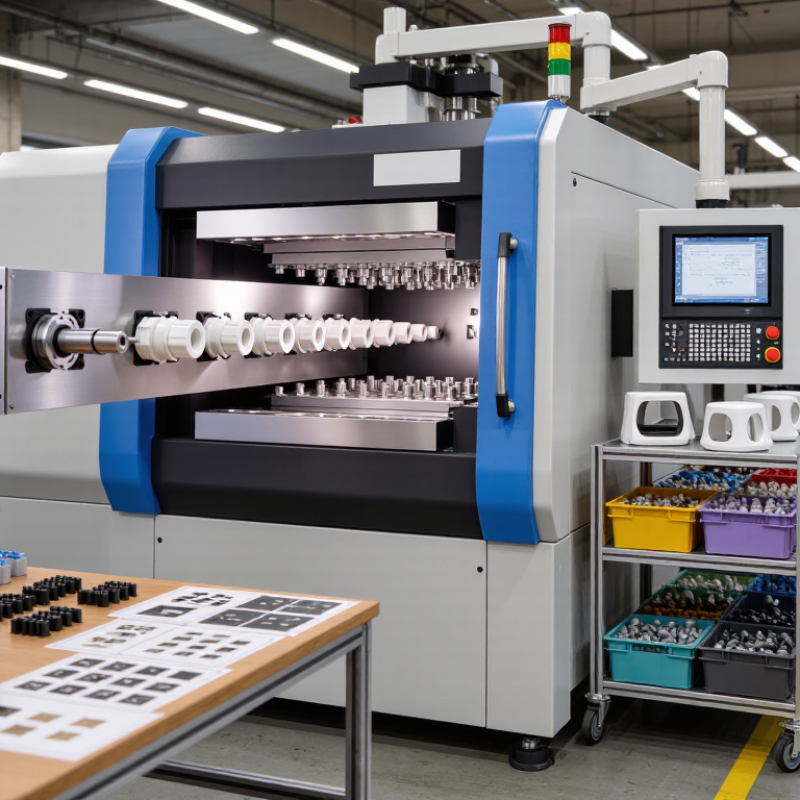
Plastic injection molding is a manufacturing process that shapes molten plastic inside a closed mold. Pellets enter a heated barrel, where a rotating screw melts and pushes them forward. The machine injects the material into a clamped mold, then holds pressure as the plastic cools. Once solid, the part is ejected. That is the cycle. Common applications include appliance housings, medical-device components, and small fittings, where repeatable dimensions matter. Some parts use thermoplastics; others require different materials and process settings.

A 2024 Grand View Research analysis estimated the global injection-molded plastics market at about US$330.4 billion in 2023. That figure describes market value, not guaranteed part quality or production efficiency. In practice, outcomes depend on mold design, material choice, temperature, and cooling time. A thin wall may cool quickly, while a thick section can shrink or warp. Details matter. Engineers often test early samples and adjust the mold before full production. This can add time and cost, a trade-off that is easy to underestimate. The process is highly repeatable once controlled, but it is not automatically the right choice for every shape or production volume.

How the Injection Molding Process Works

Why Choose Plastic Injection Molding Manufacturing?
How the Injection Molding Process Works

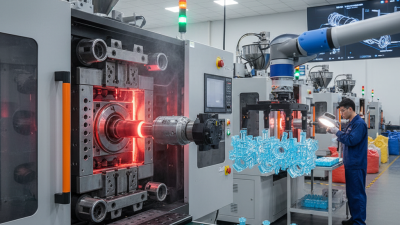
Injection molding turns plastic pellets into repeatable parts through a controlled cycle. Pellets enter a hopper, then a rotating screw moves them through a heated barrel until they melt. The machine injects the melt into a closed mold, where pressure fills fine details such as ribs, clips, and lettering. The material cools and hardens before ejector pins release the part. Then the cycle begins again.

The details matter. Holding pressure helps compensate for shrinkage, while cooling time affects both part quality and production speed. A small temperature or mold-design change can cause warping, sink marks, or incomplete filling. In practice, the first shot is rarely perfect. Engineers inspect samples and adjust settings before approving a stable production run. Grand View Research estimated the global injection-molded plastics market at USD 330.98 billion in 2023, illustrating the process’s industrial scale; market size alone, however, does not guarantee a suitable part or process.

Tips: Ask for a trial run and inspect parts from different points in the cycle. Check dimensions, surface finish, and fit—not just appearance. Keep notes on settings; small changes can matter.

Why Choose Plastic Injection Molding Manufacturing?

How the Injection Molding Process Works

Cooling often takes the largest share of an injection molding cycle. The proportions shown are an illustrative example; actual cycle times vary with the part design, material, mold, and machine settings.

Which Materials and Product Designs It Supports

Plastic injection molding supports a broad range of thermoplastics, including polypropylene, ABS, polycarbonate, and nylon. The right grade depends on heat, impact, chemicals, and appearance—not just price. PlasticsEurope’s Plastics – the Facts 2024 report puts thermoplastics at 90.4% of global plastics production in 2023. That breadth gives designers options, but not every resin suits every part. Small details matter.

For a thin-walled enclosure, uniform wall thickness helps reduce sink marks and uneven cooling. Ribs can add stiffness without making the whole part thicker; rounded corners and draft angles help it release from the mold. Flexible parts may use thermoplastic elastomers, while glass-filled grades can improve stiffness but may leave visible fibers and increase tool wear. Grand View Research estimated the global injection molding market at USD 284.4 billion in 2023, reflecting its scale across many applications—not a guarantee that every design will be economical.

Design choices involve trade-offs. Undercuts, tight tolerances, and complex side actions can add tooling cost and maintenance. A CAD model may look clean, yet a gate location can leave a witness mark on a visible surface. Prototype testing helps reveal issues before production, especially with recycled or filled grades, whose flow and shrinkage can vary. These are details worth checking early.

What Production Advantages It Offers

Plastic injection molding earns its production advantage through repeatable cycles, not just speed. Once a mold is tuned, it can form thousands of closely matched parts, including ribs, bosses, and snap features. Multi-cavity tools can produce several parts per cycle, while automated ejection reduces routine handling. That can stabilize labor and unit costs at sustained volumes. Grand View Research valued the global injection molding market at USD 262.7 billion in 2023. Its 2024 report projected a 4.8% compound annual growth rate through 2030, reflecting broad industrial demand. Market growth alone does not prove savings for every part.

Tooling is the trade-off. Steel molds can require substantial upfront investment, and late design changes may mean costly rework. Injection molding works best when geometry, resin choice, and expected demand are considered before tooling begins. Thin walls, even wall thickness, and suitable draft angles can support reliable filling and ejection. Still, they are not guarantees; part size, tolerances, and resin behavior can complicate production. I would compare total lifecycle cost, including scrap and maintenance, rather than chase the lowest quoted unit price. Not every part fits.

Why Choose Plastic Injection Molding Manufacturing? – What Production Advantages It Offers

Production Advantage What It Offers How It Helps Production Key Consideration
High-volume output Once the mold and process are set up, parts can be produced in repeated cycles. Cycle times range from seconds to longer periods, depending on the part, material, and cooling requirements. Supports efficient production of large quantities with a consistent process. Actual output depends on mold design, the number of cavities, machine capacity, and cycle time.
Lower unit cost at scale Tooling requires a substantial upfront investment, while the cost of producing each additional part can be comparatively low at higher volumes. Can make the process economical for products with steady, high demand. For low volumes or frequently changing designs, tooling costs may outweigh per-part savings.
Repeatable part production A properly designed mold and controlled process can produce parts with consistent features across production runs. Helps support dependable assembly and product quality. Consistency depends on mold condition, material control, machine settings, and inspection practices.
Complex part geometry Molds can incorporate features such as ribs, bosses, snaps, and detailed surface textures. Multiple design features may be formed in a single molding cycle, potentially reducing separate components or operations. Part geometry must account for draft, wall thickness, material flow, and mold release.
Broad material selection Many thermoplastics can be injection molded, including materials with different levels of stiffness, impact resistance, and heat performance. Allows material selection to be matched to functional and environmental requirements. Material choice affects processing conditions, part performance, and tooling design.
Reduced post-processing Parts can often be molded close to their intended final shape, with color and surface texture incorporated into the process. May reduce machining, finishing, or painting steps when the design allows. Gates, flash, support structures, or cosmetic requirements may still require secondary work.
Material-use efficiency The process forms parts from a measured amount of molten material; some sprues and runners may be recyclable depending on the resin and quality requirements. Can help limit material waste compared with processes that remove large amounts of stock. Regrind use must be evaluated for material compatibility and product specifications.
Scalable production planning Production capacity can be adjusted through machine selection, mold-cavity count, and scheduling. Provides options for matching output to demand once tooling is established. Capacity increases may require additional tooling, equipment, labor, or validation.

Note: These advantages are typical rather than guaranteed. Suitability depends on part design, production volume, material, tooling investment, and required quality standards.

Which Costs and Limitations to Consider

Plastic injection molding can make each part inexpensive at scale, but the upfront tooling bill is often the real gatekeeper. A steel mold may cost thousands of dollars, with the exact price depending on part size, cavity count, surface finish, and design complexity. Lower-cost aluminum tooling can suit shorter runs, though it may wear sooner. That trade-off matters. A quoted unit price alone can be misleading; setup, material changes, inspection, and packaging also affect the final cost.

The process also has limits. Thick sections may cool unevenly and create sink marks, while sharp corners or poorly placed gates can complicate filling. Draft angles and consistent wall thickness usually make parts easier to release and produce reliably. Design changes after tooling begins can be expensive, especially when mold steel must be cut or rebuilt. Lead times can stretch while the mold is designed, tested, and adjusted. Small orders may not justify these costs, and tight tolerances can require extra inspection. A practical estimate should include expected volume, material, tooling life, and likely design revisions—not just the first production quote.