
What Are the Top Types of Plastic Manufacturing in 2026?

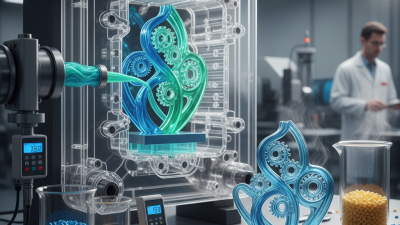
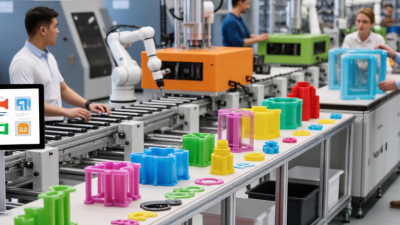
Plastic manufacturing in 2026 spans familiar processes with very different strengths. Injection molding makes precise, repeatable parts, from appliance housings to bottle caps. Extrusion produces continuous shapes, such as pipes, films, and window profiles. Blow molding forms hollow containers, while thermoforming shapes heated sheets into trays and panels. Rotational molding suits large, hollow products where slower cycles are acceptable.

The scale is substantial. Plastics Europe’s Plastics—The Fast Facts 2024 report estimates that global plastics production reached 413.8 million tonnes in 2023. The OECD’s Global Plastics Outlook reports that plastic waste more than doubled worldwide between 2000 and 2019, reaching 353 million tonnes. Those figures describe different stages of the plastics lifecycle, but together they explain why process choice now involves more than output speed. Material use, scrap, product life, and recovery also matter.

The distinction matters. As polymer scientist Dr. Ramani Narayan has emphasized, “Biobased does not mean biodegradable, and biodegradable does not mean biobased.” That reminder helps separate manufacturing methods from material claims. A molding process does not, by itself, make a product recyclable or lower-impact.

A tidy ranking can mislead. The best method depends on the part’s shape, production volume, tolerance, and material. This guide compares the leading types of plastic manufacturing, their practical trade-offs, and where each process fits. Real production floors are less neat than diagrams suggest. A small design change can alter cost, cycle time, and waste.
What Are the Top Types of Plastic Manufacturing in 2026?

2022 Baseline: Global Plastics Output Reached 400.3 Mt (PlasticsEurope)

In 2022, global plastics production reached 400.3 million tonnes, according to PlasticsEurope’s Plastics – the Fast Facts 2023. That baseline gives manufacturers a useful scale check for 2026 planning. It also shows why “plastic” is not one uniform material: different polymers suit different products, processing conditions, and performance needs.

Polypropylene represented 18.9% of global production, while low- and linear-low-density polyethylene accounted for 14.1%. High- and medium-density polyethylene made up 12.2%, and PVC reached 12.9%, according to the same report. These figures help explain the prominence of extrusion and injection molding. Polyethylene films can be produced on extrusion lines; polypropylene is commonly molded into rigid components. PVC serves products such as pipes and profiles. The data describe polymer output, not the volume made by each manufacturing process.

Still, scale matters. A factory choosing resin must consider heat resistance, flexibility, tooling, and scrap rates—not just market share. A high-volume polymer is not automatically the right one. These production shares also represent a 2022 snapshot, not a forecast. The uncomfortable point is that the headline total says little about product lifespan or end-of-life recovery. PlasticsEurope’s number is a valuable baseline, but it should not be mistaken for a measure of sustainability.

Injection and Compression Molding: Shaping Plastics in Closed Molds

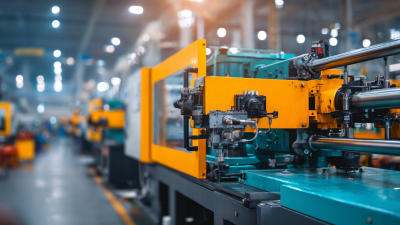
Injection molding and compression molding both shape plastic inside closed molds, but they handle material differently. In injection molding, heated plastic is pushed through a nozzle into a clamped cavity. The method suits detailed parts, such as ribbed housings or snap-fit clips, especially when many consistent pieces are needed. Thin walls and tiny features are possible, though they demand careful mold design. Small errors matter.

Compression molding starts with a measured charge placed directly in a heated mold. The mold closes, and pressure spreads the material into the cavity. This approach is common for thermosets and reinforced compounds, including parts with thicker sections. It can use simpler tooling for some designs, but loading and trimming may add hands-on work. The charge must be positioned well.

Choosing between them depends on geometry, material, production volume, and acceptable cycle time. Injection molding often offers repeatable detail, but its tooling can be costly and sensitive to changes. Compression molding may fit larger, sturdy parts, yet uneven charge placement can leave weak spots or surface variation. That risk is easy to underestimate. Engineers should test representative parts, check thickness and flow, and inspect samples under real process conditions. A drawing alone will not reveal every issue. Even then, the first settings may need adjustment.

Injection and Compression Molding: Typical Cycle-Time Ranges

A comparison of typical time to complete one molding cycle.

Injection molding cycles are commonly measured in seconds, while compression molding cycles often take minutes. Actual times vary with material, part size, thickness, and process settings.

Extrusion and Blow Molding: Producing Continuous Profiles and Hollow Parts

What Are the Top Types of Plastic Manufacturing in 2026?
Extrusion and Blow Molding: Producing Continuous Profiles and Hollow Parts

Extrusion pushes softened polymer through a shaped die, creating continuous pipe, sheet, tubing, or window seals. Cooling tanks and sizing tools hold the profile steady before it is cut or wound. The die sets the shape. PlasticsEurope’s Plastics—The Fast Facts 2024 reports 413.8 million tonnes of plastics produced worldwide in 2023. That figure covers all plastics, not just extrusion or blow molding, but it shows the scale behind these processes.

Blow molding forms hollow parts such as bottles, tanks, and ducts. In extrusion blow molding, a warm tube of polymer, called a parison, hangs between mold halves. Air expands it against the cooled cavity. Small detail, big effect. Uneven cooling can leave thin spots or visible seams, so operators monitor temperature, air pressure, and cycle timing. Extrusion suits long, consistent shapes; blow molding suits enclosed volumes. The choice is not always clean: part geometry, resin flow, and production volume can shift the economics. A process chart rarely captures those shop-floor trade-offs. Recycled feedstock may also vary in melt behavior, requiring tighter checks and adjustments. PlasticsEurope’s report provides useful industry context, while actual process performance depends on the material and product design.

What Are the Top Types of Plastic Manufacturing in 2026? - Extrusion and Blow Molding: Producing Continuous Profiles and Hollow Parts

Manufacturing Type How It Works Typical Products Common Materials Common Applications Key Advantages Main Considerations
Profile Extrusion Molten plastic is pushed continuously through a shaped die, then cooled and cut to length. Continuous parts with fixed cross-sections, such as channels, trim, tubing, and seals. PVC, polyethylene (PE), polypropylene (PP), and thermoplastic elastomers (TPEs). Construction, furniture, appliances, and automotive trim. Suitable for long runs and consistent cross-sectional shapes; cut length can be varied. Cross-section is determined by the die; cooling and calibration are important for dimensional consistency.
Pipe and Tubing Extrusion A continuous melt passes through an annular die and is sized and cooled into pipe or tubing. Solid-wall pipe, flexible tubing, and multilayer pipe. PE, PVC, PP, and, for selected applications, cross-linkable polyethylene (PEX). Water and gas distribution, drainage, irrigation, and industrial fluid handling. Produces long, continuous lengths and a broad range of diameters and wall structures. Material, dimensions, and testing requirements depend on the intended service and applicable standards.
Sheet and Film Extrusion A flat die forms a continuous melt into a sheet or film, which is cooled and wound or cut. Packaging film, protective film, and sheet used for later forming. PE, PP, PET, and polystyrene (PS), depending on product requirements. Packaging, food containers, protective coverings, and thermoformed products. Efficient for continuous production; thickness and width can be controlled within process limits. Film properties depend on resin, layer structure, cooling, and downstream orientation or forming.
Extrusion Blow Molding A molten tube, called a parison, is extruded, enclosed in a mold, and inflated against the mold walls. Hollow containers and technical parts, including bottles, tanks, and ducts. Primarily PE and PP; other thermoplastics are used for suitable product designs. Packaging, household products, automotive components, and industrial containers. Can produce hollow shapes and accommodate handles or other integrated design features. Pinch-off areas and excess material may require trimming; wall thickness can vary with part geometry.
Injection Blow Molding A preform is injection molded around a core pin, transferred to a blow mold, and inflated to its final shape. Small, precise hollow containers with consistent neck finishes. PET, PP, and other thermoplastics selected for the container’s performance needs. Pharmaceutical, personal-care, and specialty packaging. Offers good dimensional control and typically produces containers without the same pinch-off seam found in extrusion blow molding. Tooling and process setup are specific to the part design; it is generally less suited to very large hollow products.
Stretch Blow Molding A preform is reheated, stretched lengthwise, and expanded with air inside a mold; the process is commonly used for PET containers. Lightweight, transparent bottles and other oriented hollow containers. Primarily PET; other materials may be used in process-specific applications. Beverage and food packaging, as well as selected household and personal-care containers. Stretching can improve strength and clarity in suitable materials while enabling lightweight container designs. Requires controlled preform heating and stretching; performance depends on material, preform design, and process conditions.

Thermoforming and Rotational Molding: Forming Sheets and Large Components

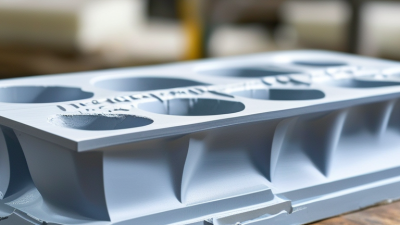
Thermoforming starts with a plastic sheet warmed until it becomes flexible. A mold then shapes it using vacuum, pressure, or both. The process works well for broad, relatively shallow parts, such as equipment covers, trays, and interior panels. You can often see the result in the smooth curves and crisp edges around a formed sheet. After shaping, excess material is trimmed, so part design should account for that extra step.

Rotational molding takes a different path. Plastic powder goes into a hollow mold, which rotates as it heats. The material coats the mold’s inner surface, forming a hollow part as it cools. Large tanks, bins, and protective housings are common applications. No seams from joining separate shells. That can help, though consistent wall thickness still depends on mold design and process control. Cycle times may be longer than those of some other forming methods.

Choosing between them is less about which process is “best” and more about the part’s shape, size, and production volume. Thermoforming can be a practical choice for sheet-like components, while rotational molding suits many larger hollow forms. Tooling cost, surface finish, material choice, and trimming needs deserve close review. A simple prototype can expose awkward corners or uneven walls before production plans harden. It is easy to overpromise on cost savings; the real comparison depends on the design.

Process Selection in 2026: OECD Found 9% of 2019 Plastic Waste Was Recycled

OECD data puts the scale of the challenge in plain terms: only 9% of plastic waste generated worldwide in 2019 was recycled. This is a global estimate, not a recycling rate for every product or material. Still, it matters when choosing how to manufacture a plastic part. Injection molding suits detailed, repeatable components; extrusion makes continuous profiles and film; blow molding forms hollow containers. Thermoforming shapes heated sheets into trays and panels. Each process can use different resins, but the finished design affects whether material can be sorted and recovered.

A small design decision can complicate recycling. A molded part made from one clearly identified polymer is generally easier to sort than a product combining bonded layers, mixed plastics, or hard-to-remove labels. Colorants and additives may also affect the value of recovered material. In practice, checking the resin, wall thickness, and likely waste stream early can prevent costly redesigns. But process selection alone cannot fix weak collection or sorting systems. The 9% figure is sobering, and it does not tell us which process performed best. That gap deserves more attention. Manufacturers should treat recyclability as a design constraint, not a claim inferred from the molding method.